The Core Question: What Makes a Workout Environment Work?
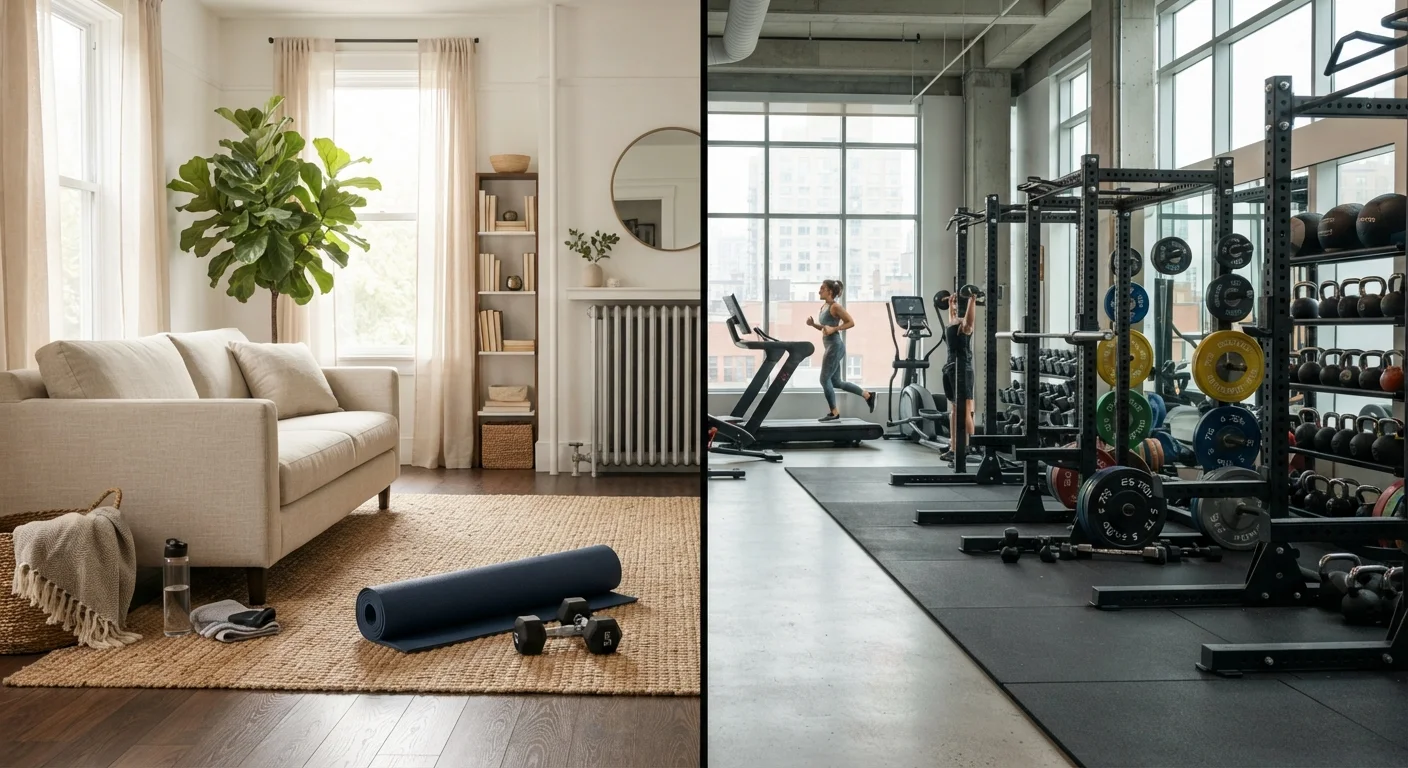
The debate between home workouts and gym training is less about which environment is superior and more about which conditions support your consistency. Exercise science consistently shows that adherence - showing up regularly over months and years - drives the vast majority of long-term fitness outcomes. As explored in why consistency beats intensity in long-term fitness, habit formation and training frequency outweigh any single variable in a workout plan, including location.
That said, the practical differences between home and gym environments are real and worth examining honestly. Cost, equipment access, motivation style, and schedule flexibility all interact with the setting you choose - and each factor cuts differently for different people.
Advantages and Disadvantages of Home Workouts
Training at home has grown significantly as an option, supported by a wider range of affordable equipment and streaming fitness content. The structural benefits are meaningful.
No commute - removes a key barrier to consistency
Eliminating travel time makes it far easier to fit sessions into a busy day. Research on exercise adherence consistently identifies perceived time cost as one of the most common reasons people skip planned workouts.
Lower ongoing financial cost
Once basic equipment is acquired, home training carries no monthly fees. For people on tight budgets, this removes a recurring financial commitment that can become a source of guilt or cancellation.
Complete scheduling flexibility
You can train at 5 a.m., during a lunch break, or late at night without being constrained by facility hours or peak-time crowding.
Private environment suits many people
For those who feel self-conscious exercising in public or are learning new movements, training at home reduces social anxiety and allows for uninhibited experimentation with form and technique.
The limitations, however, are equally real.
Equipment limitations cap certain training goals
Progressive overload in strength training requires incrementally heavier resistance. Replicating a full free-weight rack or cable station at home requires substantial upfront investment and significant space.
Distractions and lack of dedicated space
Household responsibilities, family members, and the general pull of home life can interrupt focus and shorten sessions. Without a dedicated training area, setup and breakdown time also adds friction.
Absence of professional guidance and social accountability
Home trainers rarely have on-demand access to qualified coaches to correct form or adjust programming. The motivating effect of training alongside others is also largely absent in solo home settings.
Self-motivation must be entirely internally sourced
Gyms create an environment cue that primes many people for exercise. At home, the absence of that environmental trigger means motivation depends more heavily on established personal habit.
Equipment Doesn't Have to Be All-or-Nothing
A modest home setup - a set of adjustable dumbbells, resistance bands, and a pull-up bar - can support a wide range of effective training for most fitness goals at a fraction of the cost of a full home gym. The gap between "some equipment" and "no equipment" is much larger than the gap between "some equipment" and "a full rack." Starting small and adding selectively based on actual training needs is a practical approach.
What the Gym Offers - and Where It Falls Short
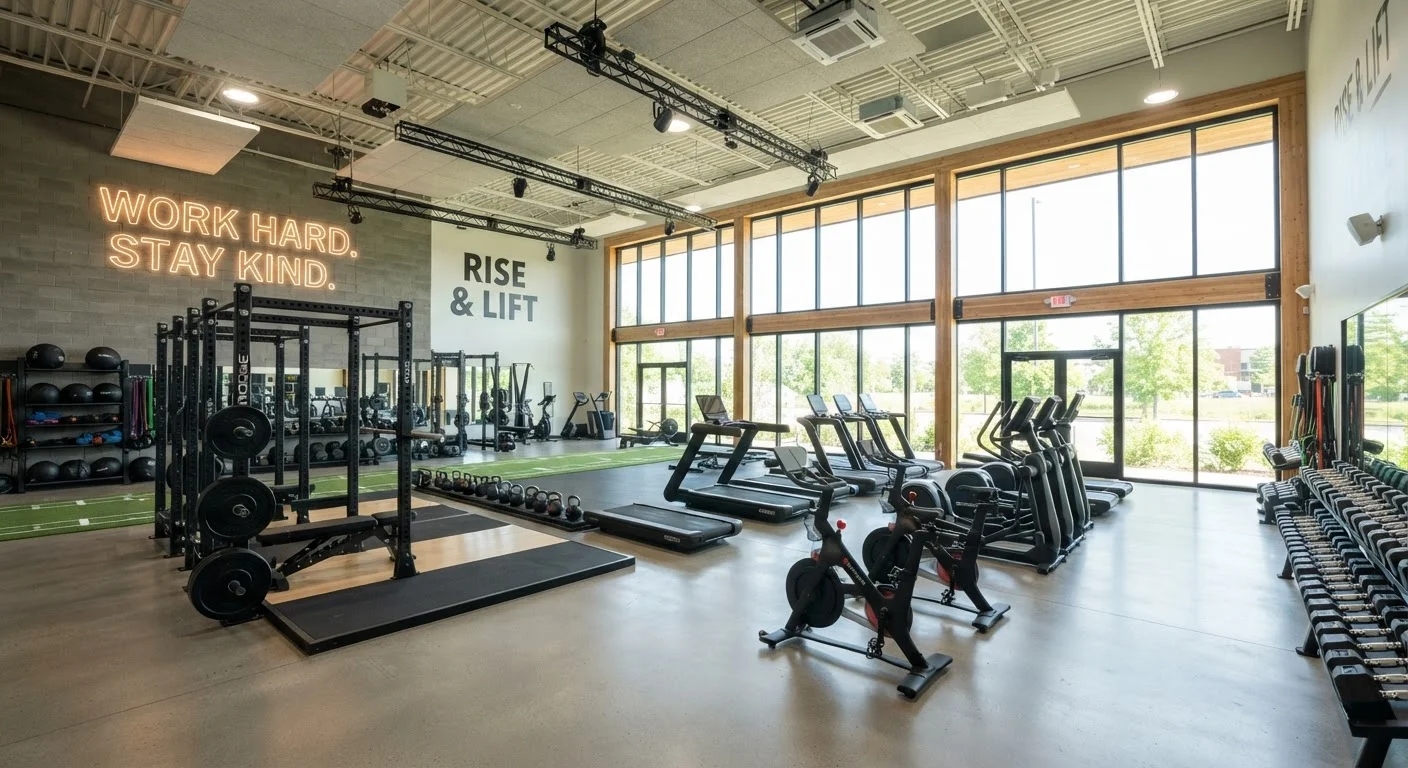
A commercial gym's primary advantage is infrastructure. Free weights in incremental denominations, cable machines, squat racks, cardio equipment, and often group fitness classes - this breadth makes it easier to follow structured progressive programming. For those pursuing specific strength or body composition goals, the equipment depth can be genuinely difficult to replicate at home without significant investment.
~$50/mo
Average US gym membership cost
Industry data from IHRSA (now the Health & Fitness Association) consistently places average US gym membership costs in the $40-$60 per month range, though this varies widely by facility type and region.
~50%
Exercisers who report dropping out within 6 months
Multiple adherence studies have noted that roughly half of people who begin a new exercise program discontinue within the first six months, underscoring that environment and accessibility are critical retention factors.
The social environment also functions as a motivator for many people. Seeing others train, having access to personal trainers, and operating in a space designed exclusively for exercise can reduce the psychological friction of starting a session. If you are new to resistance training, preparing for your first gym session can help set realistic expectations before you commit.
On the downside, gym memberships carry recurring costs, commute time eats into available training windows, and peak-hour crowding can disrupt planned workouts. For shift workers or those with unpredictable schedules, a gym's fixed operating hours can become a genuine obstacle rather than a neutral factor.
Structuring a Sustainable Routine in Either Setting
The practical goal is matching your environment to your schedule and goals in a way that removes friction rather than adds it. Whether you train at home or at a gym, the structure of your weekly programming matters more than the setting. Building a weekly exercise routine around a full-time schedule offers concrete guidance on session frequency and length for busy adults.
It is also worth considering how your training modalities align with your setting. Cardio-focused work - bodyweight circuits, yoga, running - translates cleanly to home environments. Heavier progressive resistance training typically benefits from gym infrastructure. Understanding how to balance strength training and cardio for your goals can clarify which modalities you actually need and therefore which environment serves those needs better.
Many adults find that a hybrid approach - home sessions on time-pressured days, gym sessions when schedule allows - provides the best of both settings without the constraints of either.
This article is for general informational purposes only and does not constitute medical or fitness advice. Consult a qualified healthcare or fitness professional before beginning or significantly changing any exercise program, particularly if you have existing health conditions.