How Long a Car Battery Actually Lasts
The average car battery lasts somewhere between three and five years. That's a wide range, and for good reason - battery life depends heavily on where you live, how you drive, and whether the battery is sized correctly for your vehicle's electrical demands.
In moderate climates with consistent daily driving, batteries often reach the higher end of that range. In hot southern states, where under-hood heat is intense year-round, three years is sometimes closer to the norm. Cold climates present their own challenges, but it's heat - not cold - that tends to cause the most long-term damage to battery chemistry.
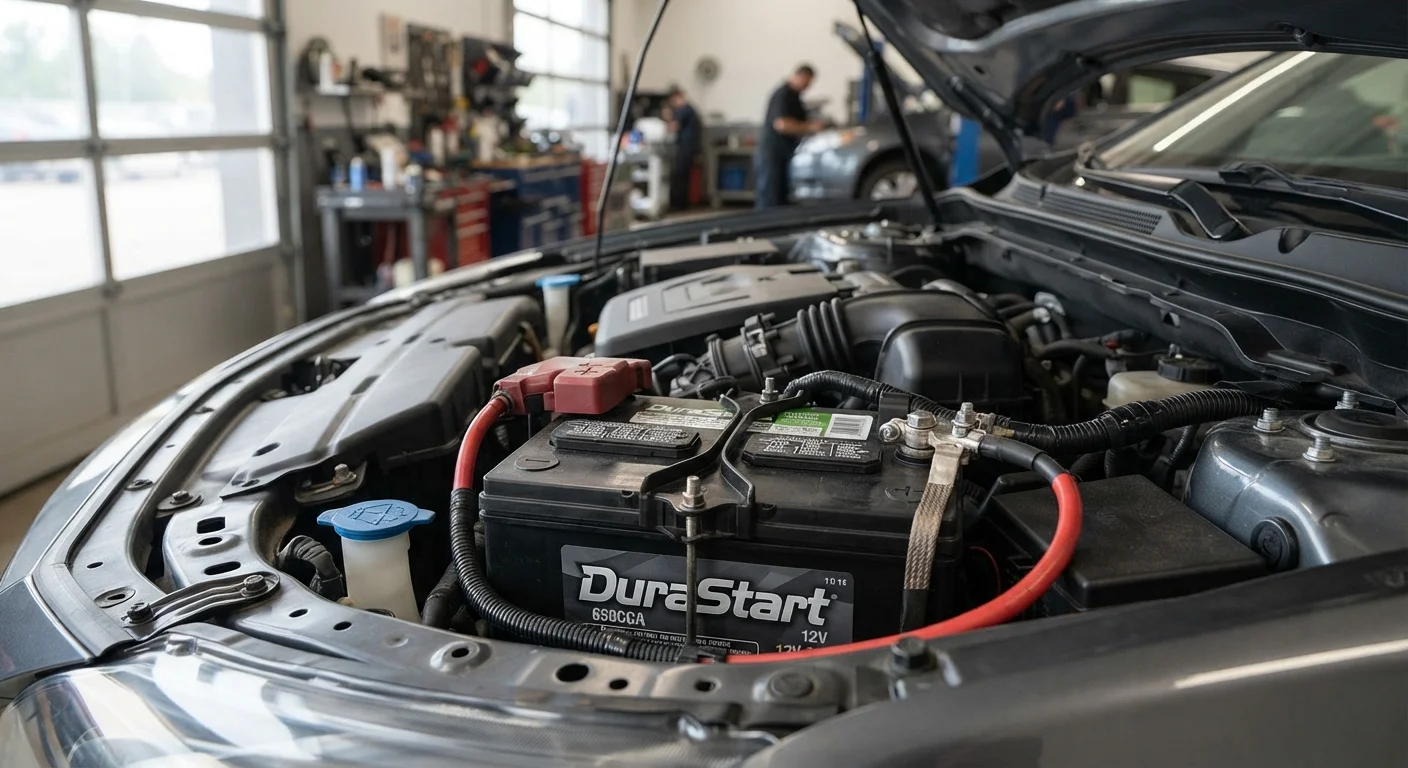
Lead-acid battery
The most common type of car battery, which uses lead plates and sulfuric acid to store and release electrical energy. It powers the starter motor and supports the vehicle's electrical systems.
Alternator
A generator driven by the engine that produces electricity while the car is running, which recharges the battery and powers electrical components.
Cold cranking amps (CCA)
A rating that describes how much power a battery can deliver in cold temperatures to start the engine. Higher CCA ratings indicate better cold-weather starting ability.
Parasitic drain
A small but continuous draw of electricity from the battery when the vehicle is off, caused by components like clocks, alarms, or faulty accessories.
Load test
A battery test that measures how well the battery maintains voltage when a controlled electrical demand is placed on it, revealing its true functional capacity.
The takeaway: don't assume your battery is fine just because it started the car this morning. Age alone is a useful signal. If yours is approaching three years old, it's worth paying attention to.
What Drains a Battery Faster Than Normal
Several everyday habits and conditions quietly reduce a battery's working life:
- Short, infrequent trips. Every engine start draws a significant charge from the battery. The alternator - the component that recharges the battery while the engine runs - needs time to put that energy back. A two-minute drive to a corner store doesn't give it enough time. Repeated short trips keep the battery in a state of partial charge, which degrades it over time.
- Extreme heat. High temperatures speed up the internal chemical reactions that cause battery wear. A battery sitting in a hot engine bay day after day ages faster than one in a garage-kept car in a cooler climate. The seasonal impact on your car's systems, including the battery, is worth understanding if you live somewhere summers are intense.
- Parasitic drain. Some electrical components draw a small amount of power even when the car is off - alarm systems, clocks, and memory modules, for example. If a non-factory accessory is wired incorrectly, or a relay sticks, that trickle drain can flatten a battery overnight.
- Leaving lights or accessories on. Interior lights, phone chargers, or infotainment systems left running with the engine off can deplete a battery in a matter of hours.
Longer Drives Help Recharge the Battery
If your daily driving consists mostly of short hops, consider taking an occasional longer drive - 20 to 30 minutes on the highway - to give the alternator time to properly recharge the battery. This is especially helpful in winter, when cold temperatures demand more from the battery on every start.
Warning Signs Your Battery Is Struggling
A failing battery usually gives you some notice before it quits entirely. Here's what to look for:
- Slow or labored cranking. If the engine turns over sluggishly - especially on a mild morning - the battery may not have enough reserve power to spin the starter motor efficiently.
- Dashboard warning light. A battery or charging system warning light (often shaped like a battery icon) signals that something in the electrical system needs attention. It doesn't always mean the battery itself is the problem, but it warrants a check.
- Dimming headlights or interior lights. When electrical output drops, lights are often the first visible symptom.
- Erratic electronics. Infotainment glitches, power windows moving slowly, or radio presets resetting can all point to inconsistent battery voltage.
- Swollen or bloated battery case. If the battery casing looks puffed out rather than flat-sided, the battery has likely been exposed to excessive heat or overcharging. This is a physical sign it should be replaced promptly.
These symptoms don't guarantee a dying battery - the alternator or other charging system components could be involved. A test is the only way to know for certain.
When and Where to Get a Battery Tested
The simplest rule: get the battery tested around the three-year mark, and then annually after that. If you're seeing any of the warning signs above, don't wait.
Many auto parts retailers offer free battery testing while the battery is still installed in the vehicle. The process typically takes just a few minutes and gives you a snapshot of the battery's current health. Mechanics and dealerships can also test batteries, sometimes as part of a broader electrical system inspection.
Testing Is Not the Same as Replacing
A battery test tells you where things stand - it doesn't commit you to anything. Even if the result comes back marginal, you can decide with more information rather than guessing. Proactive testing is about knowledge, not pressure to spend money.
It's also worth folding battery checks into a seasonal maintenance routine. Cold-weather startups put extra load on a marginal battery, so testing in late fall - before temperatures drop - is a common and practical approach. Our seasonal car check-up guide outlines what to look at throughout the year.
What Happens During a Battery Test
A battery test is non-invasive and quick. A technician connects a handheld electronic tester to the battery terminals. The device sends a small load through the battery and measures how well it holds voltage under that stress - this is called a load test.
The tester typically reports one of three results: good, weak/marginal, or replace. A marginal result doesn't always mean immediate replacement is necessary, but it's a useful signal to watch more closely and perhaps retest in a few weeks.
Testers also check the charging output of the alternator, so if the battery is fine but the alternator isn't doing its job, that can be caught in the same visit.
Replacing a battery is among the more straightforward maintenance tasks on most vehicles, though some modern cars store user settings and system calibrations through the battery's power supply. Disconnecting it can reset certain systems. If you're considering doing it yourself, our guide on which DIY maintenance jobs are safe to tackle is a helpful starting point. When in doubt, a qualified mechanic can handle the swap quickly and safely.