
Why Standard Budgeting Advice Often Misses the Mark
Most budgeting frameworks assume a fixed monthly paycheck. You know what's coming in, you divide it into categories, and you stick to the plan. For freelancers, gig workers, commission-based earners, and anyone whose income shifts month to month, that model breaks down quickly.
The challenge isn't discipline - it's structure. When $4,200 arrives in March and $1,800 in April, a static budget built on one of those numbers will fail half the time. The solution is a system that accounts for variance from the start, rather than one that pretends variance doesn't exist.
For a broader look at how budgets can reflect real-life complexity, see building a monthly budget that reflects real life.
Don't Budget Around Your Best Month
Using a high-earning month as your income baseline is one of the most common mistakes variable-income earners make. When a slow month arrives - and it will - you'll find yourself short on essentials. Always anchor your baseline to your lowest or most conservative recent income figure.
This article is for general financial education purposes only and is not personalized financial, tax, or legal advice. Consult a qualified financial professional for guidance suited to your individual circumstances.
Before You Start: What You'll Need
Getting this system in place requires a bit of groundwork. Gather your income records and account statements, then make sure you have the tools below before working through the steps.
What you will need
Bank or payment platform statements
Used to calculate your income baseline across multiple months.
Spreadsheet or budgeting app
Tracks income, expenses, and buffer account balance month to month.
Separate buffer savings account
Holds surplus income from high-earning months to cover shortfalls later.
Quarterly tax calendar or reminder
Keeps estimated tax payment deadlines visible so you never miss one.
Step-by-Step: Building Your Variable-Income Budget
Follow these steps in order. Each one builds on the last, and skipping ahead - especially before establishing your buffer - tends to undermine the whole system.
Calculate your conservative income baseline
Pull your income records for the past 6-12 months and list each month's total earnings. Identify your three lowest-earning months and average those figures together. This number - not your average or your peak - becomes the income figure your budget is built on.
If you're just starting out and don't have a full year of data, use what you have and revisit the baseline every quarter as more data accumulates.
List and total all essential fixed expenses
Write down every non-negotiable monthly expense: rent or mortgage, minimum debt payments, insurance premiums, utilities, and any subscriptions you genuinely cannot cut. Add them up. This is your survival floor - the absolute minimum your budget must cover every single month.
Understanding the difference between fixed and variable expenses is foundational here. See how fixed and variable expenses behave differently in a budget for a deeper breakdown.
Open and fund a dedicated income buffer account
A buffer account is a separate savings account that acts as a personal cash-flow stabilizer. In months when income exceeds your baseline, deposit the surplus here. In months when income falls short, draw from it to cover the gap.
Aim to build the buffer to cover at least two months of your survival floor before you start allocating surplus to other goals.
Pay yourself a consistent monthly 'salary'
Once your buffer has a foundation, route all client payments and gig income into a single receiving account. Then, on the first of each month, transfer your baseline amount to your everyday checking account. This is your 'salary' - a consistent, predictable figure you budget against regardless of what came in that month.
Surplus stays in the buffer or gets directed to savings and tax reserves. This structure converts irregular income into a predictable paycheck.
Set aside taxes and savings as percentages of every deposit
Before any deposit hits your spending account, allocate a percentage for taxes and savings. Common starting points for self-employed earners are 25-30% for federal and state taxes combined, and 10-20% for savings - but your actual tax rate depends on your income level and filing situation. Consult a tax professional to calibrate the right percentage for you.
[tip_callout]
For saving strategies built specifically around variable income, see saving strategies for irregular paychecks.
Allocate discretionary spending last
Whatever remains after your fixed expenses, tax reserve, and savings allocation is available for discretionary spending - food beyond basics, entertainment, clothing, and personal spending. Budget these categories against what's actually left, not what you wish you had.
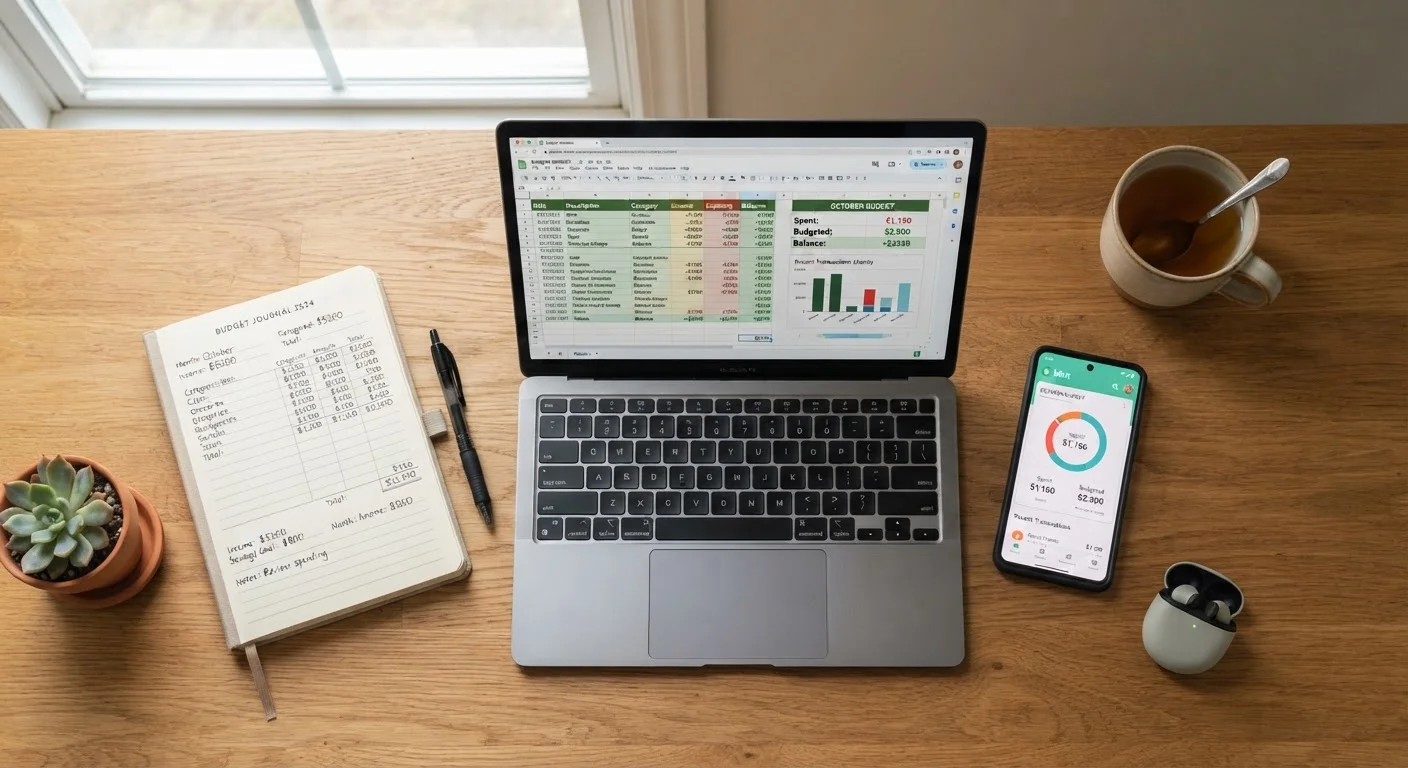
Choosing a tracking method that works for you makes sticking to this step far easier. Pick one you'll actually use.
Self-Employment Tax Requires Proactive Planning
If you're self-employed, federal and state income taxes are not withheld automatically. The IRS generally requires quarterly estimated tax payments if you expect to owe $1,000 or more for the year. Failing to pay on time can result in penalties. Consult a licensed tax professional to determine the right amounts for your situation.
Keeping the System Running Month to Month
A variable-income budget isn't a one-time setup - it needs a monthly maintenance routine. At the start of each month, log what came in, confirm your salary transfer, replenish any buffer you drew down, and check your tax reserve balance. This review takes 15-20 minutes and keeps small drift from becoming a crisis.
Every quarter, revisit your conservative income baseline using the most recent three low-earning months. If your income has grown or contracted significantly, adjust the baseline and your percentage allocations accordingly.
If you're still deciding how to track all of this day to day, compare paper, spreadsheet, and app-based methods to find the approach that fits your habits. The best tracking system is the one you'll actually maintain.