The Rise of the 'Nones'
For most of the 20th century, claiming no religious affiliation was unusual enough in America to be sociologically remarkable. That is no longer the case. Pew Research Center data tracking American religious identity over two decades shows the share of adults identifying as religiously unaffiliated - the so-called 'nones' - has grown from roughly 16% in 2007 to approximately 28-30% by the early 2020s.
The 'nones' are not a monolithic group. They include committed atheists who reject the premise of religious belief, agnostics who regard the question as unanswerable, and a much larger category of people who simply describe their religion as 'nothing in particular' - often maintaining private spiritual practices while declining to join or identify with any institution.
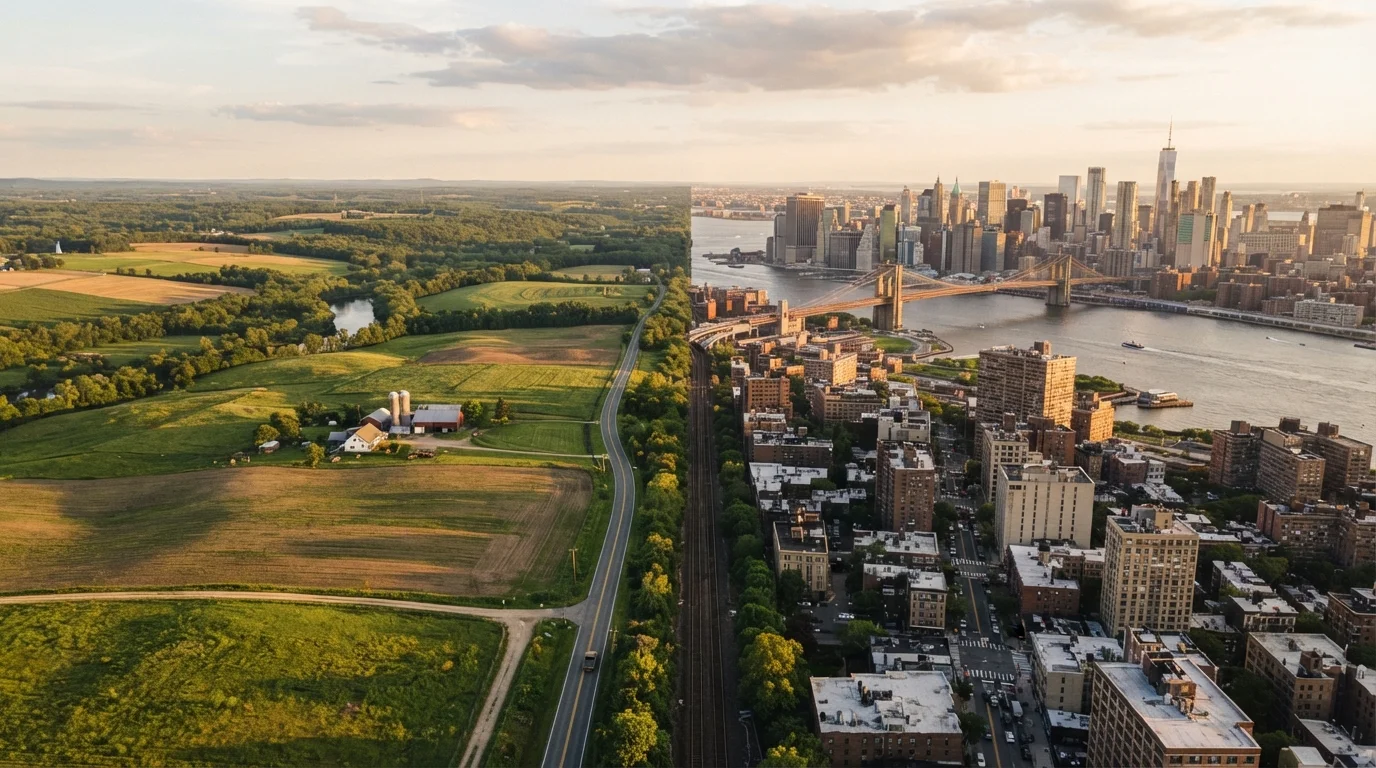
This shift is not happening uniformly. The rural-urban divide in American life maps closely onto religious identity: rural and Southern communities continue to show higher rates of affiliation and attendance, while urban and coastal populations are more likely to be unaffiliated. Age is the other major fault line, with Millennials and Gen Z disaffiliating at rates that significantly outpace older generations.
~28-30%
Americans identifying as religiously unaffiliated
Pew Research Center surveys in the early 2020s place the 'nones' at roughly 28-30% of US adults, up from 16% in 2007.
~16%
Unaffiliated share of US adults in 2007
Pew Research Center's 2007 Religious Landscape Study established this baseline, making the subsequent rise one of the most tracked shifts in American religious demography.
40%+
Millennials with no religious affiliation
Multiple Pew surveys indicate that more than 40% of Millennials identify as religiously unaffiliated, compared to roughly 17% of the Silent Generation.
Why Americans Are Leaving - and What They're Seeking Instead
Researchers have identified several overlapping explanations for the decline in organized religion. Institutional scandals - most prominently the Catholic Church's abuse crisis - have damaged trust in religious leadership broadly, not just within Catholicism. Political entanglement is another factor: surveys consistently show that Americans who perceive organized religion as ideologically aligned with one political party are more likely to disengage, particularly those who do not share that alignment.
Cultural individualism also plays a role. Younger Americans tend to approach identity - including religious identity - as something personally constructed rather than inherited. The expectation that one should belong to the faith community of one's upbringing has weakened substantially across generations.
Yet departure from institutions does not always mean departure from the sacred. A substantial portion of the unaffiliated report believing in God or a universal spirit, practicing meditation or prayer, and finding meaning in nature, community, or ethical frameworks. Scholars sometimes describe this as 'spiritual but not religious' - a phrase that has become something of a cultural shorthand for a genuinely widespread phenomenon.
“The rise of the 'nones' doesn't mean Americans are becoming less spiritual. It means they're increasingly unwilling to let institutions define their spiritual lives for them.”
— Robert Putnam, Harvard political scientist and co-author of 'American Grace: How Religion Divides and Unites Us'
A Fragmented Landscape: Who Is Still Attending
The broad narrative of American secularization obscures real complexity. While mainline Protestant denominations - Methodists, Presbyterians, Lutherans - have experienced steep membership declines over decades, other segments of American Christianity have proven more durable. Non-denominational evangelical congregations have maintained significant followings, and some have grown substantially, partly by offering community, purpose, and cultural identity in ways that resonate with members.
Immigration has also reshaped the picture. Islam, Hinduism, Buddhism, and Sikhism have all grown as shares of the American religious population, driven largely by demographic change rather than conversion. This means that even as the overall share of Christians declines, the American religious landscape is becoming more diverse rather than simply more secular.
The social movements reshaping American culture have also interacted with faith communities in complicated ways - some congregations becoming organizing hubs for progressive causes, others aligning more explicitly with traditionalist political movements, deepening the sense that religion in America is fragmenting along ideological as well as denominational lines.
Interpreting Religious Survey Data
When reading polls about American religion, it's worth distinguishing between questions about belief, affiliation, and practice - they often yield very different results. Someone can believe in God, belong to no church, and never attend services. Aggregated 'religious' or 'secular' labels can obscure the genuine diversity of how Americans actually relate to faith.
Meaning, Values, and What Comes Next
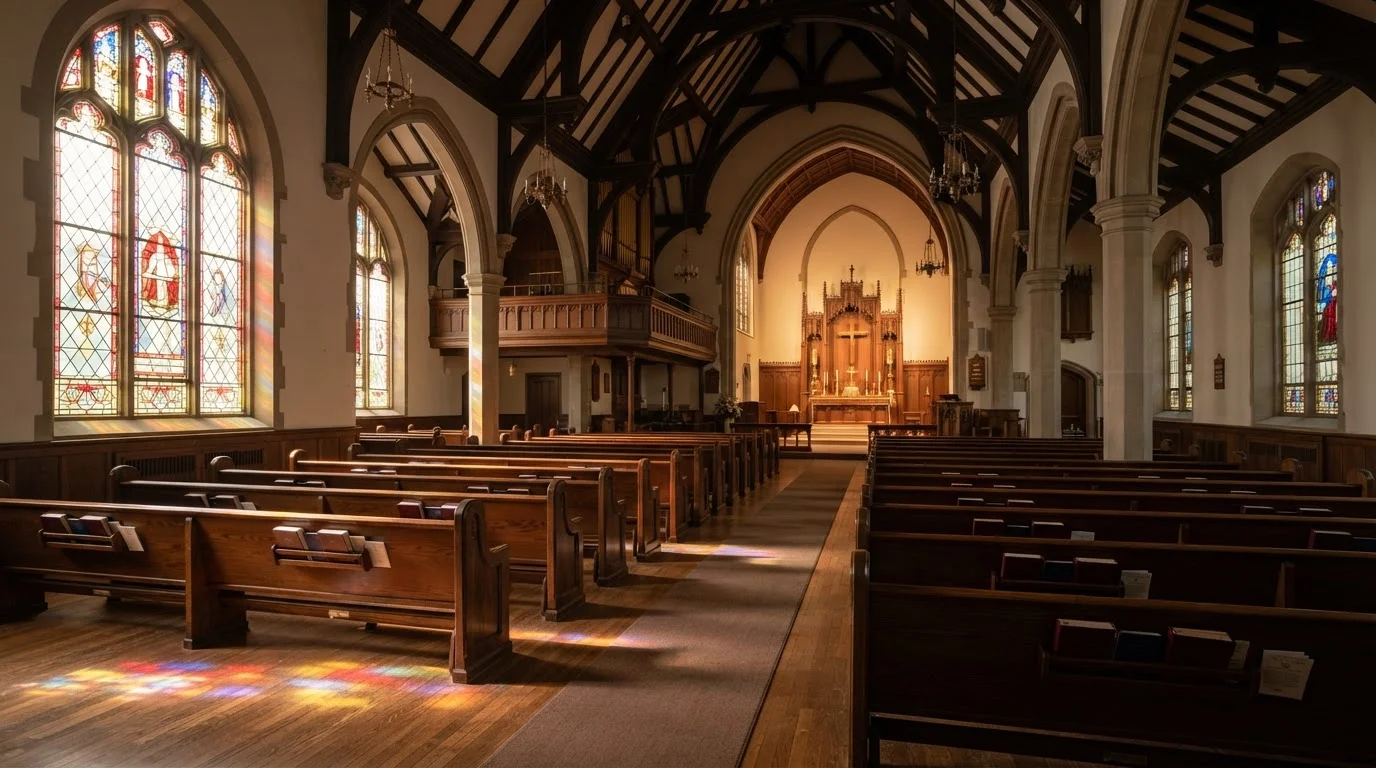
One of the more consequential questions raised by religious disaffiliation is what, if anything, fills the social and psychological roles that religious institutions have historically played. Churches, mosques, synagogues, and temples provide not only theology but also community, ritual, mutual aid, shared moral frameworks, and a sense of belonging - functions that secular life does not automatically replicate.
Some observers point to the rise of values-driven communities - wellness culture, political activism, and even consumer identity - as partial substitutes. The shift toward values-driven purchasing reflects a broader cultural pattern in which consumption and lifestyle choices carry moral and communal weight that religious identity once supplied for many Americans.
Similarly, the generational rethinking of institutions visible in changing attitudes toward work and declining marriage rates suggests a wider renegotiation of inherited social structures - of which organized religion is one significant part.
Whether the current trajectory represents a lasting secular shift or a restructuring of how Americans engage with the spiritual remains genuinely uncertain. What demographic data does confirm is that the relationship between Americans and organized religion is being actively renegotiated - and that the outcome will shape culture, politics, and community life for decades to come.
About the Data
Much of what we know about American religious identity comes from large-scale survey organizations, most notably Pew Research Center and PRRI (Public Religion Research Institute). These organizations use rigorous sampling methods, but self-reported religious identity can shift based on how questions are worded and the social context of the survey. Treat headline figures as reliable indicators of directional trends rather than precise counts.