Why Preparation Makes Your First Session Count
Walking into a gym for the first time can feel disorienting - unfamiliar machines, unspoken social rules, and the pressure to look like you know what you're doing. The good news is that a little preparation beforehand eliminates most of that friction.
Research on exercise adherence consistently shows that people who have clear expectations and a concrete plan are more likely to return after their first session. Preparation isn't about being perfect - it's about lowering the barriers that cause people to give up after a single visit.
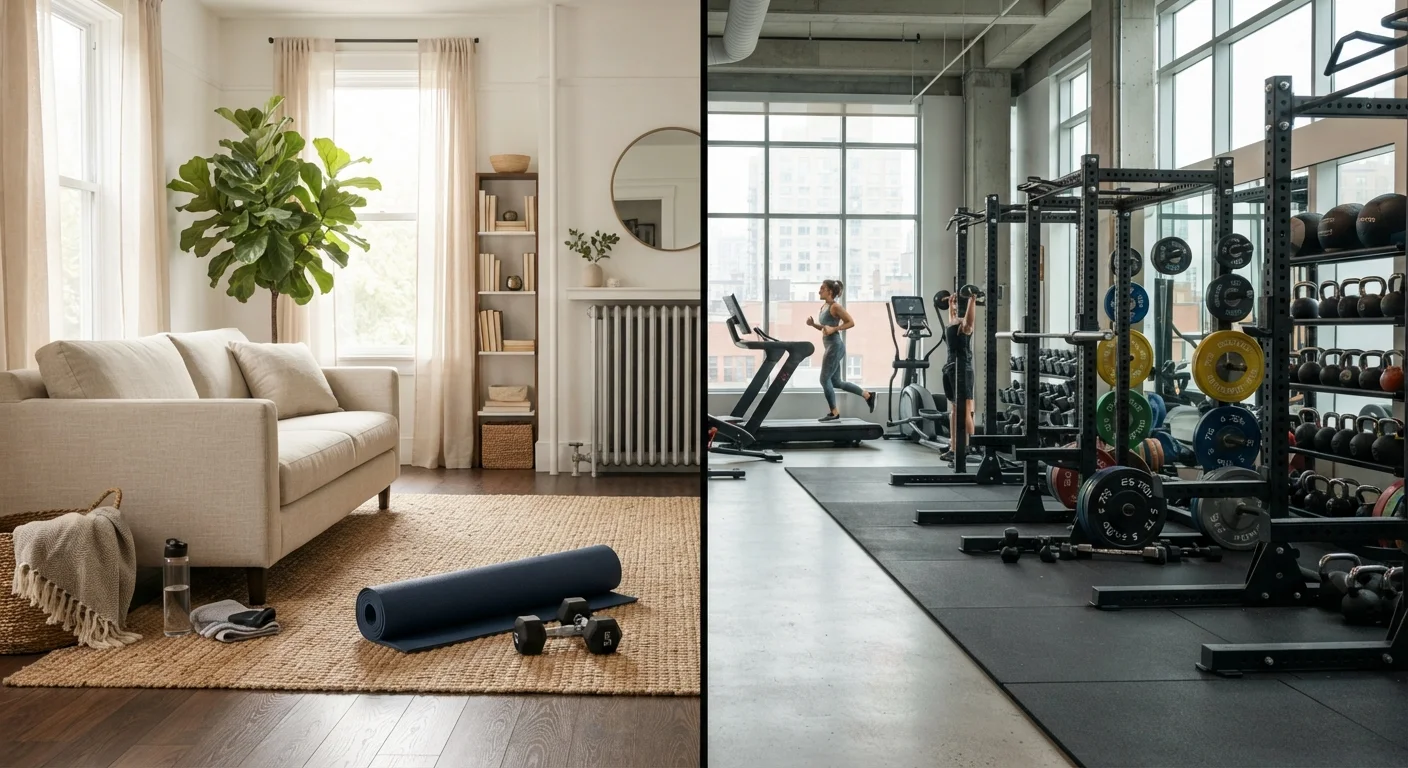
If you're also weighing whether a gym is even the right fit, our article on home workouts vs. gym training offers a balanced comparison of both environments.
Before You Arrive
Gear and Clothing
During Your Session
After Your Session
What to Bring and Wear
Gear doesn't need to be expensive, but it does need to be functional. Athletic shoes with lateral support are the most important item - running shoes work for treadmills, but cross-trainers are better suited for strength work. Avoid casual shoes, sandals, or shoes with inadequate grip.
Moisture-wicking fabrics help regulate body temperature and reduce skin irritation during sustained activity. Bring a water bottle - staying hydrated supports performance and reduces the risk of dizziness or fatigue, particularly if you're new to structured exercise.
Cross-training athletic shoes
Provides the lateral support and grip needed for a range of gym activities including strength training and group classes.
Reusable water bottle
Keeps you hydrated throughout your session without the need to repeatedly visit a fountain.
Small gym towel
Used to wipe down equipment before and after use - standard etiquette at most facilities.
Combination lock
Secures your belongings in a locker while you exercise.
Workout tracking app or notebook
Helps you log exercises, sets, and reps so you can track progress and plan future sessions.
A small gym bag keeps everything organized: a change of clothes, a combination lock if your facility has lockers, and a small towel (some gyms require one for wiping down machines). Headphones are optional but help many beginners stay focused and reduce self-consciousness.
After the Checklist: Building the Habit
One session is a start - a habit is what produces lasting results. Aim to schedule your next visit before you leave the gym, while motivation is still high. Treating gym time as a fixed appointment, rather than something fitted in when convenient, meaningfully increases consistency.
Consult a Professional Before Starting
If you have a cardiovascular condition, diabetes, joint problems, or any other chronic health concern, speak with a qualified healthcare provider before beginning a structured exercise program. A single conversation can help you identify appropriate intensity levels and movements to avoid - protecting both your safety and your long-term progress.
If you have a pre-existing health condition, are returning to exercise after a long break, or are over 45 with no recent physical activity, consult a qualified healthcare provider before beginning a new exercise program. This article provides general information only and is not a substitute for personalized medical guidance.
Once you've established a basic routine, structuring workouts across a busy week is the natural next step - including how to balance session frequency, intensity, and recovery.
This article is for general informational purposes only and does not constitute medical advice. Always consult a qualified healthcare professional before starting a new exercise program, particularly if you have existing health conditions.