What Actually Causes Tomatoes to Crack
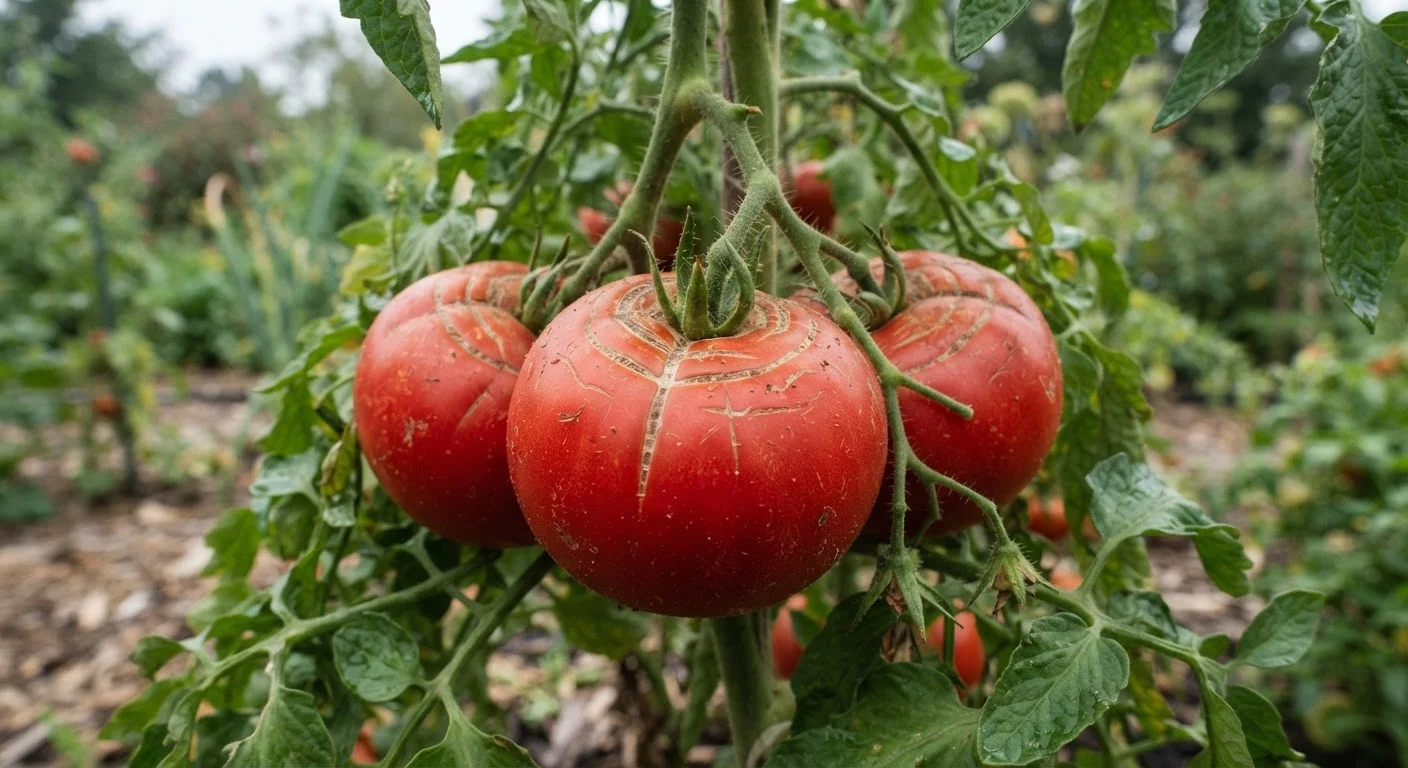
Tomato cracking happens when the inside of the fruit grows faster than the outer skin can stretch to accommodate it. The skin splits under pressure, producing the radial cracks (running from stem to blossom end) or concentric cracks (circular rings around the shoulder) that gardeners find so disheartening at harvest time.
The root cause is almost always stress - specifically, sudden changes in the fruit's internal water supply. When a tomato plant takes up a large amount of water rapidly after a dry period, the flesh swells quickly while the skin, which has already toughened and stopped expanding, simply cannot keep up. The same effect can be triggered by temperature spikes, since heat accelerates internal fruit development unevenly.
Understanding this mechanism is key, because it means cracking is largely a preventable problem rooted in environmental conditions and garden management - not bad luck.
Heavy Rain After Drought Is High-Risk
A prolonged dry spell followed by a heavy rainfall event is one of the most common triggers for widespread cracking across an entire crop. If your region is entering a wet period after drought, consider harvesting mature-but-not-yet-ripe tomatoes early and allowing them to ripen indoors to protect your yield.
The Most Common Mistakes That Lead to Cracking
Most tomato cracking in home gardens traces back to a handful of recurring errors. Recognizing them in your own routine is the first step toward a healthier, uncracked harvest.
Watering inconsistently - alternating between letting soil dry out completely and then flooding it.
Why it happens: Many gardeners water on a loose schedule or only when plants look stressed, which creates dramatic wet-dry cycles in the root zone.
Skipping mulch around tomato plants, leaving soil exposed to rapid moisture loss.
Why it happens: Mulching is often seen as optional or purely aesthetic, so gardeners skip it to save time or material costs.
Planting crack-prone heirloom or large-fruited varieties without adjusting care strategies to compensate.
Why it happens: Home gardeners often choose varieties based on flavor or appearance without knowing that some types have naturally thin, less elastic skin prone to splitting.
Allowing tomatoes to stay on the vine far past peak ripeness in high heat.
Why it happens: Gardeners sometimes delay harvesting while waiting for perfect color, not realizing that overripe fruit on the vine in hot weather is extremely vulnerable to splitting.
Overfertilizing with nitrogen during fruit development, pushing rapid vegetative growth.
Why it happens: More fertilizer can seem like a good idea for bigger yields, but high nitrogen in the fruiting stage redirects energy to leaves and causes uneven, fast fruit growth.
Cracked Tomatoes Can Rot Quickly
Once a tomato's skin splits, bacteria and mold can enter the fruit within hours, especially in humid conditions. Always harvest cracked tomatoes immediately and use or refrigerate them right away. Do not leave split fruit on the vine expecting it to heal - the damage is irreversible and will worsen.
Choosing the Right Varieties and Harvesting Smartly
Prevention starts before you even put a seed in the ground. Some tomato varieties are bred with thicker, more elastic skin that handles moisture fluctuations far better than others. Cherry tomato varieties, for example, are generally more crack-prone due to their thin skin and rapid ripening, while many modern hybrid varieties explicitly note crack resistance in their descriptions.
That said, variety selection is only part of the equation. Harvesting practices matter just as much. Many gardeners wait for a perfect, deeply colored fruit before picking - but tomatoes harvested when nearly ripe and left to finish indoors are far less vulnerable to cracking than fruit left on the vine through a rainstorm or heat wave.
2-3"
Ideal mulch depth around tomato plants
University extension programs commonly recommend this mulch depth to effectively regulate soil moisture and reduce temperature fluctuations at the root zone.
~85°F+
Temperature threshold that accelerates cracking risk
When daytime temperatures consistently exceed this range, rapid fruit growth and skin stress increase significantly, particularly in thin-skinned varieties.
Keep a daily eye on maturing fruit during periods of rain or high heat. A few days of proactive harvesting can save the majority of your crop from splitting.