
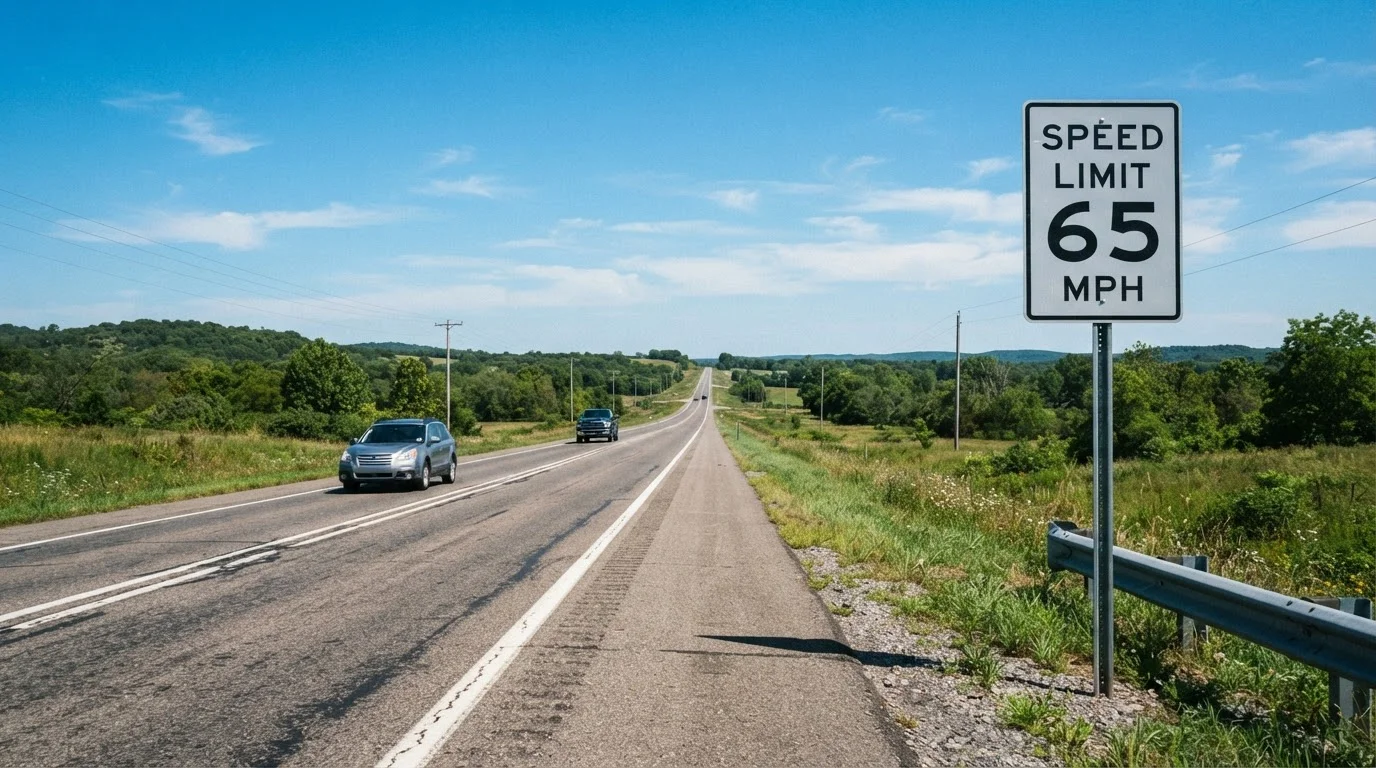
How Speed Limits Are Actually Set
Speed limits don't appear on signs because someone in a government office made a guess. There's a real methodology behind them, rooted in traffic engineering.
The most widely used tool is the 85th percentile study. Engineers observe traffic flowing freely on a stretch of road - meaning no heavy congestion or enforcement presence - and record how fast drivers are going. The speed at or below which 85% of those drivers travel becomes the baseline for setting the posted limit. The reasoning is straightforward: that speed represents what most people already consider reasonable for that road.
Other factors engineers weigh include:
- Road geometry - curves, grades, and sight distance
- Number of access points (driveways, intersections)
- Pedestrian and cyclist activity nearby
- Crash history on the corridor
- Whether the area is urban, suburban, or rural
The federal MUTCD provides national guidelines, but individual states hold authority over their roads. That's why limits can change the moment you cross a state line.
85th
Percentile benchmark used by traffic engineers
The 85th percentile speed is the industry-standard baseline used in the MUTCD-guided process for evaluating appropriate posted speed limits.
~29%
Of all US traffic deaths involving speeding
According to the National Highway Traffic Safety Administration (NHTSA), speeding is consistently cited as a factor in roughly 29% of motor vehicle fatalities annually.
85 mph
Highest posted speed limit in the US
A stretch of Texas State Highway 130 has the highest posted speed limit in the country at 85 mph, reflecting both road design and low traffic density.
Why Speed Limits Vary So Much
Driving across the US, you'll notice speed limits that seem inconsistent - sometimes frustratingly so. There are real reasons for the differences.
Road type matters most. A divided freeway with controlled access handles speed very differently than a two-lane county road with blind driveways. Interstate highways in some western states permit up to 80 or 85 mph, while urban arterials often sit at 35-45 mph even on wide roads.
State law sets the floor and ceiling. States pass legislation defining maximum speeds by road category. Local governments can then lower limits in their jurisdictions - a city can post 25 mph on a state road running through a downtown - but generally can't raise them above the state maximum without special authority.
Special zones create temporary or permanent reductions. School zones, hospital zones, and active construction zones carry reduced limits, sometimes only during specific hours or when signs are illuminated. These aren't suggestions - violations typically carry higher fines.
Variable Speed Limits Are on the Rise
Some highways now use electronic signs that can change the posted limit in real time based on weather, congestion, or incidents. These are called variable or dynamic speed limits. They carry the same legal weight as static signs - the speed shown when you pass the sign is the enforceable limit at that moment.
What Speeding Violations Actually Cost You
The fine on your ticket is usually the smallest part of what speeding costs over time.
Fines vary widely by state and by how far over the limit you were traveling. A 10 mph overage might carry a $100-$150 base fine in many jurisdictions, while 20+ mph over can push $300-$500 or more before court fees are added.
Points are added to your driving record in most states. Accumulate enough points and your license can be suspended. Points typically stay on your record for two to three years, though serious violations can remain longer.
Insurance premiums often rise after a conviction, sometimes by 20-30% on average for a first offense. That increase can compound over three to five renewal cycles, meaning one ticket can cost you far more than the fine itself.
Criminal charges become possible at extreme speeds. Many states treat driving 30 or more mph over the limit as reckless driving - a criminal misdemeanor in most jurisdictions, not just a traffic infraction. A criminal record carries consequences well beyond driving penalties.
Contest or Mitigate Before You Just Pay
Before paying a speeding ticket outright, check whether your state offers options like traffic school or deferred adjudication. Completing a defensive driving course can sometimes prevent points from appearing on your record, which protects your insurance rate. Consult your state's DMV website or a traffic attorney to understand your options.
Statutory Limits: When No Sign Is Posted
Many drivers don't realize that speed limits apply even when no sign is visible. These are called statutory speed limits - default speeds established by state law for different road categories.
Common examples include:
- 25 mph - residential streets and business districts in most states
- 55 mph - undivided highways in many states
- 70 mph - rural interstates (varies by state)
If you're on a road without a posted sign, the statutory limit for that road type applies. Claiming you didn't see a sign is not a legal defense when no sign is required. Understanding your state's statutory limits is part of knowing the rules of the road.
When in doubt, slow down - road conditions, visibility, and traffic always factor into whether your speed is truly safe, regardless of what the sign says.