Why the Method Matters as Much as the Plan
Most budgeting advice focuses on the numbers - how much to allocate, what categories to track, which percentages to follow. But the format you use to manage that plan is just as consequential. A budget you find tedious to maintain will get abandoned; one that fits naturally into your routine will actually stick.
Before comparing the three main approaches, it helps to recognize that common misconceptions about budgeting often prevent people from starting at all - and picking the wrong method reinforces those myths. The goal here is to match your tool to your tendencies, not to find the "correct" answer.
Consider three factors when evaluating any method: how much time it requires, how much insight it provides, and how likely you are to maintain it under real-life conditions.
Paper Budgeting: Slow Down to Gain Awareness
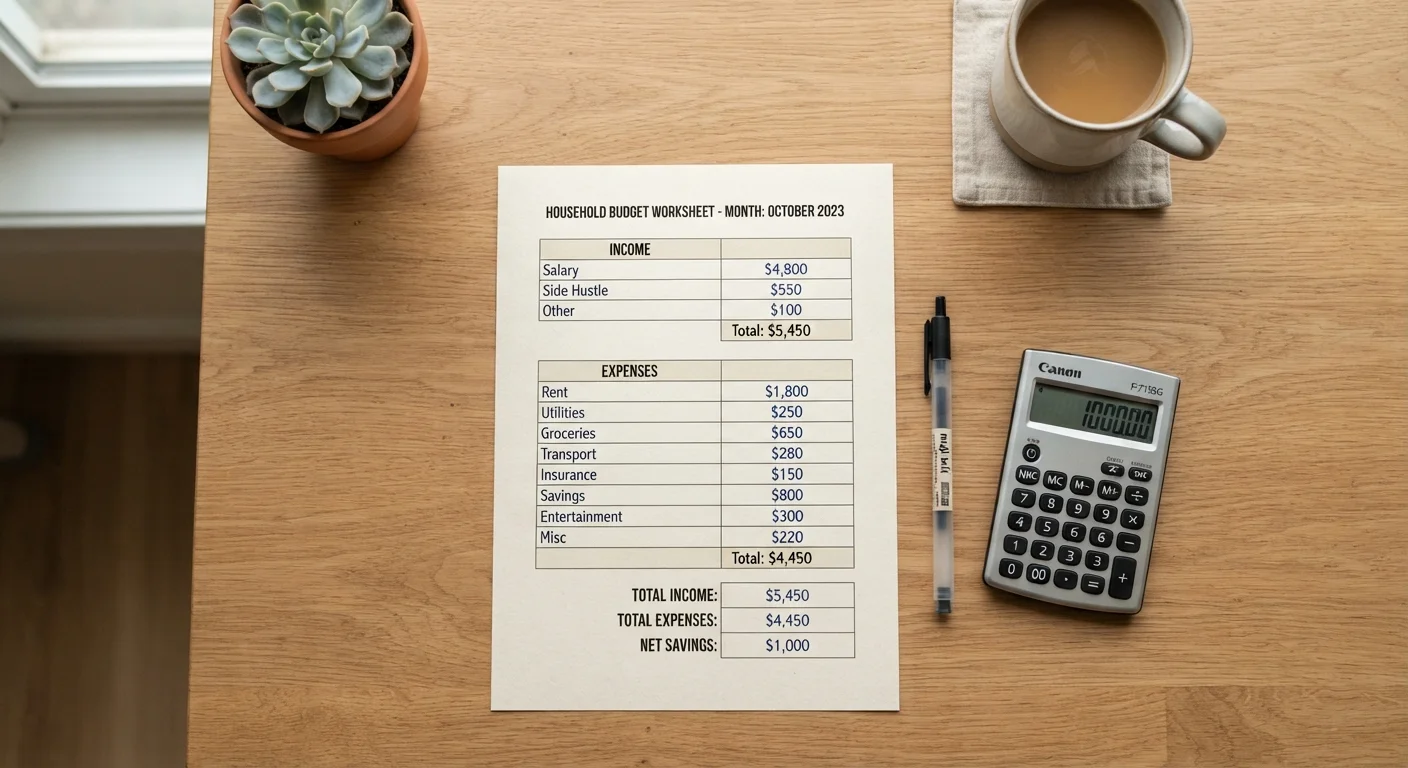
Writing down income and expenses by hand is the oldest budgeting method - and it remains effective for a specific type of person. The act of physically recording each transaction creates a moment of intentional engagement that digital methods bypass. Research in cognitive psychology suggests that handwriting reinforces memory encoding more strongly than typing, which may explain why some people report greater spending awareness when they keep a written ledger.
The trade-offs are real, though. Paper budgets require consistent manual entry, offer no automatic calculations, and are easy to lose or forget. They don't sync with bank accounts and provide no alerts. If you miss a few days of entries, catching up becomes a chore - and many people simply stop.
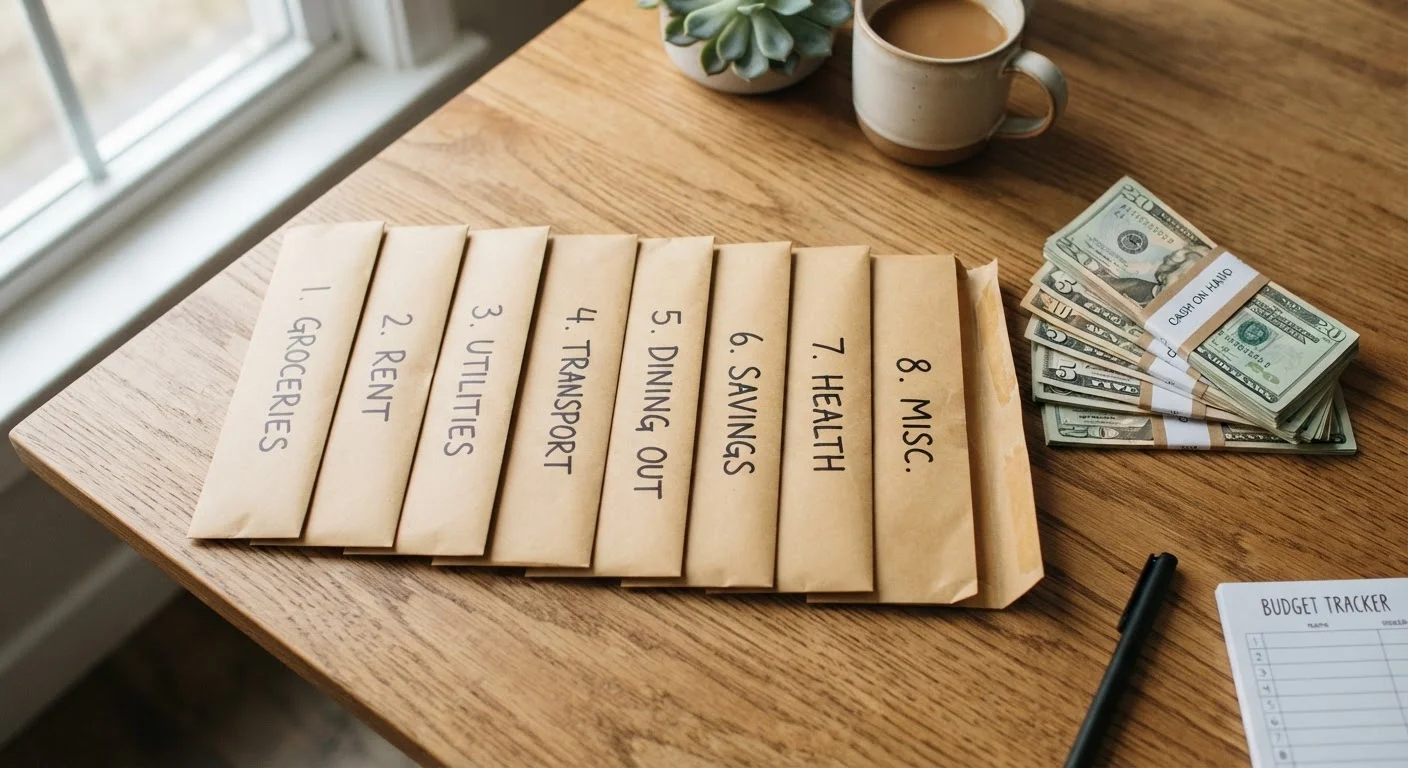
Paper works best for: people new to budgeting who want to build basic awareness, those with straightforward finances and few accounts, and anyone who finds screens distracting or prefers tangible records. It pairs naturally with the envelope budgeting method, which also relies on deliberate, manual engagement with cash.
Start With One Week of Paper Tracking
Even if you plan to use a spreadsheet or app long-term, spending one week writing down every purchase by hand can be a revealing exercise. Many people discover spending patterns they hadn't noticed before - categories they were underestimating or purchases they made without conscious intent. Use that insight to set up your permanent system with better category choices.
Spreadsheets: Maximum Control, Maximum Effort
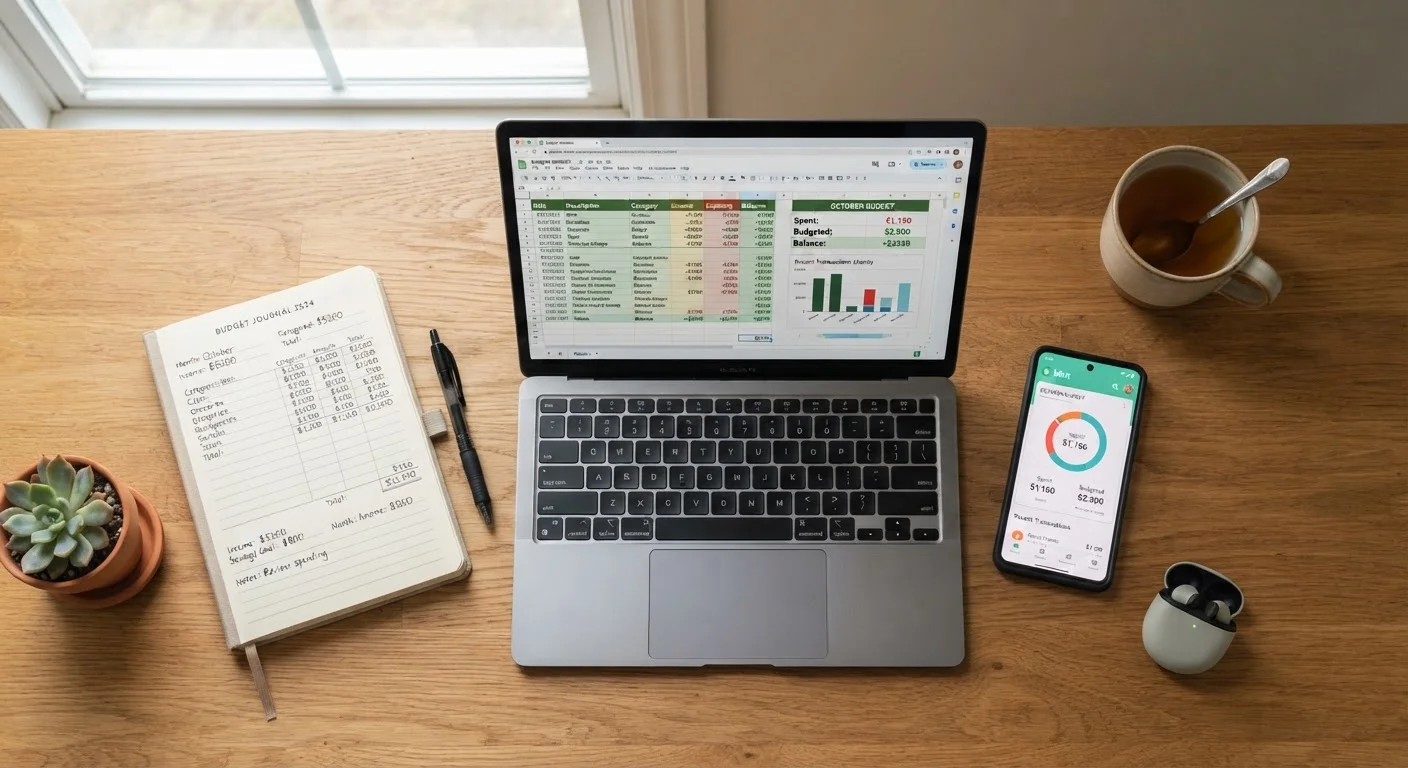
A well-built spreadsheet can do almost anything a budgeting app can - and more, if you're willing to invest the setup time. You can track fixed and variable expenses in separate columns, build formulas that flag overspending automatically, and design categories that match your actual life rather than a preset template.
That flexibility is also the main downside. Spreadsheets require you to build and maintain the system yourself. Data entry is still manual unless you export from your bank. If you're not comfortable with basic formulas, setup can feel overwhelming. And the blank-page problem is real - starting from scratch is harder than clicking "sign up."
Spreadsheets shine for people who are detail-oriented, comfortable with numbers, and want a system they fully understand and control. They're also useful when your financial situation is complex - multiple income streams, irregular expenses, or detailed savings goals. See our guide to building a monthly budget that reflects real life for a practical framework you can adapt into a spreadsheet format.
| Paper Budgeting | Spreadsheets | Budgeting Apps | |
|---|---|---|---|
| Setup effort | Very low - pen and notebook | High - build formulas and structure | Low - download and connect accounts |
| Ongoing time required | High - fully manual entry | Medium - manual entry with auto-calc | Low - largely automated |
| Customization | Total, but unstructured | Total and structured | Limited to app's framework |
| Spending awareness built | Very high - friction is intentional | High - active engagement required | Lower - automation reduces attention |
| Privacy considerations | None - fully offline | Depends on cloud storage use | Requires account credential access |
| Best for | Beginners, simple finances | Detail-oriented, complex finances | Busy users, multiple accounts |
Budgeting Apps: Automation With Trade-Offs
Budgeting apps solve the friction problem. Many connect directly to bank and credit card accounts, categorize transactions automatically, and send alerts when you're approaching a spending limit. For people who struggle with consistent manual entry, this automation can be the difference between maintaining a budget and abandoning it entirely.
The limitations are worth naming clearly. Apps require you to trust a third party with your financial account credentials or read-only access. Privacy policies vary, and some apps are supported by advertising or upsell premium features. Free tiers often have meaningful restrictions. You should read the privacy terms of any app before connecting sensitive accounts.
Apps also impose their own structure. If their category system doesn't match how you naturally think about spending, you may find yourself fighting the tool rather than using it. And if you rely entirely on automation, you may lose some of the mindful awareness that makes budgeting effective in the first place. The habits that drive budgeting success are behavioral, not technological - apps support good habits but can't substitute for them.
Review App Permissions Before Connecting Accounts
Before linking a bank account to any budgeting app, review what level of access you're granting. Most apps request read-only access, meaning they can view transactions but not move money - but confirm this in the app's terms. Also check whether your data is sold to third parties or used for targeted advertising. Making an informed decision upfront protects your financial privacy.
How to Choose - and When to Switch
Start by being honest about your behavioral patterns. Do you enjoy data and customization? A spreadsheet may reward you. Do you hate administrative tasks and need automation? An app likely fits better. Are you trying to build financial awareness from scratch? Paper may be the most powerful starting point, even if you switch later.
It's also worth considering a hybrid: some people use an app for automatic transaction tracking but maintain a paper or spreadsheet layer for monthly goal-setting and reflection. This isn't a compromise - it's a deliberate design choice. Many people with variable income find that apps handle day-to-day tracking well but fall short on the forward-planning that irregular earners need.
Switching methods isn't failure. Financial lives change - a new job, a move, a growing family - and your budgeting system should adapt. Treat your first choice as an experiment, evaluate it after 60-90 days, and adjust accordingly. The method that serves you best is the one you're still using three months from now.
This article is for general informational and educational purposes only and does not constitute personalized financial advice. Consider consulting a qualified financial professional for guidance specific to your situation.