
How Envelope Budgeting Works
The envelope method is one of the oldest personal budgeting systems around, and its mechanics are deliberately simple. At the start of each month, you divide your take-home income across labeled envelopes - one for groceries, one for gas, one for dining out, and so on. Each envelope receives a fixed cash amount. When an envelope runs out, spending in that category stops until the next month begins.
Traditionally, this means withdrawing physical cash and distributing it by hand. If your grocery envelope holds $400 and you spend $380 by the 25th, you have $20 left and must work with it. There's no borrowing from next month and no invisible overage on a card statement to discover later.
Not every expense fits neatly into an envelope. Fixed monthly obligations - rent, insurance premiums, minimum loan payments - are typically paid by check or automatic transfer and tracked separately. The envelope system shines on variable, discretionary spending: the categories where most people lose track most easily. For a broader framework to pair with this approach, see building a monthly budget that reflects real life.
The Pros: Why This Method Has Lasted Decades
The envelope system has outlasted countless budgeting trends for a reason. Its advantages are behavioral as much as mathematical.
Spending limits are felt, not just calculated
Handing over cash creates a psychological awareness that card swipes don't. Research in behavioral economics consistently finds that people spend less when transactions feel tangible.
Prevents overspending in variable categories
Because each category has a hard cap, there's no room for gradual creep in areas like dining, clothing, or entertainment - the envelopes empty and spending stops.
Simple enough to start immediately
The system requires no software, no financial background, and no complex calculations. You need your income figure, a list of categories, and envelopes - physical or virtual.
Builds month-to-month financial self-awareness
Physically allocating money forces you to confront trade-offs before spending, not after. Over time, this develops a clearer understanding of personal spending patterns.
Highly customizable to individual priorities
There are no mandatory categories or required ratios. You define what matters and fund it accordingly, making the system adaptable to any household's income and values.
~1 in 3
Americans who follow a detailed monthly budget
Gallup survey data has consistently found that fewer than one-third of U.S. adults maintain a detailed household budget, underscoring how many people operate without a formal spending plan.
18%
Average U.S. personal savings rate decline since 2020
The U.S. Bureau of Economic Analysis tracks the personal savings rate, which has seen notable volatility since 2020, highlighting how quickly spending can outpace income without structured constraints.
Beyond the psychological edge, the method is inherently flexible. You decide your categories, your amounts, and your rules. If you consistently overspend on dining but underspend on entertainment, you adjust next month's envelopes. That iterative process builds genuine self-awareness about where money actually goes - something that many budgeting myths suggest is harder than it looks.
The Cons: Real Limitations to Consider
Envelope budgeting's strengths come with real trade-offs. Understanding them upfront helps you decide whether this system fits your lifestyle or whether it needs adjustments.
Carrying and managing cash is inconvenient
Withdrawing cash, organizing envelopes, and paying with exact amounts adds friction to everyday purchases. It can feel impractical for busy households or those who shop online frequently.
Doesn't cover fixed monthly obligations
Rent, utilities, subscription services, and loan payments don't fit the envelope model. These must be tracked separately, which means the system only covers part of a full budget.
Rigid structure can frustrate irregular earners
Freelancers, gig workers, or anyone with variable income may struggle to pre-assign fixed amounts each month when total income isn't predictable.
Lost or stolen cash is gone permanently
Unlike debit or credit card transactions, cash has no fraud protection, recovery mechanism, or digital record. Losing an envelope means losing those funds with no recourse.
Requires consistent upfront planning and discipline
The method demands that you allocate money at the start of every month without fail. Skipping this step even once can unravel the structure for the entire month.
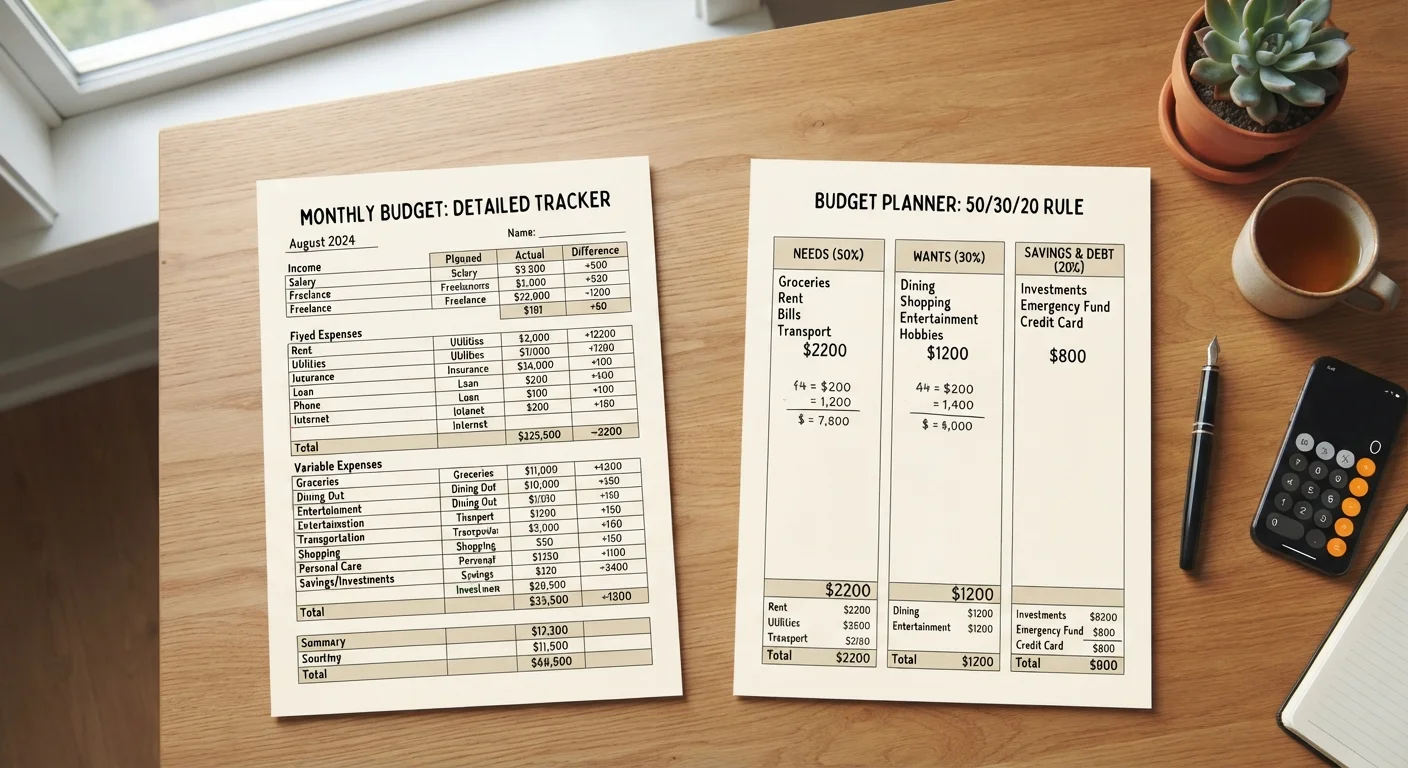
For those weighing different structural approaches to spending plans, it's worth comparing how envelope budgeting stacks up against other methods. Zero-based budgeting and the 50/30/20 rule each take a different angle on the same underlying challenge of spending less than you earn.
Does a Digital Version Hold Up?
Many people now use apps or spreadsheets that replicate envelope logic digitally - assigning virtual amounts to spending categories and tracking transactions against those limits. This removes the need for cash withdrawals and works naturally with card-based spending.
How Digital Envelope Apps Typically Work
Apps that use envelope-style budgeting link to your bank account and let you create spending categories with preset limits. As transactions clear, the app deducts amounts from the corresponding virtual envelope. Some apps flag you when a category is running low, which provides a digital version of the physical cue you'd get from a thinning stack of bills. The core logic is identical to paper envelopes - only the medium changes.
The honest trade-off is that digital envelopes soften the physical friction that makes cash envelopes so effective. Tapping a screen to move funds between categories takes a second; peeling bills from an envelope feels immediate and final. That said, a digital system is far more practical for most households today, and consistency with any system beats perfection with none.
If you're deciding between a paper-based approach, a spreadsheet, or an app, the comparison of paper budgeting vs. spreadsheets vs. apps can help clarify what actually fits your habits. Whichever format you choose, pair it with a regular review - the monthly budget reset checklist is a practical starting point for that habit.
This article is for general informational and educational purposes only and does not constitute personalized financial advice. For guidance tailored to your specific situation, consult a qualified financial professional.