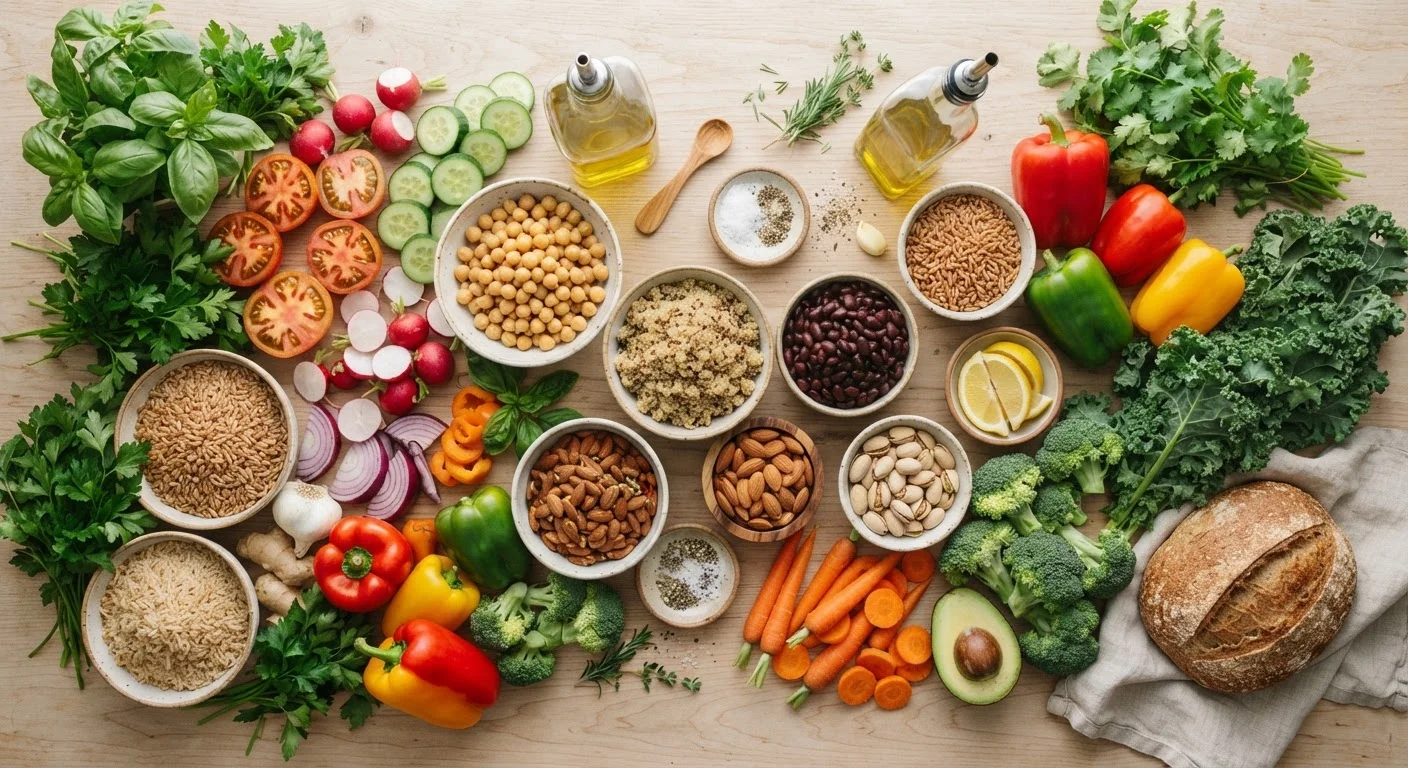

What 'Balanced' Actually Means
The phrase "balanced diet" appears so frequently that it risks losing meaning. In practice, balance refers to consistently providing the body with adequate amounts of macronutrients - carbohydrates, protein, and fat - along with essential micronutrients like vitamins and minerals, without routinely overconsuming energy or any single food category.
The most widely cited framework in U.S. public health guidance, USDA's MyPlate, visualizes this as a divided plate: roughly half filled with vegetables and fruit, one quarter with grains (preferably whole), and one quarter with protein foods, accompanied by a serving of dairy or a fortified alternative. This isn't a rigid prescription - it's a proportional model that applies across a wide range of dietary patterns and cultural food traditions.
Understanding why these proportions are recommended is more useful than memorizing rules. Vegetables and fruits supply fiber, antioxidants, and a broad spectrum of micronutrients at relatively low caloric density. Grains provide sustained energy. Protein supports tissue repair, immune function, and satiety. Healthy fats - from sources like nuts, seeds, avocado, and olive oil - support cell function and fat-soluble vitamin absorption. For a closer look at how well-studied dietary patterns use these principles, see eating patterns worth knowing about.
Best Practices for Building Your Plate
The following evidence-informed practices translate nutritional principles into everyday decisions. They are general guidelines, not personal medical prescriptions - individual needs vary based on age, activity level, health status, and other factors. Always consult a qualified healthcare professional or registered dietitian for guidance tailored to your circumstances.
Anchor every meal around non-starchy vegetables
Non-starchy vegetables - leafy greens, cruciferous vegetables, peppers, and similar foods - deliver fiber, vitamins, and phytonutrients with relatively few calories. Consistently prioritizing them helps displace lower-nutrient options naturally. A plate that leads with vegetables tends to be better balanced across all other categories.
Choose whole grains over refined grains most of the time
Whole grains retain the bran and germ, preserving fiber, B vitamins, and minerals that are stripped during refining. Higher fiber intake is associated with improved digestive health, better blood glucose regulation, and greater satiety. Refined grains are not harmful in moderation, but shouldn't dominate the plate.
Vary your protein sources across the week
Different protein sources carry different nutritional profiles. Plant-based proteins (legumes, tofu, tempeh) bring fiber and phytonutrients; fatty fish provides omega-3 fatty acids; poultry and eggs are lean and versatile. Rotating sources helps cover a wider range of amino acids and micronutrients, and reduces reliance on any single food.
Include healthy fats rather than avoiding fat entirely
Dietary fat is essential for absorbing fat-soluble vitamins (A, D, E, K), supporting brain health, and producing hormones. The key distinction is fat quality: unsaturated fats from plant and marine sources are associated with better cardiovascular outcomes than high intakes of saturated or trans fats. Eliminating fat indiscriminately creates gaps. For broader context, see the risks of removing entire food groups.
Read nutrition labels to understand what you're actually eating
Packaged foods can appear healthy based on marketing language while containing added sugars, excess sodium, or refined ingredients. Checking the nutrition facts panel - specifically serving size, added sugars, sodium, and fiber - provides an accurate picture. This skill pays dividends across every food category.
Practical Patterns That Stick
Nutritional knowledge is only useful when it connects to real behavior. Research on dietary adherence consistently shows that structure - not perfection - predicts long-term success. Eating at regular intervals, planning meals in advance, and keeping a variety of whole foods accessible at home are among the most reliably effective strategies.
9 in 10
Americans fall short of vegetable intake recommendations
According to CDC analysis of national dietary data, the vast majority of U.S. adults do not meet federal vegetable consumption guidelines.
~25%
Of daily calories come from ultra-processed foods in average U.S. diet
Research published in nutrition epidemiology journals has consistently found that ultra-processed foods constitute a substantial share of total energy intake among U.S. adults.
Paying attention to hunger and fullness cues is equally important. Eating slowly and without distraction allows the body's satiety signals - regulated by hormones including leptin and ghrelin - to communicate effectively. Understanding these signals can reduce overeating without requiring calorie counting.
It's also worth pairing good nutrition with regular physical activity. The two are complementary pillars of health, each reinforcing the benefits of the other. Public health activity guidelines for adults offer a practical benchmark for movement alongside dietary habits.
This article is for general informational and educational purposes only and is not a substitute for professional medical or nutritional advice. Speak with a qualified healthcare provider or registered dietitian before making significant changes to your diet.