
The Hormonal Architecture of Hunger
Hunger isn't a vague sensation - it's the result of a precisely orchestrated hormonal process. The stomach and intestines act as a continuous reporting system, sending chemical messages to the brain that regulate when and how much you eat.
Ghrelin, often called the "hunger hormone," is produced mainly in the stomach and rises in the hours between meals. As ghrelin levels climb, signals reach the hypothalamus - the brain region that governs appetite - prompting the familiar urge to eat. Once food is consumed, ghrelin levels fall relatively quickly.
On the other side of the equation, the gut releases hormones including peptide YY (PYY) and glucagon-like peptide-1 (GLP-1) in response to food in the digestive tract. These act as satiety signals, slowing digestion and communicating fullness to the brain. Leptin, produced by fat tissue, works over a longer timeframe - reflecting overall energy stores rather than moment-to-moment meal status.
Hunger Signals Can Be Disrupted
Several factors can interfere with normal hunger and satiety signaling, including chronic sleep deprivation, high stress levels, certain medications, and some medical conditions. If you notice persistent difficulty recognizing hunger or fullness cues, or experience significant unintended changes in appetite, speak with a healthcare professional rather than attempting to self-manage through dietary changes alone.
Understanding these mechanisms helps explain why certain eating patterns feel more or less satisfying, a theme explored further in our guide to well-studied dietary patterns.
Why Eating Speed and Food Composition Matter
One of the most practically important facts about satiety is the timing gap: it takes approximately 15 to 20 minutes after you begin eating for fullness hormones to register in the brain. Eating quickly - a common pattern in busy daily life - means many people consume significantly more food than their body actually needs before the signal arrives.
What you eat matters just as much as how fast. Foods rich in protein and dietary fiber tend to prolong satiety more effectively than foods high in refined carbohydrates or added sugars. Protein stimulates greater GLP-1 and PYY release, while fiber slows the rate at which food leaves the stomach, extending the feeling of fullness. Fat also contributes to satiety, though through somewhat different mechanisms and over a longer time course.
Build Meals That Work With Your Signals
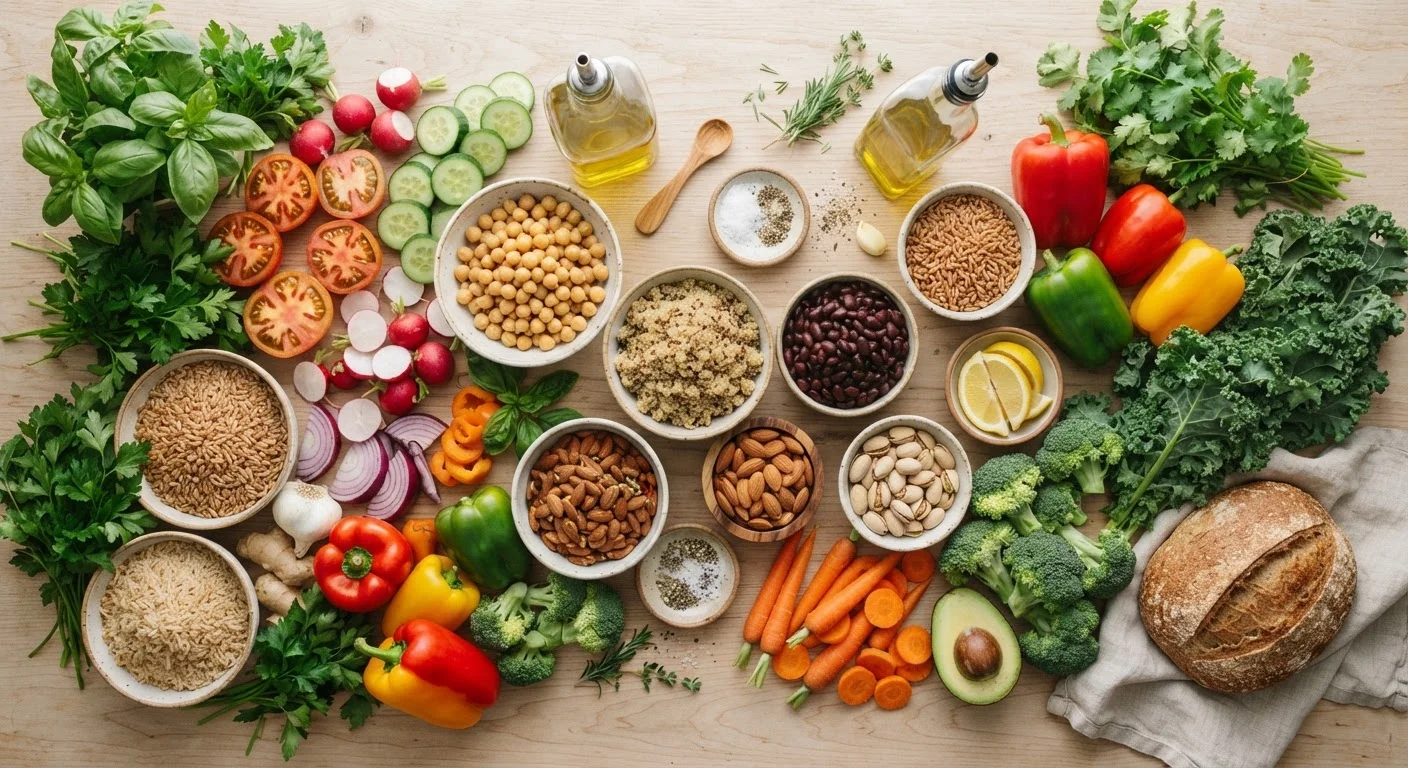
Incorporating adequate protein, fiber-rich vegetables, and whole grains into your meals doesn't just support nutrition - it directly influences how long you stay full. These food choices work with your body's hormonal signaling rather than against it. Small, consistent adjustments tend to be more sustainable than dramatic dietary overhauls.
For a practical look at how to construct meals that support these signals, see our article on building a balanced plate.
15-20 min
Time for fullness signals to reach the brain after eating
Widely cited in behavioral nutrition research as the key window during which eating pace significantly influences total intake.
~30%
Greater food intake linked to distracted eating
A systematic review published in the American Journal of Clinical Nutrition found distracted eating was associated with meaningfully higher immediate food consumption.
2-3x
Satiety advantage of high-protein vs. high-carb meals
Multiple controlled studies have found protein to be the most satiating macronutrient per calorie, producing greater suppression of ghrelin and stronger PYY responses.
When External Cues Override Internal Signals
The body's hunger system doesn't operate in a vacuum. External cues - the sight and smell of food, the time of day, social settings, stress, and emotional states - can all trigger eating that has little to do with physical need. Researchers use the term hedonic hunger to describe eating driven by pleasure or habit rather than caloric requirement.
Environmental factors are particularly potent. Studies in behavioral nutrition have found that portion sizes, plate dimensions, lighting, and even background noise influence how much people eat, often without their awareness. This doesn't reflect a lack of self-control; it reflects how deeply eating behavior is shaped by context.
“Hunger is not the enemy - it's information. The goal is to learn to read that information accurately, rather than ignore it or override it with external rules.”
— Evelyn Tribole, Registered Dietitian Nutritionist and co-developer of Intuitive Eating
Distinguishing physical hunger - which builds gradually, feels general, and can be satisfied by many foods - from emotional or environmental hunger - which arises suddenly and often targets specific foods - is a skill that develops with attention over time. It is not about rigid restriction; it's about awareness.
If you're also interested in how emotional triggers shape other consumption behaviors, the principles are surprisingly similar to those explored in untangling the real reasons you shop.
Practical Ways to Support Your Body's Signals
Reconnecting with physical hunger and fullness cues doesn't require a special program. A few consistent practices can help most adults become more attuned over time.
- Eat without distraction when possible. Screens and multitasking reduce awareness of fullness cues and are associated with greater food intake in research settings.
- Slow your pace. Setting utensils down between bites or pausing mid-meal gives satiety hormones time to catch up with consumption.
- Notice hunger before meals. Checking in with yourself before eating - and rating hunger on a simple scale - can help distinguish genuine need from habit or boredom.
- Prioritize protein and fiber. These nutrients support longer-lasting fullness. Understanding food composition is easier when you're comfortable reading a nutrition label accurately.
No single approach works for everyone, and individual factors - including stress, sleep quality, medications, and medical conditions - can all affect hunger regulation. If hunger cues feel persistently dysregulated, a consultation with a registered dietitian or physician is the most appropriate next step.
This article provides general health information and education only. It is not a substitute for professional medical or nutritional advice. Consult a qualified healthcare provider for guidance specific to your health situation.