Why the Grout vs. Caulk Confusion Happens
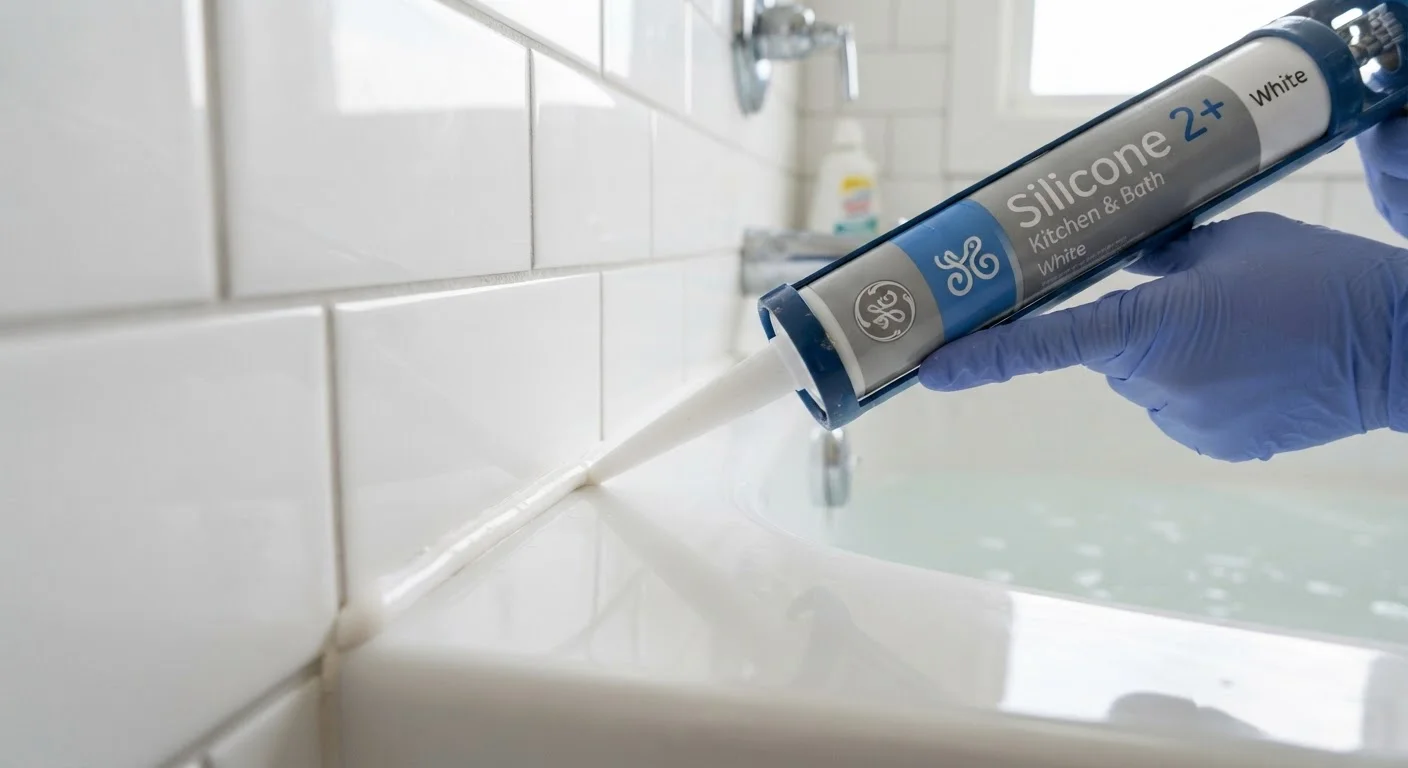
Both grout and caulk fill the gaps between tiles, and both often come in similar colors - so it's easy to see why homeowners treat them as interchangeable. They are not. Grout is a cement-based filler designed to occupy the rigid, uniform joints between tiles on a flat plane. Caulk is a flexible sealant engineered to absorb movement. Using one where the other belongs is a setup for cracking, water infiltration, and expensive repairs.
The distinction matters most in wet areas: showers, bathtubs, kitchen backsplashes, and anywhere tile meets a different material or changes direction. Understanding the underlying purpose of each product makes it much easier to apply them correctly - and to recognize when a previous installation has gone wrong.
Myth
You can use grout in corners and along the tub edge - it's all just filler.
Fact
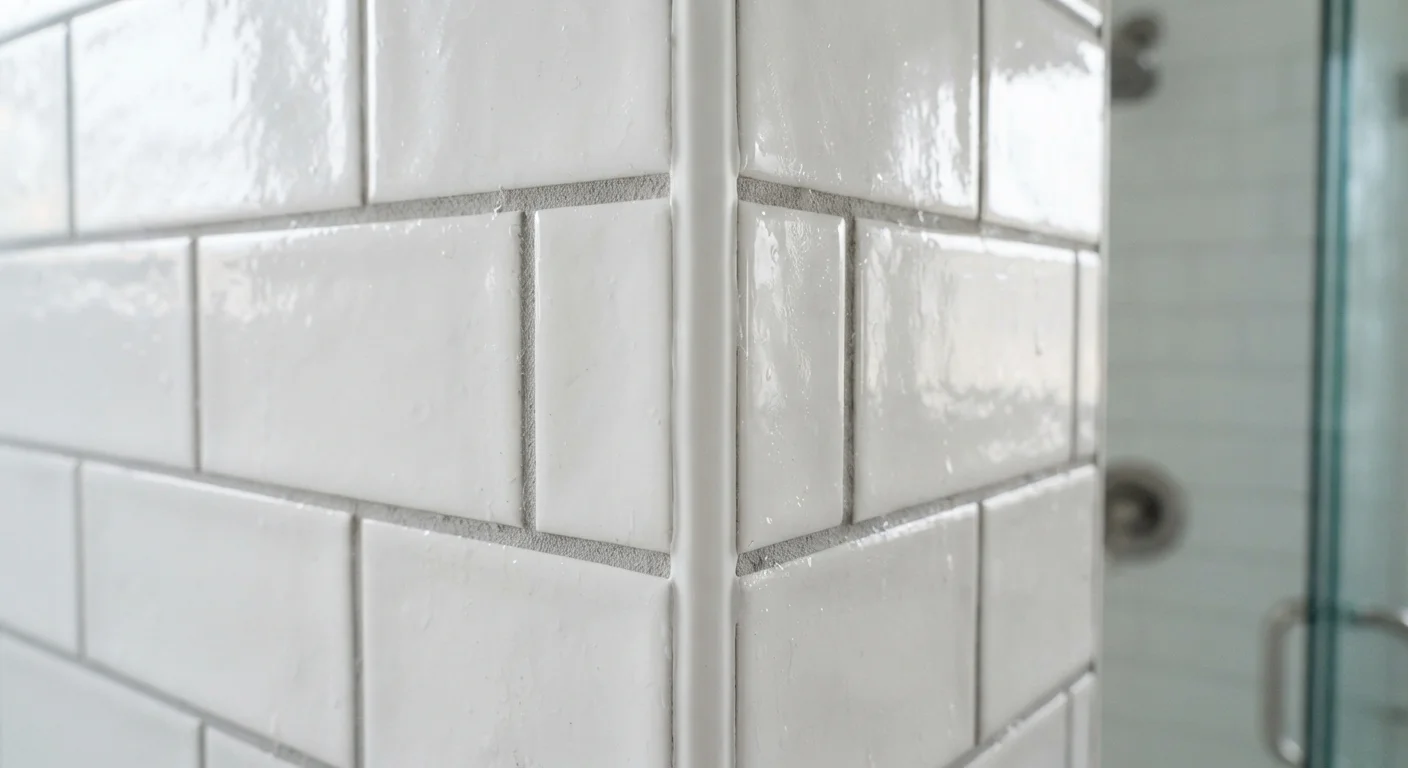
Corners and change-of-plane joints must be caulked. Grout is rigid and will crack when those surfaces shift slightly.
Tile installations are not perfectly static. Temperature swings, humidity, and building settlement cause slight movement between adjacent surfaces. At a 90-degree corner, two planes move independently. Grout, being cement-based, has no elasticity - it simply fractures. Once cracked, that joint allows water to reach the substrate, leading to mold growth and eventual tile failure. Caulk is specifically formulated with silicone or latex compounds that allow it to compress and expand without losing adhesion.
Myth
If grout looks fine, there's no need to caulk the shower corner.
Fact
Grout in a corner may look intact on the surface while being cracked or separated underneath, allowing hidden water damage.
Surface appearance is not a reliable indicator of joint integrity. A hairline crack at the grout surface, or a gap where grout has pulled away from the tile edge, can channel water behind the wall where it stays trapped and causes substrate decay. By the time visible damage appears - staining, soft drywall, or lifting tiles - the underlying problem is often already significant. Caulking corners proactively is far less disruptive than addressing water damage after the fact.
Myth
Caulk over old grout is a perfectly fine long-term fix.
Fact
Caulking over cracked grout without removing the old material creates a weak bond and traps moisture underneath.
Caulk bonds to clean, solid surfaces. Old grout that is cracked, powdery, or contaminated with mold gives caulk very little to adhere to. The new caulk may appear to seal the joint initially but will peel away sooner - sometimes within months - because the substrate beneath it is compromised. The correct approach is to remove the damaged grout completely using a grout saw or oscillating tool, clean the joint thoroughly, allow it to dry fully, and then apply fresh caulk to a sound surface.
Myth
Caulk and grout colors can never be matched, so corners always look mismatched.
Fact
Sanded caulk products are widely available in colors formulated to match standard grout shades, including custom-tinted options.
Many manufacturers produce caulk lines in colors that correspond directly to their grout product lines. For common grout shades - white, almond, gray, tan - matching caulk is generally straightforward. For specialty or custom-colored grout, some manufacturers offer tinting services. A well-matched caulk joint at a corner is nearly invisible once cured, especially after it has been tooled smooth and wiped clean during application.
Myth
New caulk can be applied immediately before using the shower.
Fact
Most caulk products require a full cure period of 24 to 48 hours before exposure to water - cutting this short causes failure.
Caulk cures through a chemical process that requires time and adequate ventilation. Exposing uncured caulk to water - even splashing - can disrupt that process, leaving the surface tacky, preventing full adhesion, and allowing mold to embed itself in the material before it has hardened. Always check the manufacturer's instructions for the specific product being used, as cure times vary. Ventilating the space and maintaining moderate temperature during curing helps achieve the best result.
Where Each Material Belongs - and Why It Matters
A useful rule of thumb from tile industry standards: any joint where two surfaces meet at an angle, or where tile meets a dissimilar material, should be caulked. This includes floor-to-wall corners in showers, the joint between a tub ledge and wall tile, transitions from tile to wood or drywall, and the perimeter of a tile floor where it meets baseboards.
Flat, field joints between tiles on the same plane - such as the grid of lines across a shower wall - should be grouted. These joints don't flex because both tiles and the substrate behind them move as one unit. Corner joints, by contrast, sit at the intersection of two planes that expand and contract independently with temperature and humidity changes. Grout, which is rigid, cracks under that stress. Caulk flexes with it.
Never Skip Removing Old Grout from Corners
Applying caulk directly over existing grout in a corner joint - even if the grout looks intact - typically leads to early caulk failure. Old grout in a movement joint has likely already experienced micro-cracking, and it provides a poor bonding surface. Remove grout from corners with a grout saw or oscillating multi-tool before caulking. If you're uncertain about the depth or condition of the existing joint, consult a licensed tile contractor.
For a deeper look at how caulk application technique affects longevity, see our guide to common bathtub caulking mistakes.
~35%
Tile failures linked to improper joint treatment
Industry estimates from tile installation professionals suggest that a significant share of premature tile and grout failures trace back to incorrect use of rigid grout in flexible movement joints.
24-48 hrs
Typical caulk cure time before water exposure
Most latex and silicone caulk products specify a minimum of 24 to 48 hours of cure time in a ventilated space before the sealed area should contact water.