The Psychology Behind Spending Shifts
Economic uncertainty doesn't just change what people can afford - it changes how they think about spending. When financial risk feels elevated, behavioral economists have documented a reliable intensification of loss aversion: the psychological tendency to weigh potential losses more heavily than equivalent gains. In practical terms, this means consumers become more reluctant to part with money even when their financial situation hasn't materially worsened.
This shift in mindset leads to a characteristic pattern: purchases are increasingly evaluated against a mental hierarchy of necessity. Spending that feels obligatory - rent, utilities, groceries, healthcare - is protected. Spending that feels optional is scrutinized and often deferred. Understanding this mental framework helps explain why spending changes during uncertain periods follow predictable patterns across different demographic groups.
Emotional and psychological triggers play a surprisingly large role in these decisions. Anxiety about the future doesn't necessarily lead to purely rational, spreadsheet-driven choices - it interacts with emotions in complex ways.
Uncertainty vs. Actual Financial Hardship
It's important to distinguish between economic uncertainty (a perception of elevated risk, even without current financial hardship) and actual income loss or financial distress. Both drive spending changes, but uncertainty often triggers behavioral shifts well before any real income decline occurs. This means consumer spending can contract in response to economic news or sentiment - not just to verifiable household financial changes.
Where Spending Actually Goes: The Trade-Down Effect
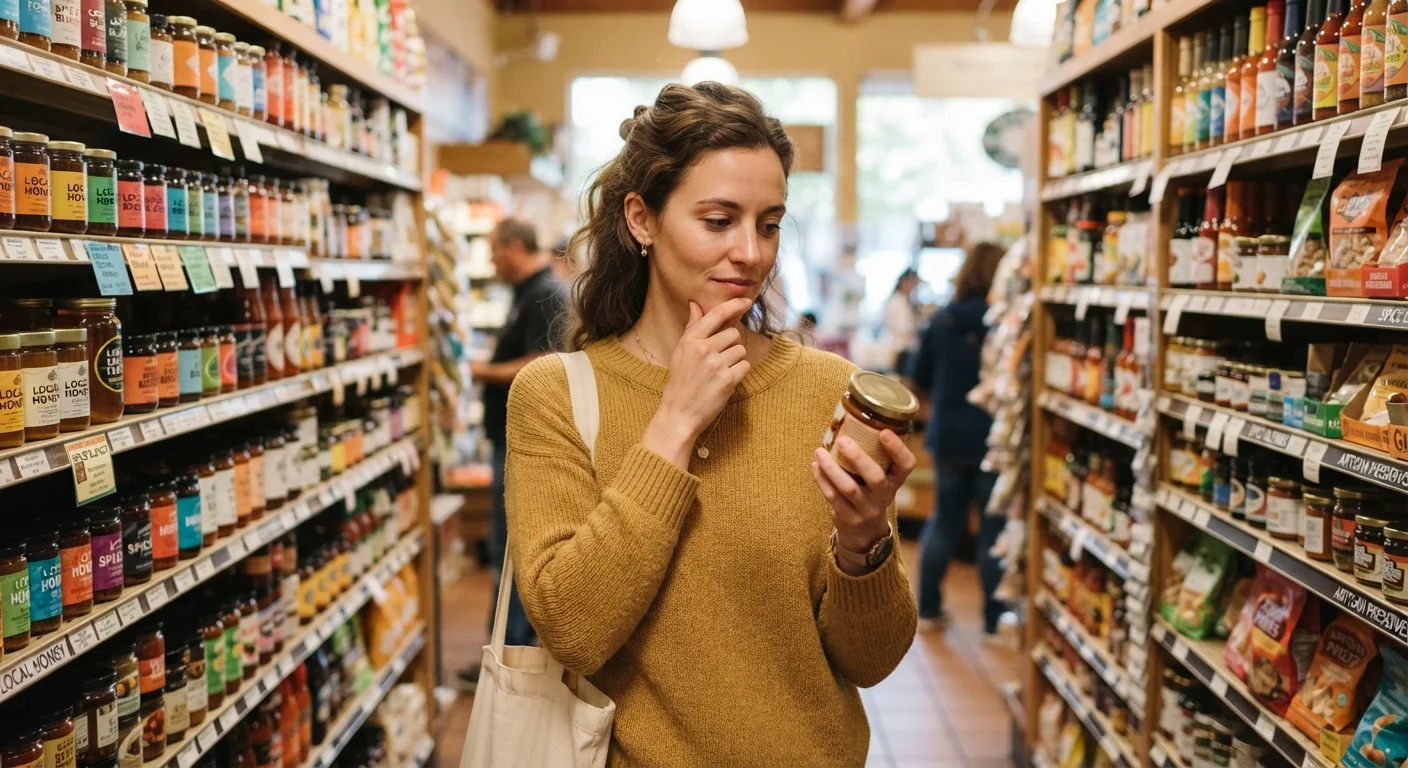
One of the most consistently documented responses to economic uncertainty is trading down - switching to a lower-cost option within the same product category rather than eliminating the purchase entirely. A household might stop visiting full-service restaurants but continue eating out at fast-casual chains. A shopper might replace a national-brand cereal with a store-brand equivalent but keep buying cereal.
This behavior has important implications for both consumers and market observers. It means that spending volume in a category may remain relatively stable while revenue and margins contract for premium producers. Private-label products - sold under a retailer's own brand rather than a manufacturer's name - reliably gain market share during periods of financial stress, and research suggests a meaningful portion of those gains persist even after economic conditions improve.
~25%
US grocery share held by private-label products
Private-label grocery products have steadily grown their share of US grocery sales, with that share typically accelerating during inflationary periods, according to industry trade data from the Food Marketing Institute and similar sources.
72%
Consumers who traded down during inflation cycles
McKinsey consumer surveys conducted during inflationary periods found that roughly 70-75% of US consumers reported switching to lower-priced alternatives in at least one product category.
60%+
Share who kept store-brand after switching
Research examining post-recession consumer behavior suggests a majority of households that switched to store brands during economic stress continued purchasing them afterward, indicating lasting behavioral change.
The trade-down effect also illustrates that consumer behavior under uncertainty is less about abandoning categories and more about repricing expectations within them. This connects to broader long-term shifts in how Americans shop, where value-consciousness has become an increasingly structural feature of purchasing decisions.
The Counterintuitive Patterns: When Spending Rises
Not all spending contracts during uncertainty. Some categories see a reliable uptick, and understanding why reveals a great deal about human psychology under stress.
The so-called lipstick effect - the tendency to maintain small, affordable luxuries even while cutting larger discretionary purchases - has been observed across multiple economic downturns. Premium chocolate, specialty coffee, cosmetics, and streaming entertainment often hold up or even grow during periods when household budgets feel squeezed elsewhere. These purchases serve a psychological function: they maintain a sense of normalcy and self-reward without the financial exposure of larger commitments.
Home-related spending also frequently increases when uncertainty keeps people closer to home. Spending on home improvement, cooking supplies, and home entertainment can rise as households substitute home-based activities for more expensive outside experiences. The emotional drivers behind purchase decisions become especially visible in these patterns - what looks irrational on a budget spreadsheet may be serving a real psychological need.
Separate Reactive Cuts from Strategic Ones
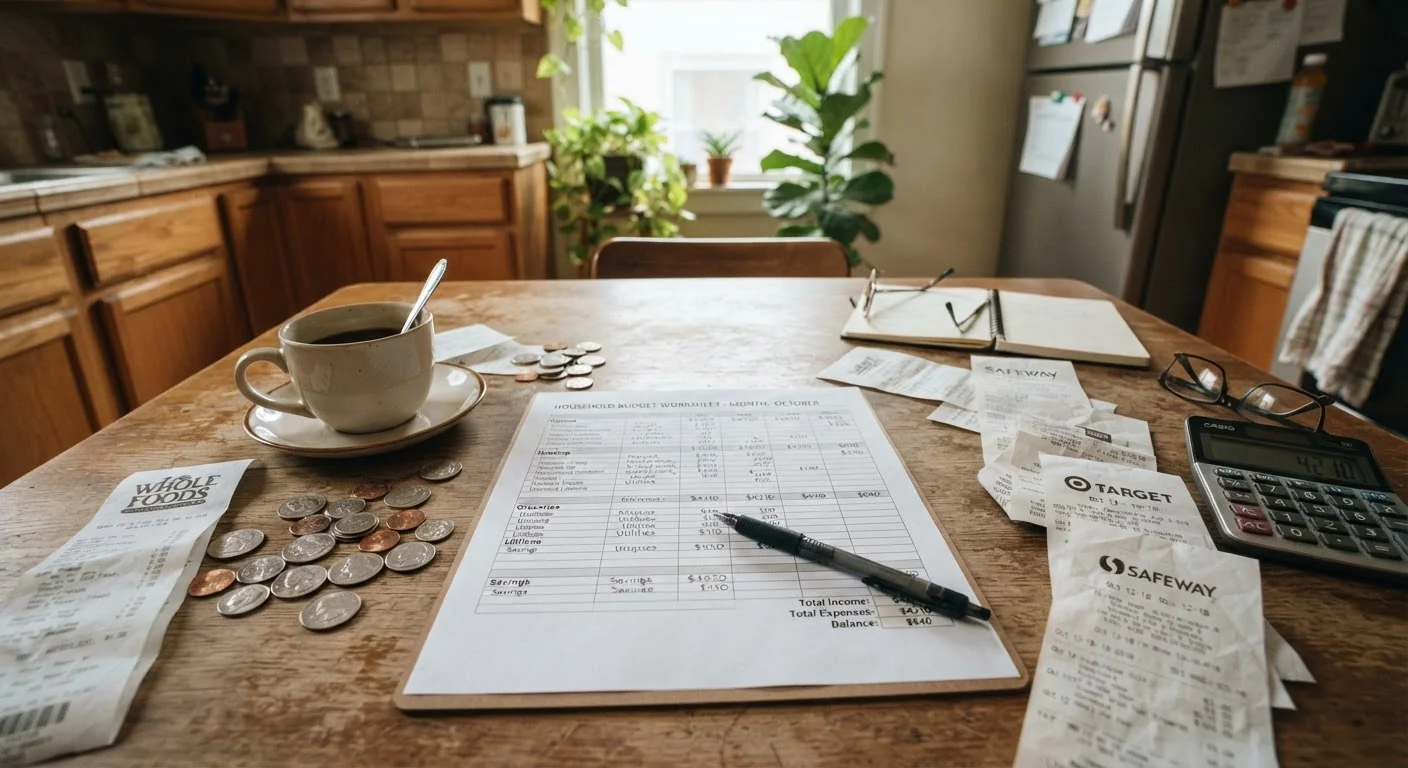
When financial anxiety rises, it's worth pausing to evaluate whether a spending change reflects a genuine budget need or an anxiety-driven impulse to cut. Some reactive cuts - like reducing contributions to an emergency fund - can actually increase financial vulnerability. Reviewing spending decisions against your actual income and obligations, rather than your stress level, tends to produce more durable financial decisions. The structure of how you approach shopping can also influence how well you hold to intentional decisions under pressure.
How Income Level and Household Composition Shape the Response
Spending responses to economic uncertainty are not uniform. Income level, household size, employment type, and existing debt load all influence how dramatically - and in which categories - households adjust their behavior.
Lower-income households typically have less financial buffer, meaning that spending adjustments may reach into essential categories: food quality, healthcare visits deferred, utility costs managed through behavioral changes. Higher-income households more commonly absorb uncertainty by reducing investment-oriented discretionary spending - home renovations, financial product purchases, discretionary travel - while day-to-day consumption patterns remain relatively intact.
For anyone working to understand their own spending habits during uncertain times, resources on budgeting basics and smart shopping habits can offer practical frameworks for separating reactive anxiety-driven decisions from genuinely strategic ones. The broader picture of how values and priorities interact with spending is also explored in values-driven shopping trends.