What Is Recommerce?
Recommerce (short for reverse commerce) refers to the buying and selling of previously owned goods - ranging from clothing and electronics to furniture and collectibles. Unlike traditional retail, recommerce flows in a circular model: products move from original owner back into the market rather than ending their life in a landfill or sitting unused in storage.
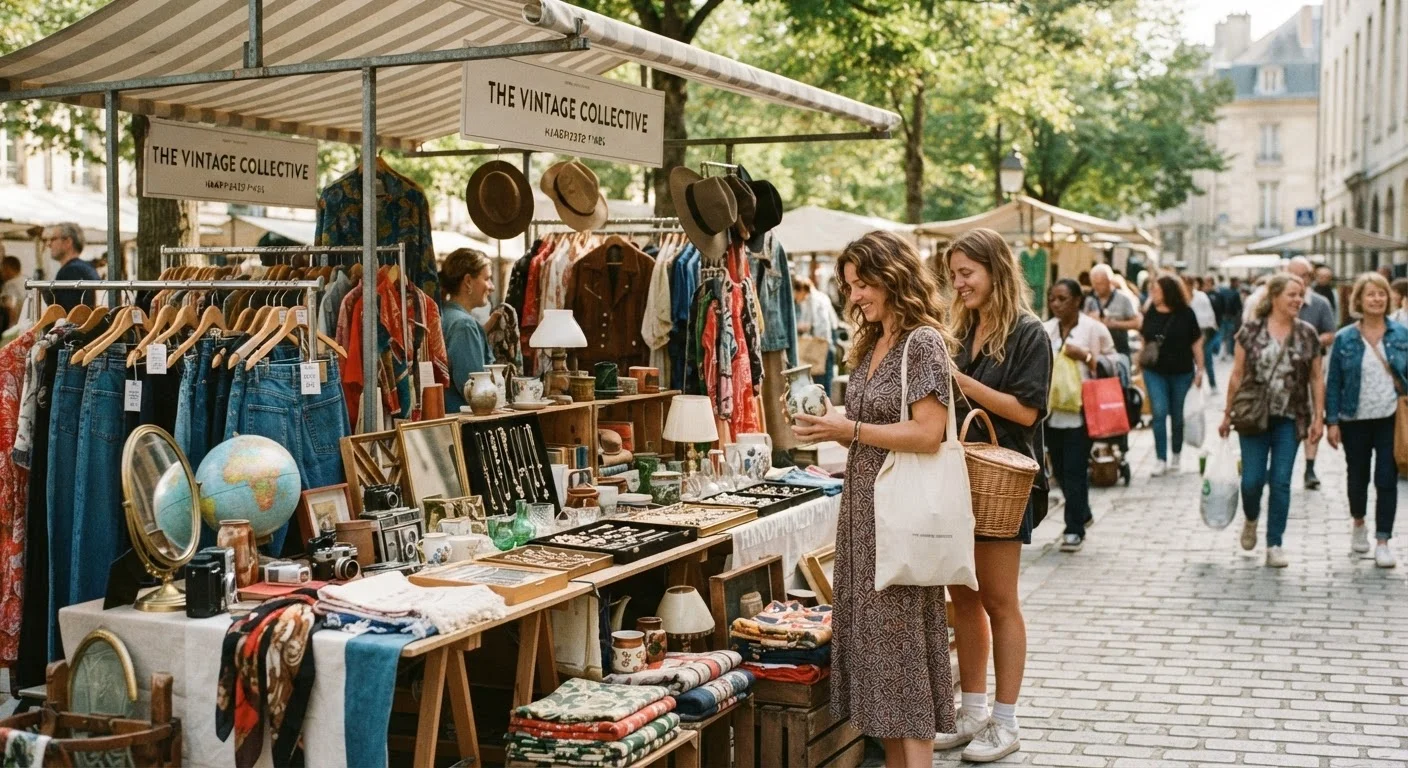
The concept is not new. Pawnshops, garage sales, and thrift stores have operated on this principle for generations. What has changed dramatically is the scale, speed, and social legitimacy of the practice. Today, resale extends far beyond donation-bin drops into a sophisticated ecosystem of peer-to-peer apps, branded resale programs, and authenticated luxury marketplaces.
For a broader understanding of how consumer values are evolving alongside trends like recommerce, see our guide to values-driven shopping.
The Scale of the Resale Market
The resale market has moved from niche to mainstream at a pace few analysts anticipated. Industry research from ThredUp's annual Resale Reports has consistently shown double-digit annual growth in the secondhand apparel category alone, with the overall U.S. secondhand market projected to reach significant scale within this decade. Globally, recommerce spans categories from consumer electronics to luxury goods, automotive parts, and sporting equipment.
$47B+
U.S. secondhand apparel market size
ThredUp's 2023 Resale Report estimated the U.S. secondhand apparel market exceeded $47 billion, with continued growth projected.
3x
Resale growing faster than traditional retail
Industry analyses have consistently found the secondhand market growing at roughly three times the pace of conventional apparel retail.
52%
Consumers who bought secondhand in 2023
According to ThredUp's 2023 Resale Report, more than half of U.S. consumers reported purchasing a secondhand item in that year.
Gen Z & Millennials
Generations most likely to buy secondhand
Younger consumer cohorts disproportionately drive resale adoption, with many citing both cost savings and sustainability as motivations.
What makes these figures notable is that resale is growing faster than conventional retail across multiple categories - not merely substituting for it in a zero-sum way, but expanding the total volume of transactions involving physical goods.
Economic Drivers Pushing Consumers Toward Secondhand
Macroeconomic conditions play a measurable role in resale adoption. Periods of inflation and wage stagnation tend to drive consumers toward lower-cost purchasing channels, and secondhand goods frequently offer comparable utility at a fraction of the original retail price. This is particularly evident in durable categories like electronics, appliances, and furniture, where new prices have risen substantially.
Beyond price sensitivity, there is a growing consumer awareness of total cost of ownership. Buyers - particularly those researching major purchases - now factor in resale value as part of the acquisition decision, treating goods as assets rather than consumables.
When buying secondhand electronics or appliances, prioritize platforms that offer a documented return window and, where available, some form of tested-and-certified condition labeling - vague condition descriptions are the most common source of buyer disappointment.
Condition standards in the secondhand market are not universal, and the gap between 'good' on one platform and 'good' on another can be significant, especially for items with wear-sensitive components.
Before selling on a resale platform, check the commission structure and any required authentication or shipping fees - the final payout can differ substantially from the listed sale price.
Platform fees in popular resale categories can range from 10% to over 20% of the sale price, which affects whether a given item is worth the effort to list versus donate or recycle.
The economics of resale also benefit sellers. Platforms enabling peer-to-peer transactions have turned decluttering into an income stream for millions of households. This two-sided economic benefit - savings for buyers, income for sellers - reinforces the market's self-sustaining growth.
Cultural and Values-Based Shifts
Economic motivation alone does not fully explain the recommerce boom. Cultural attitudes toward secondhand goods have shifted substantially, particularly among younger consumers. A purchase once associated with financial hardship has been reframed as an environmentally and socially conscious choice.
Sustainability concerns are a primary driver. The fashion and electronics industries are among the most resource-intensive sectors globally, and growing public awareness of waste and environmental impact has made the circular economy - extending a product's usable life - an appealing alternative to perpetual new consumption. This aligns closely with the broader values-driven shopping movement reshaping purchasing behavior across demographics.
Greenwashing in Resale Marketing
Not every claim of sustainability in the recommerce space holds up to scrutiny. Some branded 'take-back' programs resell only a fraction of returned items and send the rest to landfill. Before assuming a resale or trade-in program delivers environmental benefits, look for transparent reporting on what percentage of returned goods are actually resold or recycled.
Additionally, thrifting and resale have developed genuine cultural cachet, particularly in fashion. Vintage and pre-owned items are increasingly viewed as unique, identity-expressive purchases rather than compromise choices. This destigmatization has broad implications for how brands and retailers position themselves going forward.
How Digital Platforms Transformed the Resale Experience
The infrastructure enabling modern recommerce is largely digital. Mobile-first peer-to-peer platforms, authenticated luxury marketplaces, and branded trade-in programs have collectively dismantled the friction that once made resale inconvenient for most consumers.
Key friction points that digital platforms have reduced include: geographic limitations (a seller in Ohio can reach a buyer in California), trust barriers (authentication services and buyer protection programs address counterfeit risks), and time costs (automated listing tools, shipping labels, and payment processing streamline the transaction).
This digitization has created measurable behavioral changes. Consumers browse resale platforms with the same expectations of speed and interface quality they apply to traditional e-commerce - a stark contrast to the uncertainty of older secondhand channels. For a broader look at how the shopping journey itself has changed, see how social and traditional e-commerce compare.
Challenges and Limitations of the Resale Market
Despite its growth, the resale market carries real complexities consumers should understand before participating.
- Authenticity risk: Counterfeit goods remain a concern, especially in luxury categories. Authentication services reduce but do not eliminate this risk.
- Quality inconsistency: Unlike new retail, condition varies significantly item to item. Detailed listings and return policies matter, but buyers still bear more uncertainty than in traditional channels.
- Platform fees and trust variance: Commission structures differ widely across platforms, and buyer and seller protections are not standardized. Reading the terms of any platform before transacting is prudent.
- Environmental claims require scrutiny: While recommerce broadly reduces new production demand, the net environmental benefit depends on shipping distances, packaging, and how often items are resold versus ultimately discarded.
Platform Terms Vary Significantly
Buyer and seller protections on resale platforms are not standardized across the industry. Some platforms offer full buyer guarantees and authentication; others operate on a largely as-is basis with limited recourse. Reading the policies of any platform before your first transaction is an important step - particularly for high-value items.
These limitations don't negate the value of the secondhand market, but they do underscore the importance of informed participation. The glossary of modern consumer trend terms can help readers contextualize terminology they encounter across platforms.
What the Recommerce Boom Means for Consumers
The rise of recommerce is not an isolated retail trend - it reflects deeper structural shifts in how Americans relate to ownership, value, and consumption. Understanding these forces helps consumers navigate an increasingly complex marketplace with greater intentionality.
Practically, it means the choice between new and secondhand is now a legitimate, well-supported decision rather than a compromise. It also means that resale value is an increasingly relevant factor when purchasing goods in the first place - a dynamic that rewards considered buying over impulsive acquisition. In contrast, the pull of convenience-driven purchasing is documented in the research on impulse buying behavior.
For consumers seeking to build smarter shopping habits, the secondhand market offers both financial and environmental advantages - provided buyers approach it with realistic expectations and adequate due diligence. Understanding the forces behind recommerce is the first step toward using it effectively. For a broader perspective on how structural forces are reshaping American consumer behavior, see eight long-term consumer shifts.
“The secondhand market is no longer an alternative to retail - for a growing share of consumers, it has become the default first consideration.”
— James Reinhart, Co-founder and CEO of ThredUp, in published company communications