
Why Emotion Drives More Purchases Than We Admit
Most people believe their spending decisions are largely rational. Research consistently suggests otherwise. Studies in consumer psychology have found that a significant share of unplanned purchases is driven by emotional state - excitement, stress, boredom, or the simple pleasure of acquiring something new - rather than by deliberate evaluation of need or value.
This isn't a character flaw; it's a predictable feature of how human brains weigh immediate rewards against future costs. Behavioral economists call this present bias: the tendency to overvalue what's available right now compared to what matters over time. When you encounter a product that excites you, your brain responds to that stimulus in ways that actively work against careful deliberation.
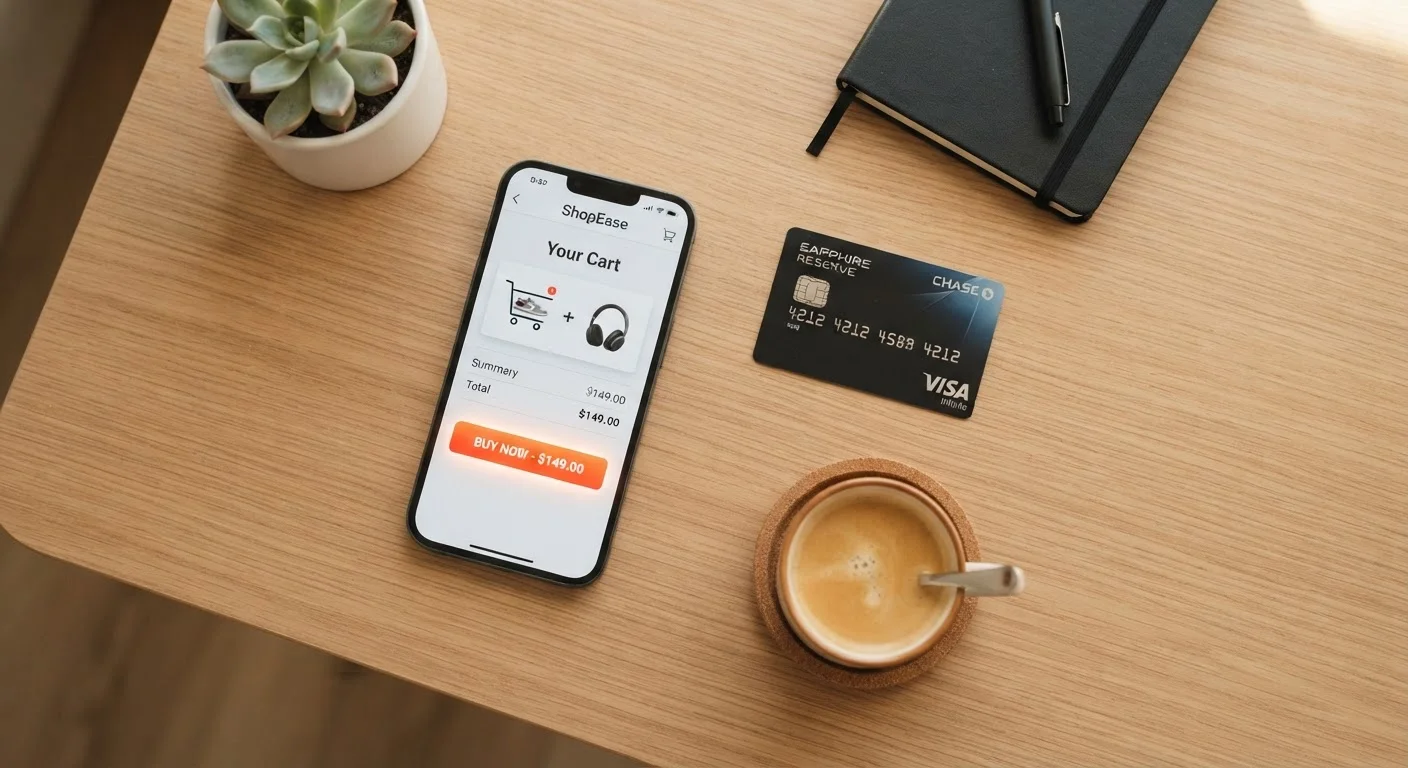
Impulse buying has only intensified as digital commerce has eliminated the friction that once existed between desire and purchase. One-click checkout, saved payment credentials, and persistent shopping carts all reduce the cognitive pause that might otherwise give second thoughts a chance to surface.
~40%
Share of purchases made on impulse
Consumer research across multiple studies consistently estimates that a significant portion of retail purchases - often cited around 40% - are unplanned at the point of entry to a store or website.
2-3 days
Typical emotional decay window for purchase desire
Behavioral psychology research on affective states suggests that the emotional intensity driving a purchasing impulse commonly diminishes substantially within 48 to 72 hours without reinforcement.
The Psychology Behind a Deliberate Pause
Inserting a waiting period works because it exploits a simple but powerful dynamic: emotional intensity around a potential purchase tends to decay over time. The research literature on affective forecasting - how people predict their future emotional states - shows that we reliably overestimate how much lasting satisfaction a new purchase will bring. A few hours or days of distance often reveals a clearer picture.
The 48-hour window specifically sits in a useful middle zone. It's long enough to allow the initial emotional spike to subside, but short enough to remain a practical habit rather than an indefinite delay. Psychologists who study self-regulation describe this kind of temporal buffer as a way of handing the decision to a calmer, less reactive version of yourself - sometimes called your 'future self.'
“The core challenge in consumer decision-making is that the person who wants to buy something and the person who will live with the consequences of that purchase are not in the same emotional state. Any strategy that bridges those two states improves decision quality.”
— Dan Ariely, Behavioral economist and author of 'Predictably Irrational'
Worth noting: the strategy pairs well with a brief self-assessment. Asking yourself a few targeted questions before any non-routine purchase - about motivation, alternatives, and true cost - can amplify the benefits of simply waiting.
When Retailers Push Back: Urgency as a Counter-Force
The cooling-off approach runs directly against the commercial interests of many retailers. Countdown timers, 'only 3 left in stock' labels, and flash sale notifications are all deliberate attempts to compress your deliberation window. These tactics are grounded in the same behavioral science - they manufacture a sense of scarcity or time pressure to trigger faster action.
Understanding this doesn't make you immune to it, but it does change how you interpret those signals. When a website tells you a deal expires in two hours, that urgency is usually a design choice, not a market reality. A discounted price doesn't automatically make something worth buying - and manufactured scarcity rarely reflects genuine supply constraints.
Treat Urgency Labels as a Prompt to Pause
When you see a countdown timer or low-stock warning, treat it as a signal to slow down rather than speed up. Ask yourself whether the scarcity is real and verifiable, or whether it's a design element intended to compress your decision window. Genuine urgency in consumer purchases is far less common than retailer messaging implies.
There are legitimate exceptions. Travel pricing, for instance, operates differently - airfare and hotel rates respond to real-time inventory and demand, meaning that waiting arbitrarily can sometimes cost more. Research into flight booking windows suggests a more nuanced approach for those categories than a simple 48-hour pause.
Applying the Principle Without Making It a Burden
A cooling-off period only works as a habit if it's sustainable. Applying it to every small purchase would be exhausting and counterproductive. The practical approach most financial educators suggest is to set a threshold - a dollar amount above which a waiting period automatically applies - and treat purchases below that threshold as routine decisions.
For items above your threshold, a saved wishlist or browser bookmark serves as a low-friction holding area. Revisiting it two days later is the moment of genuine decision. Many people report that a substantial portion of wishlist items simply lose their appeal without any conscious effort - the desire fades on its own when no further action reinforces it.
Building a short pre-purchase routine around this principle can turn an abstract idea into a concrete habit. And reviewing past purchases periodically helps calibrate your threshold over time - you start to notice patterns in what you used, what you regretted, and what surprised you.
This article is for general informational and educational purposes only. It does not constitute financial or professional advice. Readers should consider their own circumstances and, where appropriate, consult a qualified financial professional before making significant spending or financial decisions.