
Why Early Decisions Have Outsized Consequences
Building an online community feels straightforward at the start-create the space, invite some people, and let conversation take off. In practice, the choices made in those first weeks shape everything that follows: who stays, who leaves, what gets said, and what gets tolerated.
Understanding what actually makes online communities work reveals a consistent pattern: thriving digital spaces aren't accidents. They reflect deliberate choices about purpose, norms, and participation. Most of the mistakes that doom communities aren't dramatic-they're quiet omissions and well-intentioned assumptions that compound over time.
Culture Forms in the First Few Weeks
Research on group dynamics consistently shows that norms established early tend to persist, even as membership grows and shifts. If a community tolerates low-quality posts, dismissive replies, or off-topic content in its early days, those patterns become expectations. New managers should treat the founding period as a critical window for setting the culture they want-not one they'll fix later.
The Most Common Missteps-and How to Correct Them
The errors below appear across community types-Discord servers, Reddit-style forums, Facebook groups, Slack workspaces, and niche platforms alike. Each one is recoverable, but easier to prevent than to fix once patterns have set.
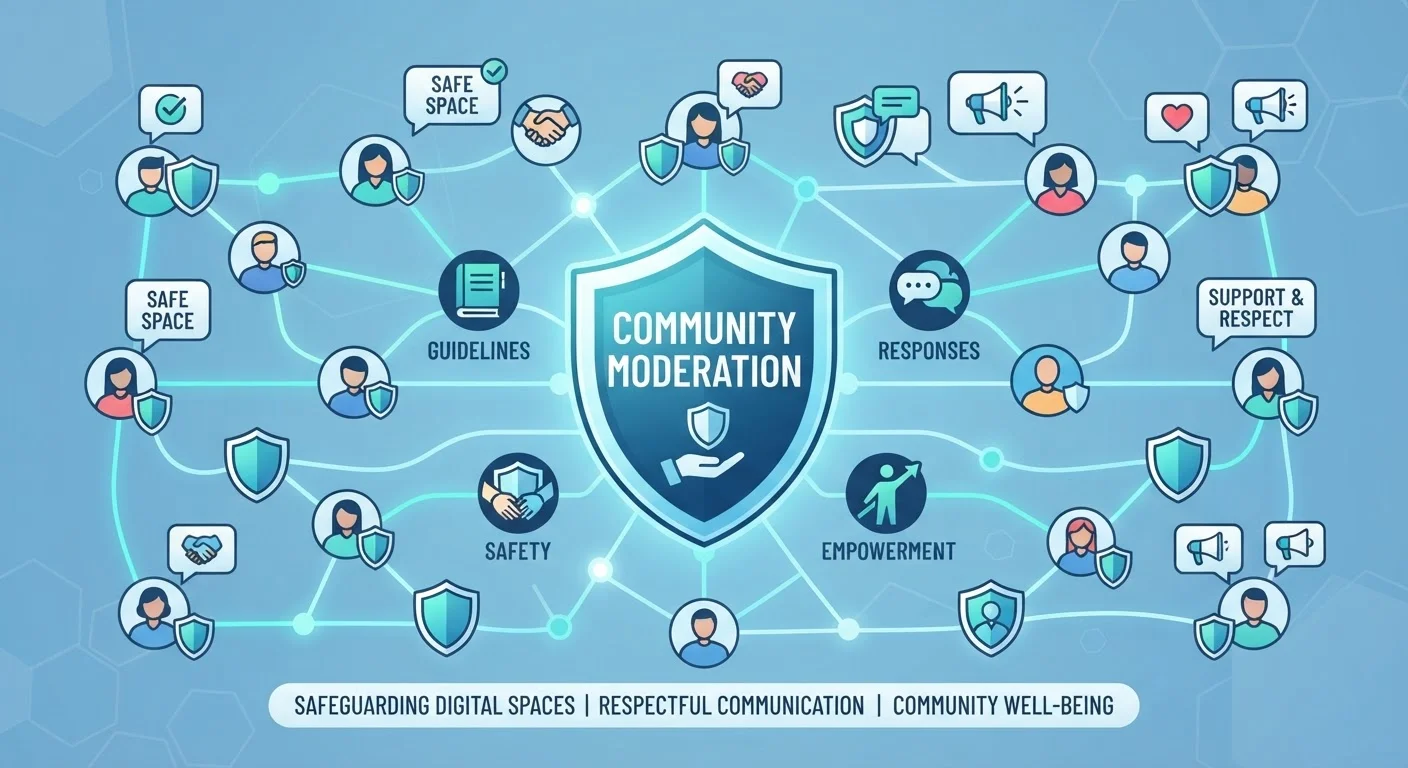
Launching without documented community guidelines.
Why it happens: New managers assume rules are obvious or worry that visible rules will feel unwelcoming or corporate.
Treating every member the same regardless of their engagement level.
Why it happens: Fairness feels like it means equal treatment, but highly active contributors and drive-by lurkers have different needs and different impacts on community health.
Applying moderation rules inconsistently across members.
Why it happens: Moderators naturally develop familiarity with certain members and unconsciously give them more latitude, especially in the early, informal stages of a community.
Broadcasting content without creating space for member-driven conversation.
Why it happens: Managers default to publishing updates, announcements, and curated content because it's controllable and measurable-but it positions the community as an audience, not a space.
Ignoring early warning signs of toxic behavior.
Why it happens: Early-stage managers often hesitate to intervene in conflict, fearing they'll seem heavy-handed or drive away members in a fragile growth phase.
68%
Communities that fail within the first year
Community management research suggests the majority of newly launched online communities do not sustain active participation past their first year, often due to unclear purpose or absent moderation.
3x
Higher retention with clear onboarding
Studies on online group behavior indicate communities with structured onboarding-clear rules, welcome messages, and orientation-tend to retain new members at significantly higher rates than those without.
Managers who avoid these pitfalls tend to share one trait: they treat community-building as an ongoing practice, not a launch-and-step-back project. Understanding why members leave communities often traces directly back to one or more of these early structural failures.
Growth Metrics Can Be Misleading
Member count and post volume are easy to track but tell an incomplete story. A community of 10,000 members with low daily activity and high turnover is functionally weaker than one with 500 highly engaged regulars. Chasing follower numbers through mass invitations or viral stunts can introduce members whose interests don't align with the space's purpose, diluting its identity and cohesion.
Building for the Long Term
A community that functions well at 50 members requires deliberate adaptation to function well at 5,000. Norms that were enforced informally through shared familiarity need to become documented policies. Conversations that happened organically may need structured formats as volume increases.
The members who join a community early are especially influential-they model behavior for everyone who arrives later. How newer members read and adapt to community culture depends heavily on what those early patterns signal. Managers who invest in getting that foundation right are building something more durable than a follower count.