
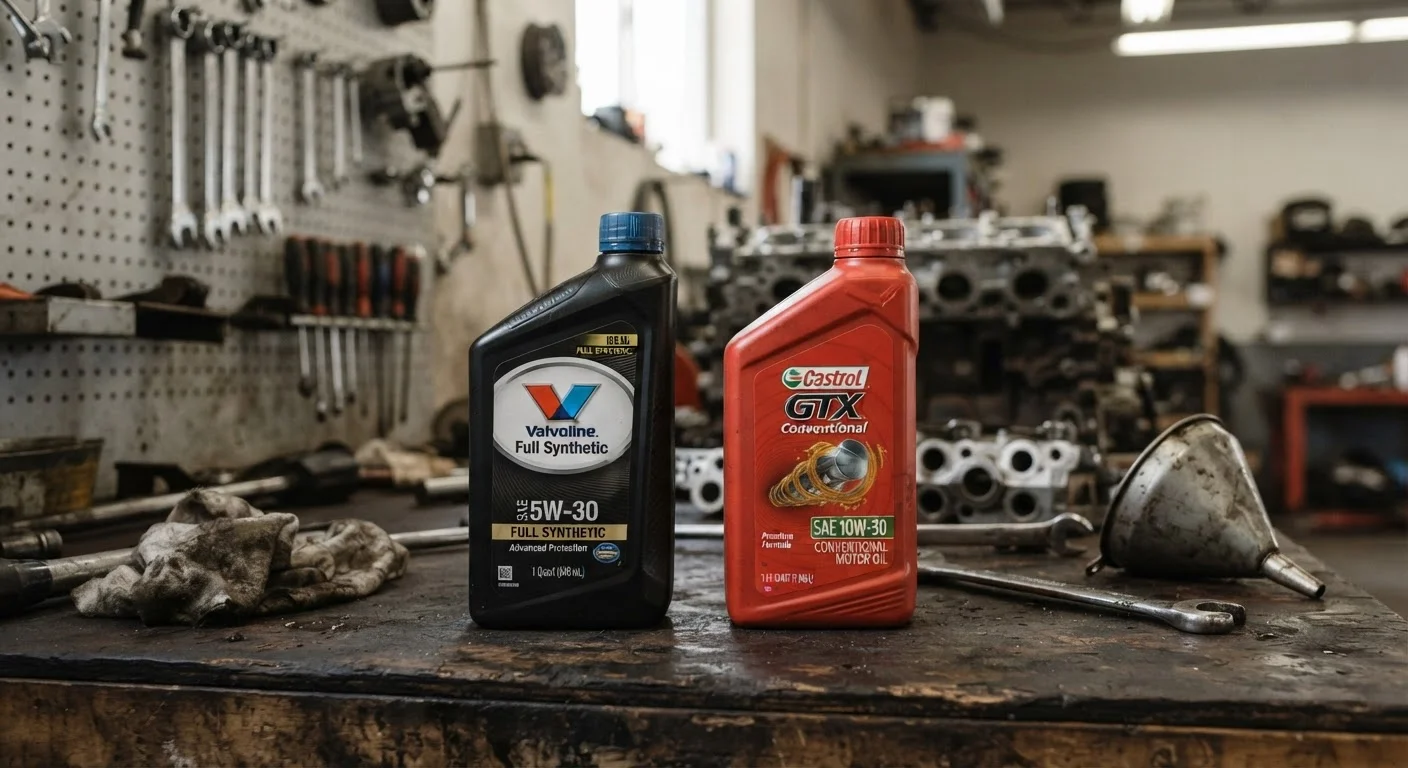
What Each Type of Oil Actually Is
Motor oil does one fundamental job: it lubricates the moving metal parts inside your engine, reducing friction and carrying away heat and contaminants. Where synthetic and conventional oil differ is in how they're made - and those differences have real consequences for your engine.
Conventional motor oil starts as crude petroleum pumped from the ground. It goes through a refining process to remove impurities, but the resulting molecules are still irregular in size and shape. That inconsistency is just the nature of a naturally derived product.
Synthetic motor oil is built in a lab. Chemists start with base oil compounds and engineer them at the molecular level, creating a more uniform, stable structure. The result is an oil that flows more predictably, resists breakdown longer, and performs more consistently across a wider range of temperatures.
Most of what you find on store shelves is actually a blend - some mix of synthetic and conventional base oils - but full synthetic and straight conventional are the two poles of the spectrum worth understanding.
How They Compare on Key Factors
The practical differences between these two oil types show up in a handful of specific areas that matter to everyday drivers. Here's how they stack up.
| Criterion | Synthetic Motor Oil | Conventional Motor Oil |
|---|---|---|
| Origin | Chemically engineered base compounds | Refined crude petroleum |
| Molecular consistency | Highly uniform structure | Variable, less predictable |
| Temperature performance | Better in extreme cold and heat | More limited range |
| Typical change interval | 7,500-10,000+ miles (per manufacturer) | 3,000-5,000 miles (per manufacturer) |
| Cost per quart | Higher upfront cost | Lower upfront cost |
| Engine compatibility | Required for many modern engines | Often suitable for older, simpler engines |
For a deeper look at how often you should actually be changing your oil - and what happens when you stretch the interval too far - see our guide to oil change intervals.
The Cost Question: Is Synthetic Worth It?
Synthetic oil typically costs two to four times more per quart than conventional. That gap sounds significant, but the math isn't as straightforward as it looks.
2-4×
Typical synthetic vs. conventional cost difference
Full synthetic motor oil generally costs two to four times more per quart than conventional oil at retail.
~10,000 mi
Common full synthetic change interval
Many full synthetic products carry manufacturer-approved intervals around 7,500 to 10,000 miles, though your owner's manual remains the authoritative reference.
Conventional oil is generally recommended for changes every 3,000 to 5,000 miles under normal driving conditions, while many full synthetic products are rated for 7,500 to 10,000 miles or more - though you should always follow what your owner's manual actually specifies for your vehicle.
If synthetic's longer service life means fewer trips to the shop, the total annual cost can end up comparable. The equation shifts depending on how many miles you drive, whether you do your own changes, and what your vehicle's manufacturer requires.
It's also worth knowing that some of the "3,000-mile rule" thinking is outdated. Our article on common car maintenance myths covers why that interval persists despite modern oil technology having moved well past it.
What Your Owner's Manual Says Matters Most
Here's the practical bottom line: your vehicle's manufacturer tested and specified an oil type for a reason. That specification - found in your owner's manual under something like "engine oil" or "lubrication" - tells you the viscosity grade your engine needs (such as 5W-30) and whether synthetic is required or simply recommended.
Some newer engines, particularly those with variable valve timing systems or turbochargers, are designed specifically around synthetic oil's properties. Using conventional in those engines isn't just suboptimal - it can void warranty coverage or lead to premature wear.
For older or simpler engines, conventional oil meeting current American Petroleum Institute (API) standards is often perfectly adequate. The API rating system - look for the circular "donut" symbol on the bottle - tells you the oil has passed standardized performance tests for current engines.
If your manual says synthetic is required, use it. If it says conventional is fine and you'd prefer the longer intervals synthetic offers, switching is generally safe - but check with a qualified mechanic if you're unsure about your specific engine.
A Note on High-Mileage Oil
You may notice a third category on shelves: high-mileage motor oil, marketed for vehicles with roughly 75,000 miles or more. These products - available in both synthetic and conventional formulations - typically include seal conditioners designed to reduce minor leaks common in older engines. They're worth considering if your vehicle falls into that bracket, but the same rule applies: check what your owner's manual specifies before switching.