What Motor Oil Actually Does
Your engine is a collection of metal parts moving against each other at high speed, thousands of times per minute. Without lubrication, that metal-on-metal contact would generate enough heat and friction to destroy the engine in minutes. Motor oil is the barrier that keeps those surfaces from touching directly.
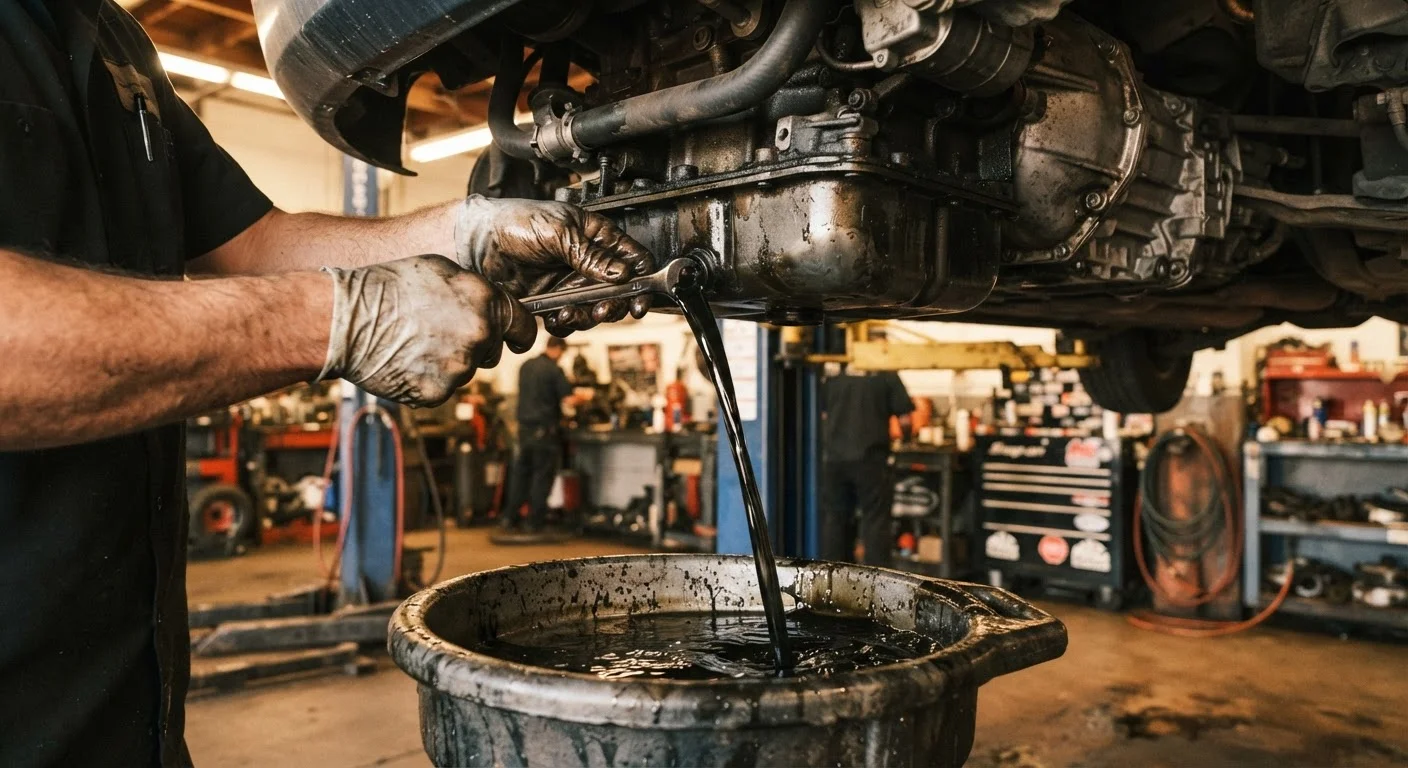
But oil does more than just lubricate. It also carries heat away from components the coolant can't reach, suspends tiny particles of combustion byproduct so they can be trapped by the oil filter, and helps keep internal passages clean. It's doing a lot of dirty work - which is exactly why it needs to be replaced regularly.
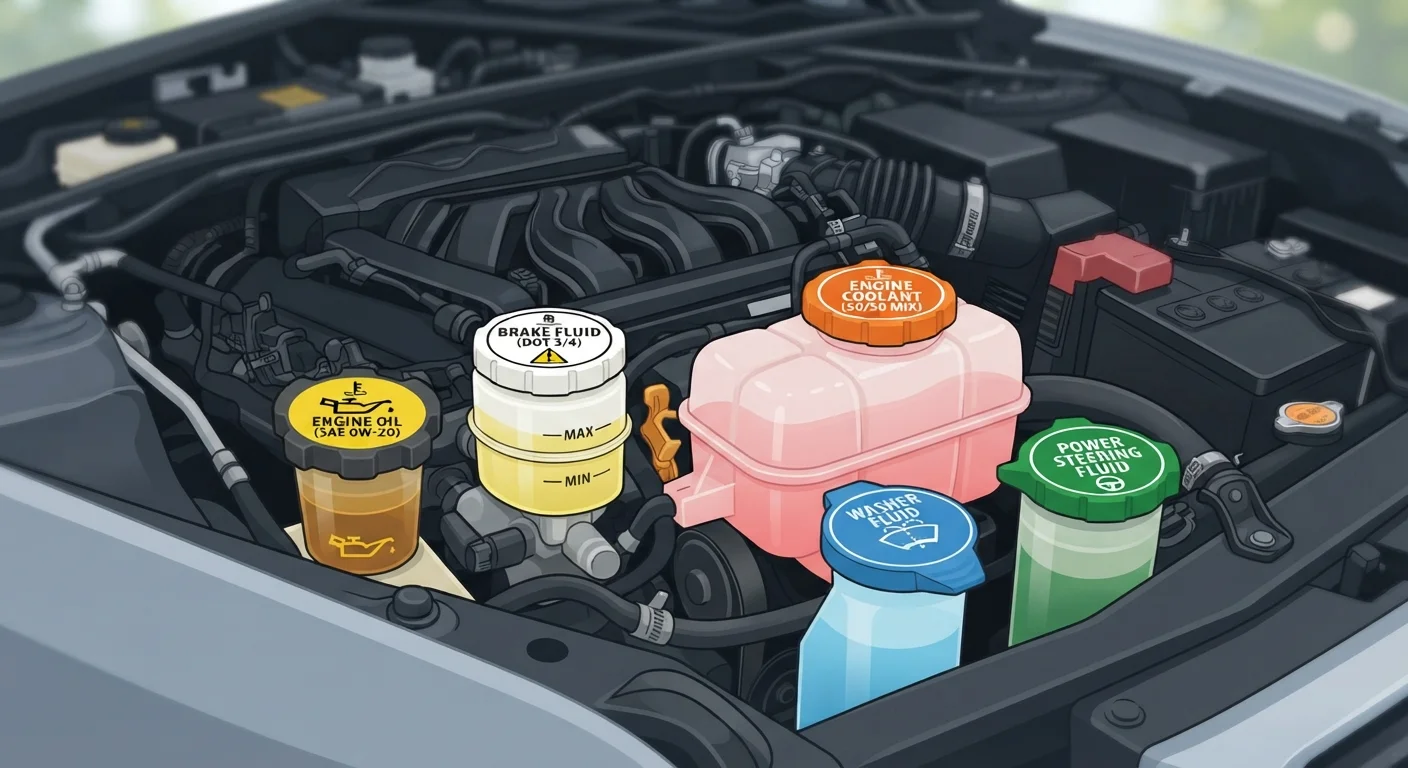
For a broader look at how oil fits alongside your engine's other fluids, see our plain-language guide to fluid reservoirs.
5,000-10,000 mi
Typical oil change interval for modern vehicles
Most major automakers now specify intervals well beyond the old 3,000-mile guideline, particularly for engines designed to run on full synthetic oil.
~$7,500
Average cost of an engine replacement
According to industry repair cost estimates, replacing a failed engine is one of the most expensive repairs a driver can face - often exceeding the vehicle's market value on older cars.
1 in 3
Drivers estimated to be overdue for an oil change
Industry service data has consistently suggested a significant share of vehicles on the road are operating with oil that is past its recommended change interval.
How Often You Actually Need to Change It
The old "every 3,000 miles" rule is one of the most persistent myths in car ownership - and following it today often just wastes money. It was developed decades ago when engine tolerances were rougher and oil formulations were simpler. Modern engines and oils, particularly full synthetic, are built to last considerably longer.
A more realistic range for most current vehicles is every 5,000 to 10,000 miles, with many manufacturers recommending 7,500 miles as a standard interval. Some vehicles running full synthetic under normal driving conditions can go up to 10,000-15,000 miles between changes, depending on the manufacturer.
That said, the only number that actually matters for your car is the one in your owner's manual. Manufacturers test their engines with specific oil types and intervals - that guidance is built for your vehicle, not a generic estimate. If reading the manual feels unclear, understanding your maintenance schedule is a good place to start.
Let Your Maintenance Schedule Be Your Guide
Rather than relying on memory or a generic rule, note your mileage each time you get an oil change and check it against your manual's interval. Many modern vehicles also have an oil life monitoring system that estimates remaining oil life based on actual driving conditions - if yours has one, pay attention to it rather than overriding it with a fixed-mileage habit.
Driving Conditions That Shorten the Interval
Manufacturer intervals are typically based on what's called "normal" driving - steady highway miles at moderate temperatures. If your driving looks different, your oil may degrade faster than those intervals assume.
- Frequent short trips: Driving less than five miles at a time doesn't allow the engine to fully warm up, which means moisture and fuel vapors can accumulate in the oil rather than burning off.
- Stop-and-go traffic: Prolonged idling and low-speed driving put more heat stress on oil than steady highway cruising.
- Towing or hauling heavy loads: The engine works harder, generating more heat and putting more strain on the lubrication system.
- Extreme temperatures: Very hot climates accelerate oil oxidation; very cold climates slow oil flow at startup, increasing wear during the first minutes of operation.
Many owner's manuals list a "severe" driving schedule with a shorter interval specifically for these conditions. If several of those situations describe your regular driving, it's worth using that shorter interval rather than the standard one.
What Happens When You Skip Oil Changes
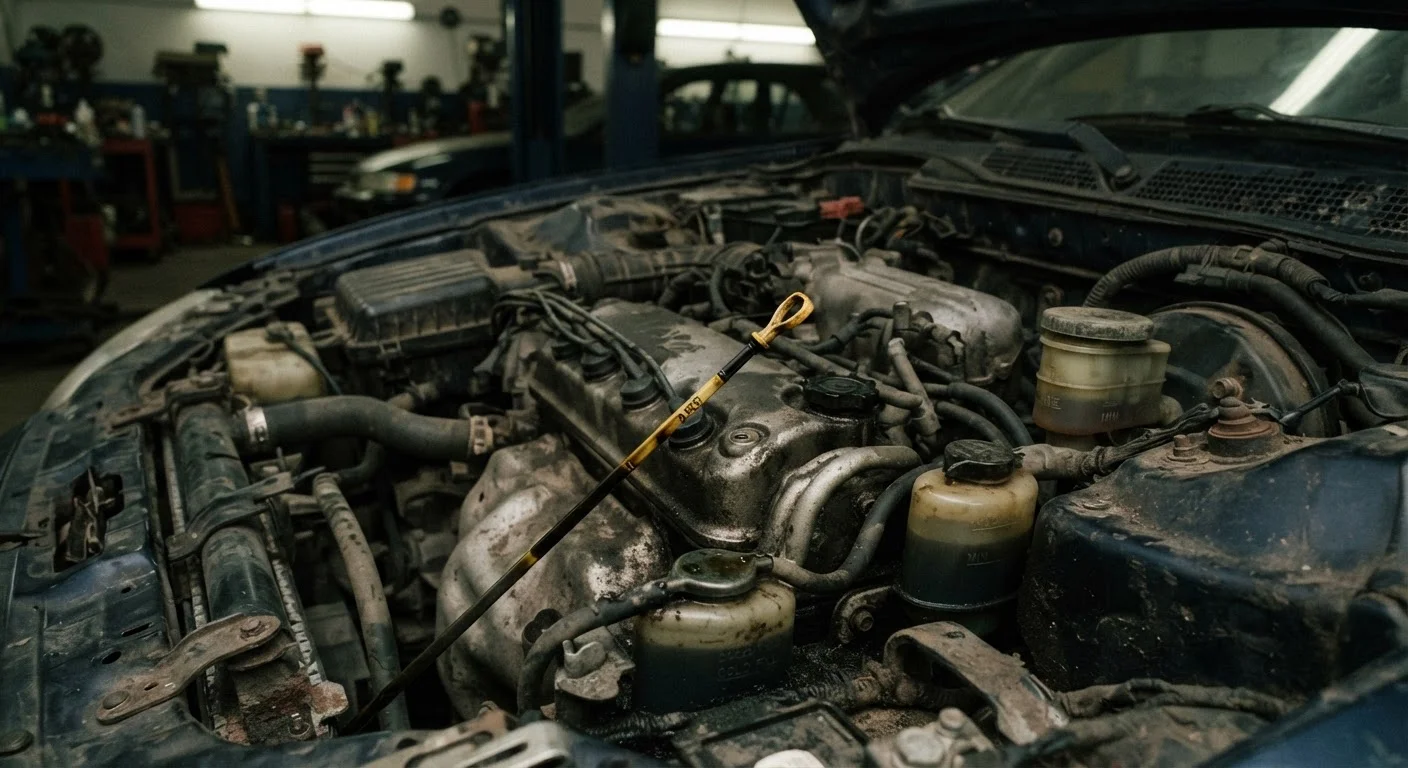
Oil that's left too long stops doing its job effectively. It oxidizes - meaning it reacts with oxygen and breaks down chemically - and accumulates so many combustion byproducts that it turns into a dark, thick sludge. That sludge can clog oil passages, starving parts of lubrication.
The consequences escalate over time. Early neglect means increased friction and faster wear on bearings, camshafts, and cylinder walls - components that are expensive to repair. Sustained neglect can lead to sludge buildup severe enough to require an engine flush, or in serious cases, engine failure. A seized engine typically isn't repairable; it requires full replacement.
None of this happens from one missed change, but the damage is cumulative and largely invisible until it becomes serious. Skipping oil changes is one of the habits covered in our article on habits that quietly shorten a car's lifespan - because the consequences don't show up all at once.
“Engine oil is the lifeblood of your engine. When it breaks down or gets too dirty to do its job, everything else starts to suffer - and often quietly, before you notice any symptoms.”
— American Automobile Association (AAA), National automotive consumer advocacy organization
Synthetic vs. Conventional: Does It Change the Equation?
The short answer is yes, but it's not a reason to skip intervals - it's a reason to know which oil your car uses. Synthetic oil is engineered for greater stability across temperature ranges and longer service life. Conventional oil, derived more directly from refined crude, breaks down faster under heat and stress.
If your car was designed to run on full synthetic (check the manual), using conventional oil and following conventional intervals won't give your engine what it was built for. And if your car uses conventional oil, switching to synthetic without verifying compatibility isn't advisable without checking manufacturer guidance first. For a deeper look at how they differ, understanding the real difference between synthetic and conventional oil breaks it down clearly.
Whether you change your own oil or take it to a shop is a separate decision. Knowing which tasks are safe to tackle yourself can help you figure out where an oil change fits in your skill level and comfort zone.