What Triggers the Shift Away from Premium Brands
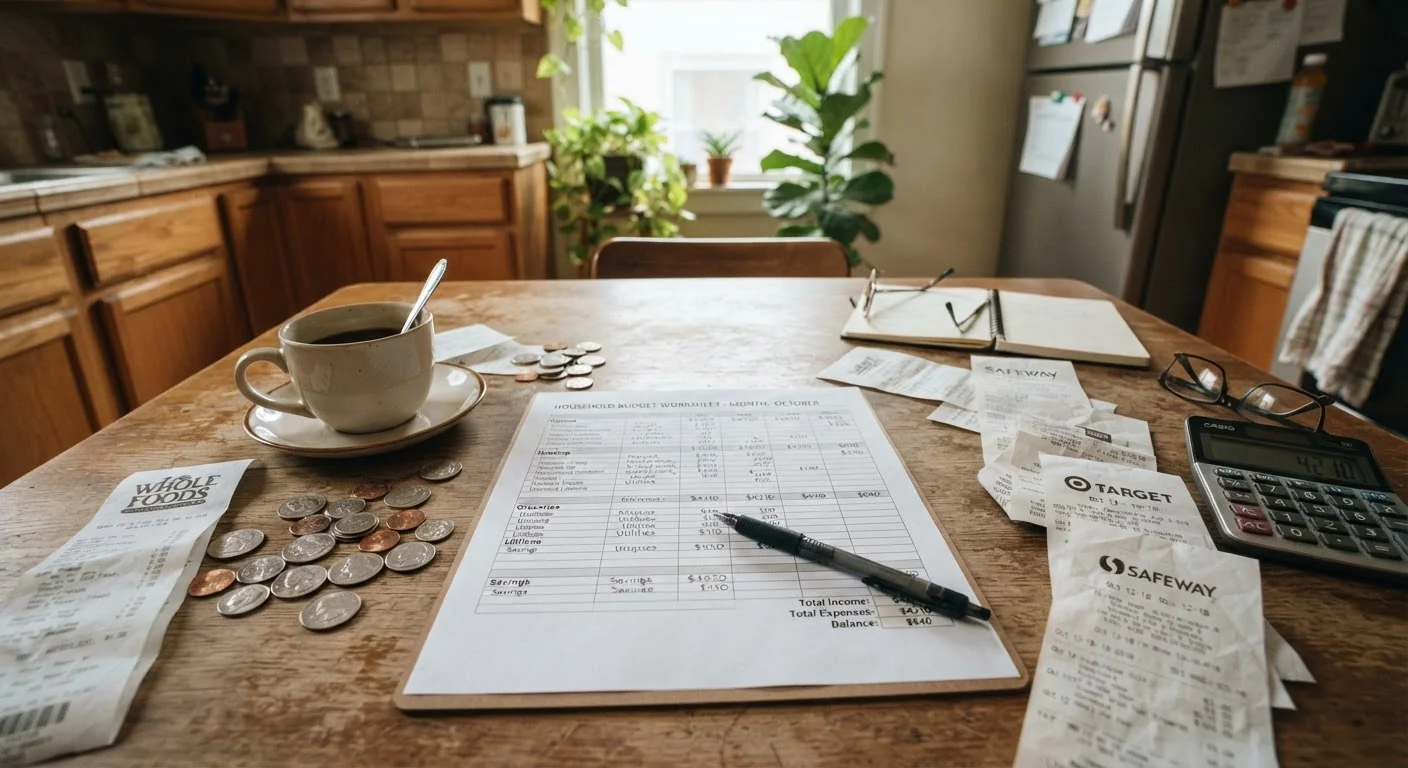
Consumer brand loyalty is often treated as deeply entrenched, but it tends to be more conditional than it appears. When household budgets come under pressure - through job insecurity, rising prices, or broader economic uncertainty - the psychological calculus behind every purchase changes. Shoppers who once reached automatically for familiar name-brand products begin asking a question they previously skipped: Is this worth the premium?
The trade-down effect is not simply about running out of money. It is triggered by a shift in perceived risk. During stable periods, paying more for a trusted brand feels safe and frictionless. During downturns, that same premium starts to feel like an unnecessary exposure. The question shifts from "Is this affordable?" to "Can I justify this when a cheaper version exists?"
Economists and market researchers have observed this pattern across multiple cycles - including the 2008 financial crisis and the inflation surge that followed the COVID-19 pandemic. In each case, private-label (store-brand) products gained measurable market share across grocery and household categories as consumers reassessed their spending. For a broader look at how uncertainty reshapes spending overall, see how economic uncertainty reshapes consumer spending priorities.
~20%
US grocery market share held by private-label brands
Private-label products have consistently held a significant share of US grocery sales, with that share rising during economic stress periods, according to industry tracking by the Private Label Manufacturers Association.
20-40%
Typical price gap between national and store brands
Consumer research across grocery categories generally finds store-brand pricing running 20-40% below comparable national-brand items, making the cost of brand loyalty highly visible at the shelf.
~41%
US consumers who increased private-label purchases during inflation
A 2023 survey by the Food Industry Association found roughly 41% of US shoppers reported buying more store-brand products in response to elevated grocery prices.
The Categories Most Affected - and Why
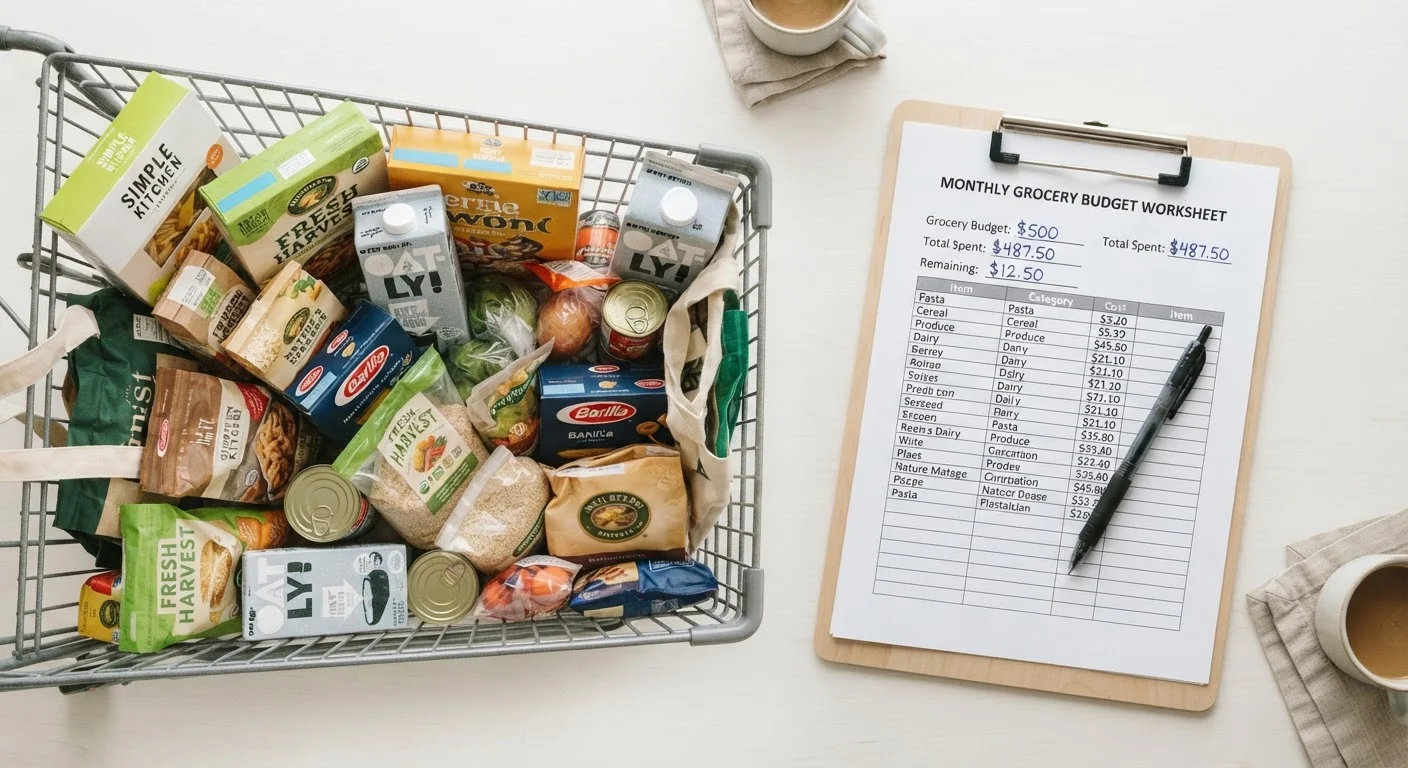
Not all product categories experience the trade-down effect equally. The pattern is most pronounced in fast-moving consumer goods (FMCG) - everyday items purchased repeatedly, where small per-unit savings accumulate quickly. Groceries, cleaning products, paper goods, and personal care items are the clearest examples.
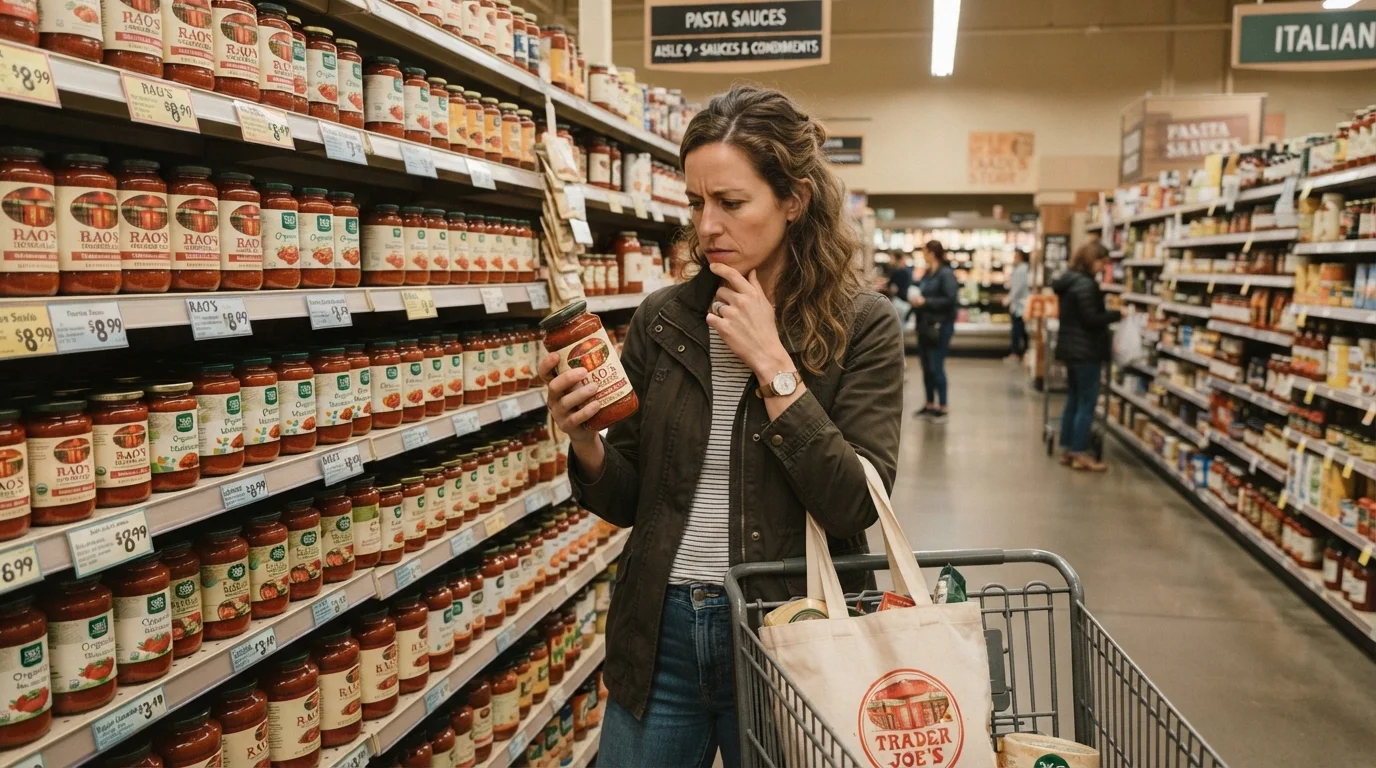
The reason these categories dominate is straightforward: the perceived quality gap between national brands and store brands is relatively low, while the price gap is often substantial - sometimes 20-40% or more. When consumers try a store-brand pasta sauce or laundry detergent and find it adequate, the rational case for returning to the premium version weakens.
Apparel, electronics, and home goods also see trade-down behavior, though the pattern is different. In these categories, shoppers may not switch brands so much as defer purchases, opt for simpler models, or shift to resale and secondhand channels. The underlying logic is the same - reduce outlay without abandoning the need entirely.
Test Before You Commit to a Full Switch
Rather than wholesale trading down across every category, consider testing one or two store-brand alternatives at a time. High-frequency, low-differentiation items - like paper towels, canned goods, or cleaning sprays - are the lowest-risk starting points. Give each a fair trial of several uses before concluding whether the quality trade-off is acceptable for your household.
It is worth noting that trade-down is distinct from the kind of impulsive deal-seeking that digital retail encourages. While both involve cost-consciousness, trade-down is typically a deliberate, repeated behavioral shift rather than a moment-of-purchase decision. Compare this with impulse buying behavior in one-click checkout environments, which operates on very different psychological mechanics.
How Long Does the Trade-Down Last?
A key question for understanding this behavior is whether it is temporary or persistent. The evidence suggests it is often stickier than brands and retailers expect.
During the 2008-2009 recession, private-label market share in US grocery categories rose noticeably - and did not fully retreat even as the economy recovered. A portion of consumers who had switched to store brands simply did not switch back. This "ratchet effect" means each major economic disruption tends to leave private-label products with a slightly higher long-term baseline.
Why don't shoppers return? In many cases, the experience of trying a lower-cost product dismantles a prior assumption - often influenced by marketing - that the premium version was meaningfully superior. Once that assumption is tested and found questionable, there is little psychological drive to pay more. This connects to a broader set of misconceptions that consumer myths that keep people overspending addresses directly.
That said, premium brands are not without staying power. In categories where emotional attachment, social signaling, or genuine quality differentiation is high - certain coffee brands, luxury personal care items, or branded athletic wear - trade-down rates tend to be lower and recovery stronger. The emotional drivers behind premium purchases are explored further in understanding the emotional drivers behind purchases.
What This Means for the Everyday Shopper
Recognizing the trade-down effect as a documented economic phenomenon - rather than a personal financial failure - can help consumers make more deliberate choices. Whether the broader economy is contracting or not, the core question the trade-down effect surfaces is a useful one: Am I paying a premium because the product genuinely delivers more value to me, or because the brand is familiar?
Smart shopping habits involve periodically testing that assumption rather than letting inertia drive the cart. Trying a store-brand alternative for one month is a low-stakes experiment with potentially meaningful long-term savings - particularly in high-frequency, low-differentiation categories like pantry staples or cleaning supplies.
At the same time, it is worth being aware of the reverse influence: retailers and manufacturers actively deploy persuasion techniques to maintain brand loyalty even when consumer budgets tighten. Understanding those tactics - covered in detail in how persuasion tactics shape what you buy - is part of shopping with clearer eyes. For more frameworks on building these habits, see the Smart Habits hub.
Trade-Down Is Not Uniform Across Income Levels
While the trade-down effect is most associated with lower-income households, research consistently finds it occurs across the income spectrum during significant economic disruptions. Middle- and upper-income consumers often trade down selectively - maintaining premium spending in categories they value most while cutting costs in others. This selectivity is itself a form of deliberate consumption worth understanding.