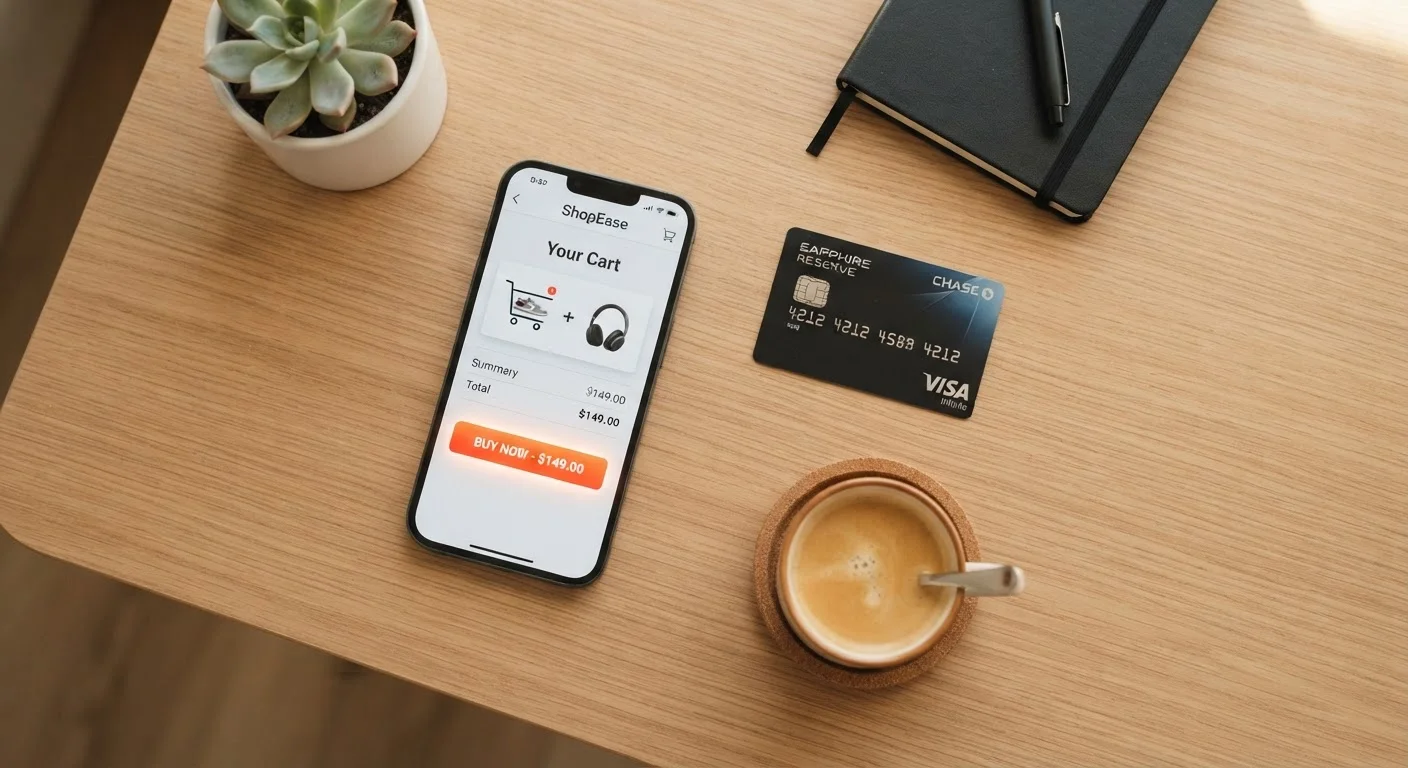

What's Actually Happening in the Brain
When you add something to your cart without planning to, it rarely feels irrational in the moment - it feels right. That's because impulse buying isn't a glitch in human reasoning; it's what happens when the brain's emotional processing outpaces its deliberative functions.
The limbic system, which governs emotion and reward, responds to attractive stimuli - a well-placed product, a vivid image, a price that seems like a deal - before the prefrontal cortex, responsible for planning and self-control, has a chance to weigh in. This lag is well-documented in behavioral research and is exactly the gap that retail environments are designed to exploit.
Dopamine plays a central role here. Anticipating a purchase can trigger a small dopamine release, creating a feeling of excitement or pleasure. This happens before the purchase, meaning the reward signal arrives during the decision, not after - which helps explain why buying something can feel satisfying even when the object itself turns out to be disappointing later.
“A large proportion of all consumer purchases are unplanned - made in response to in-store or in-app stimuli rather than pre-existing intention. The purchase environment is as much a part of the product as the product itself.”
— Consumer Behavior Research Consensus, Synthesized from behavioral economics and retail science literature
The Environmental Triggers Retailers Use
Retail environments - physical and digital - are engineered around well-tested behavioral principles. Understanding them doesn't require cynicism; it just requires knowing what to look for.
Scarcity cues like "only 2 left" or countdown timers signal that inaction has a cost, activating loss aversion - the brain's tendency to weight losses more heavily than equivalent gains. Social proof, in the form of ratings counts or bestseller labels, reduces the cognitive effort of decision-making by outsourcing judgment to the crowd. Anchoring uses a high reference price to make a lower price seem like a bargain, regardless of the item's actual value.
Physical stores use sensory design - lighting, scent, music tempo - to slow shoppers down and elevate mood. Digital stores use personalized recommendations and friction-free checkout to keep the gap between impulse and action as narrow as possible. For a deeper look at how these techniques operate, see how persuasion tactics shape purchasing behavior.
Try the 24-Hour Pause Rule
Before completing any unplanned purchase over a set personal threshold - say, $30 - wait 24 hours. If the desire persists after the immediate emotional trigger has passed, the purchase may reflect a genuine want. This simple friction can dramatically reduce regret-driven spending without requiring you to abandon spontaneity entirely.
Emotional State as the Underlying Variable
Environment matters, but emotional state is arguably the stronger variable. Research consistently shows that stress, boredom, loneliness, and low mood correlate with higher rates of impulsive purchasing. Shopping offers a sense of agency and anticipation - two things that temporarily counteract negative emotions.
This is sometimes called "retail therapy," and while it has a certain cultural acceptance, the relief tends to be short-lived. Over time, patterns of emotionally driven purchasing can create financial strain and a cycle where regret from past impulse buys adds to the stress that fuels the next one.
Understanding what's driving a purchase in a given moment is the foundation of more intentional shopping. Untangling needs, wants, and emotional triggers is a practical framework for doing exactly that before a purchase is made.
When Shopping Feels Compulsive
For most people, impulse buying is an occasional habit shaped by environment and mood. For some, however, compulsive buying behavior can cause significant financial and emotional distress. If shopping feels difficult to control despite negative consequences, speaking with a licensed mental health professional is a worthwhile step - this is not a willpower problem that general consumer tips are designed to address.
Building Awareness as a Practical Skill
Awareness of these mechanisms doesn't eliminate impulses - that's not a realistic or even necessary goal. What it does is create decision space. When a shopper recognizes that a "limited stock" alert is a deliberate persuasion technique, the alert loses some of its urgency. When a person notices they're shopping while stressed, they can consciously decide whether the purchase serves a real need or is mood management in disguise.
Practical tactics that behavioral research supports include introducing a time delay before completing unplanned purchases, shopping with a written list, and reviewing past purchases to identify patterns of regret. That last habit - reflecting on purchases after the fact - is particularly useful for calibrating future judgment without requiring significant effort.
Consumer behavior is also evolving alongside the tools retailers use. Digital checkout design has compressed purchase timelines dramatically, making the gap between impulse and action nearly instantaneous in some contexts. Knowing that context changes how you might approach certain shopping environments deliberately.
~40%
Share of purchases that are unplanned
Multiple retail industry studies consistently estimate that roughly 40% of consumer purchases are unplanned, though figures vary by category and channel.
3x
Losses weighted vs. equivalent gains
Behavioral economics research, including work associated with Kahneman and Tversky, suggests people feel losses approximately two to three times more acutely than equivalent gains - a core driver of scarcity-triggered buying.
seconds
Time to complete a one-click purchase
Frictionless digital checkout has reduced the purchase decision window to a matter of seconds in many mobile retail contexts, leaving little time for deliberate evaluation.