
From Usenet to the Front Page: A Brief History
The idea that audiences might construct elaborate interpretations of fictional universes is not new. Fans of Arthur Conan Doyle's Sherlock Holmes were producing what we would now recognize as fan theories in the late 19th century - debating inconsistencies in Watson's biography, proposing hidden chronologies, treating the fiction as a puzzle to be solved. Science fiction and fantasy fandoms sustained this tradition through printed fanzines and, by the 1980s and 1990s, early internet forums and Usenet groups.
What changed was infrastructure. When Reddit launched its franchise-specific communities in the late 2000s, and when platforms like Tumblr lowered the barrier to long-form fan analysis, theories could travel. A carefully argued post on r/FanTheories might collect tens of thousands of upvotes before being excerpted in a BuzzFeed article or a mainstream entertainment column. The path from niche forum to mainstream had never been shorter, and fan theories rode that infrastructure as effectively as any meme.
Why Audiences Theorize: Agency and Meaning-Making
Fan theorizing is not merely trivia-hunting. At its core, it reflects a desire for narrative agency - the sense that an audience is not simply a passive recipient of a story but an active co-interpreter of it. Serialized media formats, from prestige television dramas to multi-film franchises, are particularly fertile ground because they create long gaps between installments, giving audiences time to analyze and speculate.
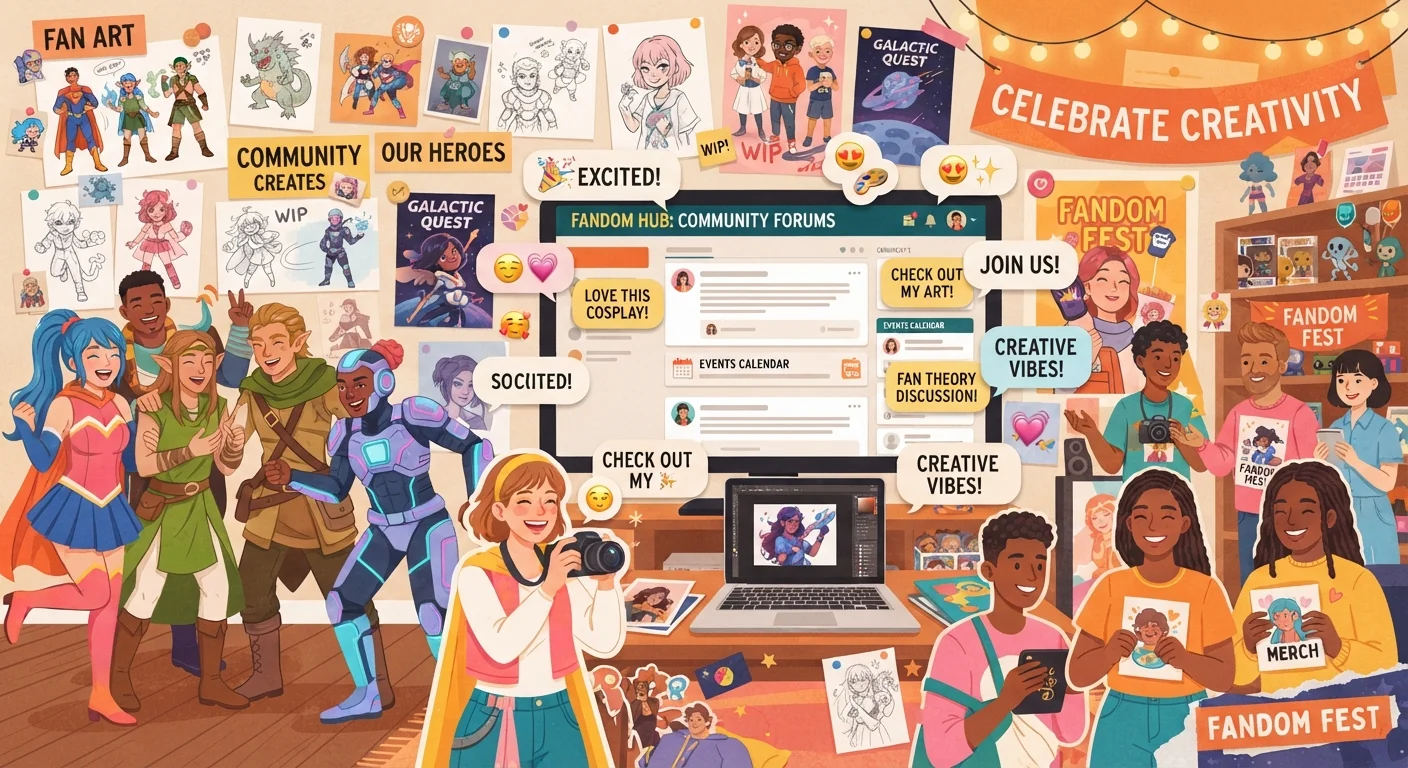
Theorizing also functions socially. Participating in a shared interpretive conversation is a way of belonging to a community around a piece of media, which connects to the broader dynamics that researchers observe in fandom communities. A compelling theory does double work: it proposes an interpretation and it performs membership in a group of knowledgeable, attentive fans.
“Fans are not just audiences but active participants who poach from texts, reinterpret them, and build communities around them. The meaning of a text is not fixed at the point of production.”
— Henry Jenkins, Media scholar and author of 'Textual Poachers: Television Fans and Participatory Culture'
It is worth noting that not every theory is built with equal rigor. Some are careful textual arguments; many others are speculative entertainment - fun to consider without making strong claims about authorial intent. Audiences generally understand the distinction implicitly, even when the media coverage of theories sometimes blurs it.
How the Media and the Industry Responded
The mainstream press began covering fan theories seriously around the early 2010s, largely because the traffic was undeniable. Articles breaking down a viral Game of Thrones or Breaking Bad theory routinely outperformed conventional entertainment reporting. Outlets quickly learned that theories were a reliable content format: they were timely, emotionally resonant for fans, and required no insider access.
1.5M+
Members in Reddit's r/FanTheories community
The r/FanTheories subreddit has grown to over 1.5 million members, reflecting the scale of organized fan speculation as of recent years.
~70%
US adults who engage with online fan communities
Pew Research Center surveys have consistently found that a substantial majority of US internet users participate in at least one online interest-based community, with entertainment fandoms among the most common.
The entertainment industry's response has been more complex. Some studios and showrunners began treating fan theory discourse as a form of audience research, gauging where viewers' attention and emotional investment were concentrated. Others built fan engagement directly into marketing cycles - officially acknowledging or gently debunking theories to sustain conversation between release dates. This dynamic raises questions about the line between genuine creative dialogue and orchestrated hype, a tension explored in common myths about how the entertainment industry actually works.
Theories as Cultural Criticism - and Their Limits
At their most substantive, fan theories represent a form of applied media literacy. The analytical habits that produce a well-constructed theory - close attention to detail, awareness of narrative convention, consideration of authorial history - are the same habits that critical engagement with pop culture generally encourages. A theory that reframes a character's arc through a psychological lens, or that identifies a recurring visual motif, is doing something genuinely interpretive.
The limits are also real. Fan theory culture can drift toward confirmation bias, where advocates selectively read evidence to support a preferred outcome rather than following the text where it leads. There is also the phenomenon of theories becoming self-fulfilling expectations - when an interpretation spreads widely enough, audiences may feel disappointed rather than surprised when a story resolves differently, even if the actual resolution is artistically stronger. Understanding these limitations is part of engaging with fan theory culture thoughtfully rather than uncritically.
Engage With Theories Critically
When reading or sharing a fan theory, it helps to ask what evidence it draws on and whether that evidence could support alternative interpretations. Treating theories as interpretive proposals rather than revelations keeps the conversation intellectually honest - and often more enjoyable.
Fan theories, at their best, represent a meaningful expansion of the cultural conversation around storytelling - one that treats audiences as intellectually capable participants rather than passive consumers. That shift, however incremental, has durably changed how media is discussed, marketed, and sometimes made.