What Is a Fandom, Really?
A fandom is more than a group of enthusiastic people gathered around a shared interest. Sociologists and media scholars generally define a fandom as a community of fans who collectively invest emotional, creative, and social energy in a source text-whether that's a film franchise, a musical artist, a sports team, or a video game series. The investment goes well beyond casual appreciation.
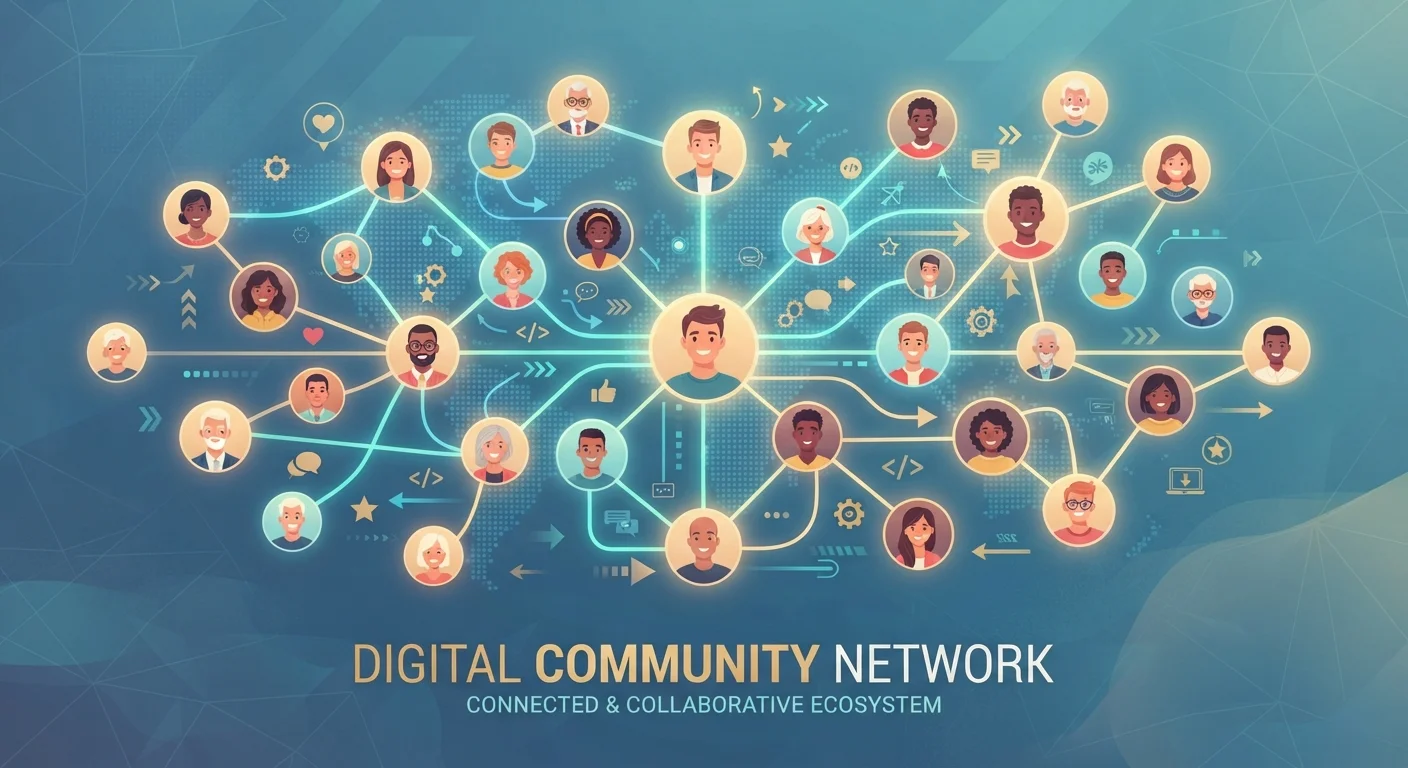
What distinguishes a fandom from a general audience is that its members actively participate: they discuss, debate, create, organize, and develop shared vocabularies. Over time, those communities develop norms, status systems, inside references, and distinct subcultures. Understanding that structure is essential for anyone trying to make sense of how online communities form and sustain themselves. For a broader framework, see what makes an online community actually work.
The Belonging Engine: Why Fans Form Communities
Research in social psychology consistently finds that affiliation with a group-particularly one organized around a meaningful shared interest-fulfills core human needs for belonging, identity, and self-expression. For many fans, their community is not supplementary to their social life; it is a primary one.
Fandoms are especially powerful belonging engines for people who feel marginalized or underrepresented in mainstream social spaces. Queer fans, neurodivergent fans, and fans from minority backgrounds frequently describe fandom communities as some of the first places they felt genuinely seen and accepted. The shared passion for a text creates a low-stakes entry point, while the community itself provides the sustained connection.
43%
Americans who identify as part of a fandom
A 2023 survey by Morning Consult found that nearly half of U.S. adults self-identify as fans of at least one community-organized interest.
9M+
Works on Archive of Our Own (AO3)
The fan-run nonprofit fanfiction archive hosts tens of millions of fan-authored stories, illustrating the scale of unpaid creative fan labor.
3x
Higher engagement among superfans vs. casual fans
Research from the Harvard Business Review has suggested that a property's most engaged fans drive disproportionate commercial activity relative to casual audiences.
Online platforms accelerated this dynamic dramatically. Before the internet, fan communities existed through newsletters, conventions, and local clubs. Digital platforms collapsed geography and allowed niche fandoms to reach critical mass globally, creating durable communities around subjects that might have only attracted a handful of people in any given city.
Creativity at the Core: Fan Works and Cultural Production
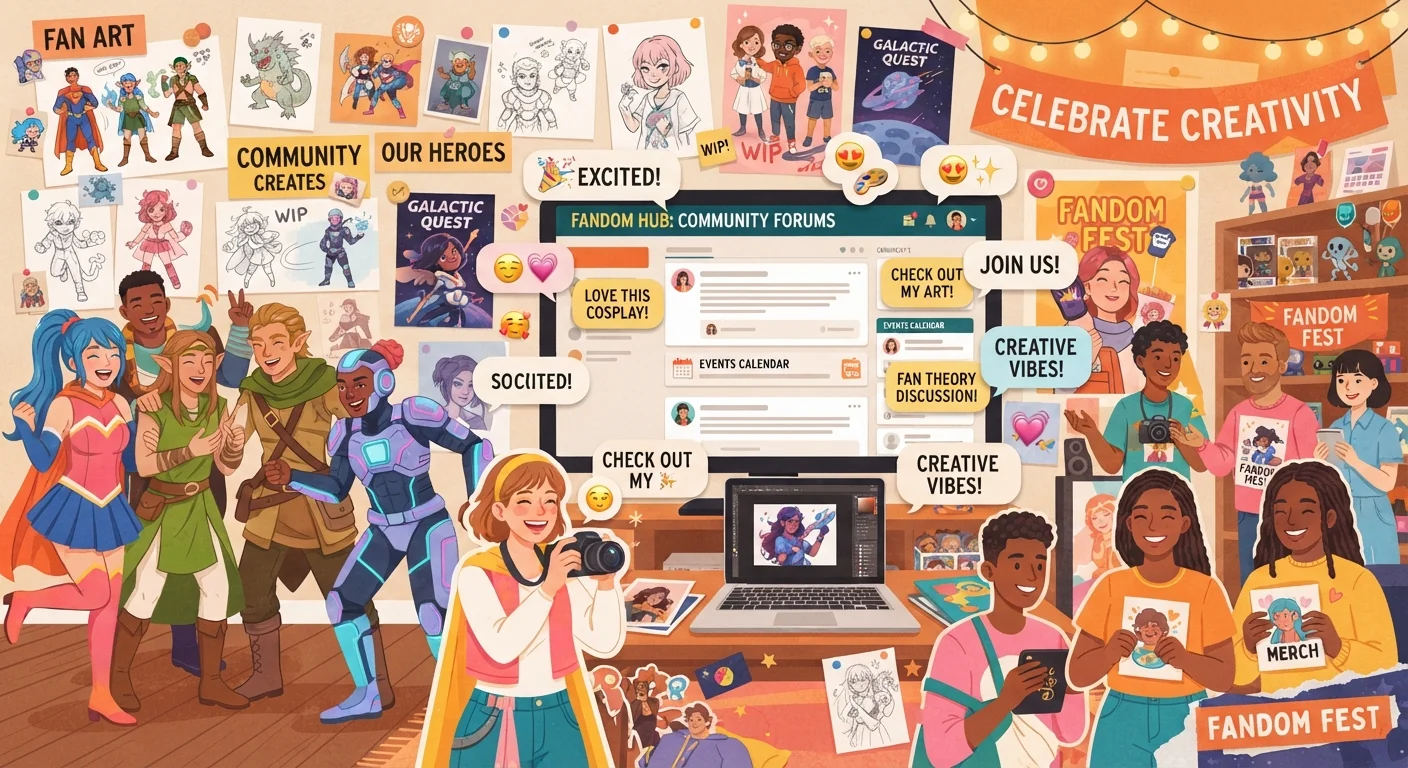
One of fandom's most overlooked aspects is the sheer volume and sophistication of creative work fans produce. Fanfiction repositories host tens of millions of stories. Fan artists generate original visual work that rivals professional illustration in technical skill. Cosplayers construct elaborate costumes that require engineering, sewing, and theatrical expertise. Video editors produce fan-made trailers and analytical essays that regularly attract millions of views.
“Fan fiction is a way of the culture repairing the damage done in a system where contemporary myths are owned by corporations instead of by the folk.”
— Henry Jenkins, Media scholar and author of Textual Poachers: Television Fans and Participatory Culture
This creative output is not trivial cultural ephemera. Media scholars have documented how fan creativity feeds back into mainstream production-showrunners incorporate fan theories, game developers adjust storylines in response to community feedback, and musicians explicitly reference fan culture in their work. Fan labor is largely unpaid, yet it generates significant cultural and commercial value.
Legally, fan creativity exists in ambiguous territory. Most intellectual property holders tolerate fan works because the goodwill and engagement they generate outweighs enforcement costs. However, the legal lines around commercial fan work, transformative use, and copyright remain genuinely contested in the United States.
The Tension Points: Gatekeeping, Toxicity, and Conflict
The same intensity that makes fandoms vibrant also produces their most documented problems. Gatekeeping-demanding that members prove sufficient knowledge or passion before being accepted-is pervasive. It often falls hardest on women, people of color, and LGBTQ+ fans, who are more likely to have their legitimacy questioned by other community members.
Harassment Dressed as Fan Passion
Coordinated harassment campaigns within or between fandoms-targeting creators, actors, or individual fans-have caused documented psychological harm to targets and legal consequences for organizers. Intense feeling about a property does not justify targeting real people. If a fan community is organizing pressure campaigns against individuals, that is a signal about the community's health, not the legitimacy of its grievances.
Inter-fandom conflict (sometimes called fandom wars) ranges from lighthearted rivalries to coordinated harassment campaigns. When conflict turns to targeting individuals-creators, actors, or fellow fans-the psychological harm can be significant. The anonymity of online platforms lowers social inhibitions that might restrain such behavior offline.
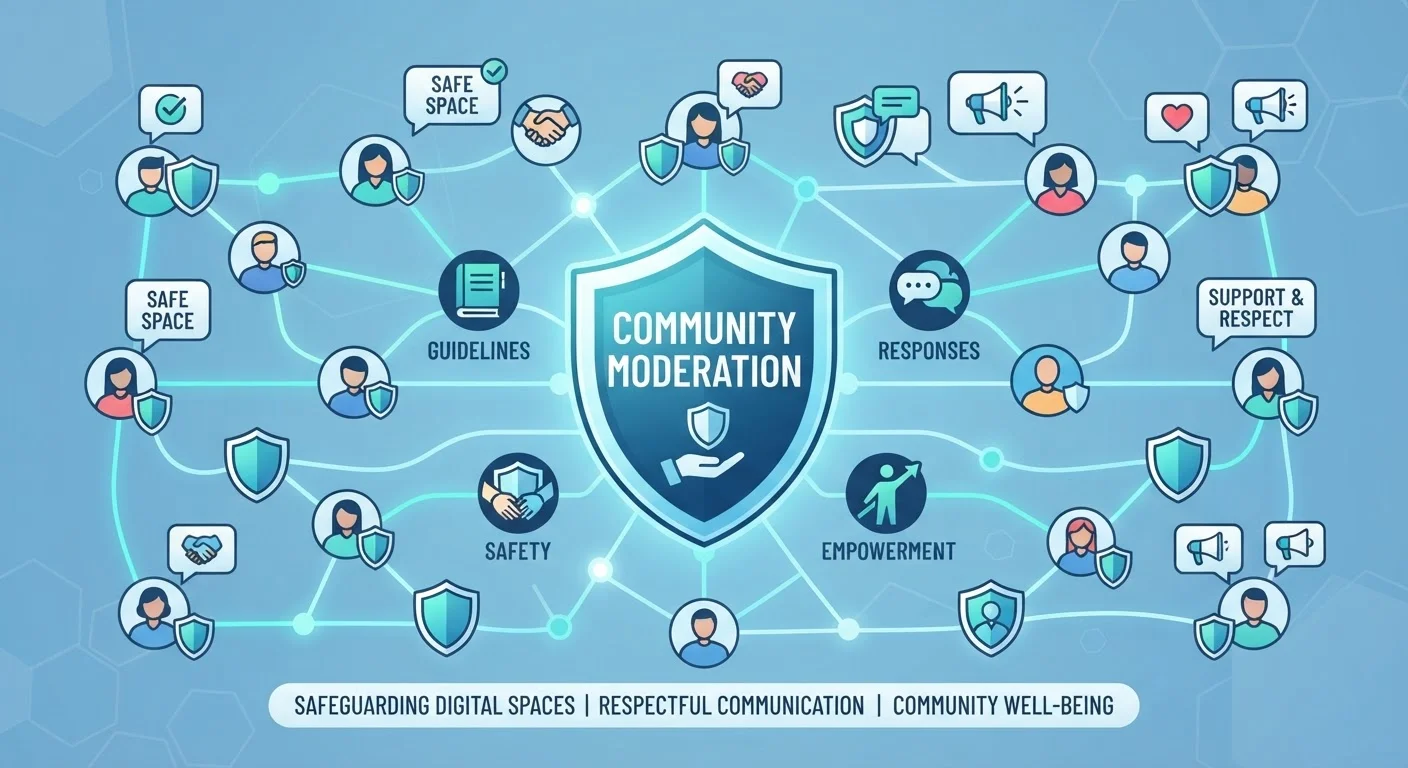
Moderation is the primary tool communities use to manage these dynamics. Moderation strategies that protect people range from volunteer-driven rule enforcement to algorithmic filtering, and no single approach is universally effective. Smaller fandoms on self-hosted platforms tend to have more consistent moderation cultures; large fandoms spread across Reddit, Twitter/X, Discord, and Tumblr simultaneously often struggle to maintain coherent community standards.
Parasocial Bonds and the Blurring of Fan-Creator Lines
A defining feature of contemporary fandom-particularly fandoms organized around individual creators, musicians, or athletes-is the parasocial relationship: a one-sided emotional bond the fan experiences toward a public figure who does not know them personally. These bonds are psychologically real and can generate genuine feelings of loyalty, grief, and protectiveness.
For a deeper exploration of the psychology involved, see when followers feel like friends and the psychology behind feeling close to strangers.
When studying or writing about a fandom, map its platform ecosystem first-the same community often behaves quite differently on Discord versus Twitter versus Reddit, and each space has its own dominant subgroup.
Platform architecture shapes community norms; content moderation policies, character limits, and algorithmic amplification all change how fans communicate and organize.
If you're entering a fan community as a newcomer, identify the community's 'canon'-not just the source material, but the shared interpretive history the group has developed around it-before participating in debates.
Veteran fans have often spent years developing positions on contested questions; entering those conversations without that context tends to generate unnecessary conflict.
Social media has intensified parasocial dynamics by giving creators tools to simulate intimacy at scale-direct replies, behind-the-scenes content, personalized acknowledgments of fan names. Fans reasonably interpret these signals as relationship-building, even when they are strategic content choices. When a creator's real behavior conflicts with the image fans have constructed, the resulting rupture can fracture entire communities.
How Fandoms Influence Culture - and Each Other
Fandom communities are not passive consumers; they are active participants in cultural production and market outcomes. Organized fan campaigns have demonstrably influenced streaming renewal decisions, film casting announcements, and product development timelines. Studios and labels now routinely monitor fan discourse as a form of real-time audience research.
Fandoms also influence each other through cross-fandom exchange of norms, aesthetics, and vocabulary. Terms originating in anime fandoms have spread to music fandoms; organizational tactics developed in political fandoms have been adopted by entertainment fan bases. The internet created conditions for rapid cross-pollination that scholars are still mapping.
Vocal Fans Are Not All Fans
The most active participants in any online fandom represent a small fraction of the total audience for a property. Research on online community participation consistently finds that a small percentage of members produce the majority of content and discussion. This means fandom discourse, however intense, may not reflect the preferences of the broader viewing or listening audience-a distinction that matters both for industry decision-makers and for fans assessing their own community's influence.
This influence is not unlimited. Fans regularly overestimate their collective market power, and vocal fan minorities often do not represent the preferences of the broader, quieter audience a commercial property depends on. The gap between a fandom's perceived influence and its actual market footprint is a persistent source of disappointment and conflict within fan communities.
Navigating Fandom as a New Member or Observer
Entering an established fandom without understanding its norms is a reliable way to generate friction. Every fan community has accumulated history, inside terminology, ongoing debates, and sensitive topics that new members are expected to learn before weighing in. Navigating a new online community without missteps applies directly to fandom entry.
Practical orientation involves spending time reading before posting, identifying which platforms a fandom primarily uses, learning the community's specific vocabulary, and recognizing which topics are genuinely contested versus which are considered settled within that space. Most established fandoms welcome new members who demonstrate good-faith curiosity; most conflicts arise from participants who skip the listening phase.
Transformative Works and Cultures (TWC)
A peer-reviewed open-access journal published by the Organization for Transformative Works, covering academic research on fan communities, fan creativity, and participatory culture.
Fanlore Wiki
A community-maintained wiki documenting the history, terminology, and cultural practices of fan communities across decades-useful for understanding how fandom norms developed over time.
Archive of Our Own (AO3)
The largest fan-run nonprofit fanfiction archive, offering a direct window into the scale and diversity of fan creative production across thousands of source properties.
For journalists, researchers, and casual observers, fandoms reward patient attention. The dynamics playing out in fan communities-belonging, identity, conflict, creative labor, parasocial attachment-mirror broader questions about how humans build meaning and connection in digital environments.