What Genre Crossover Actually Means
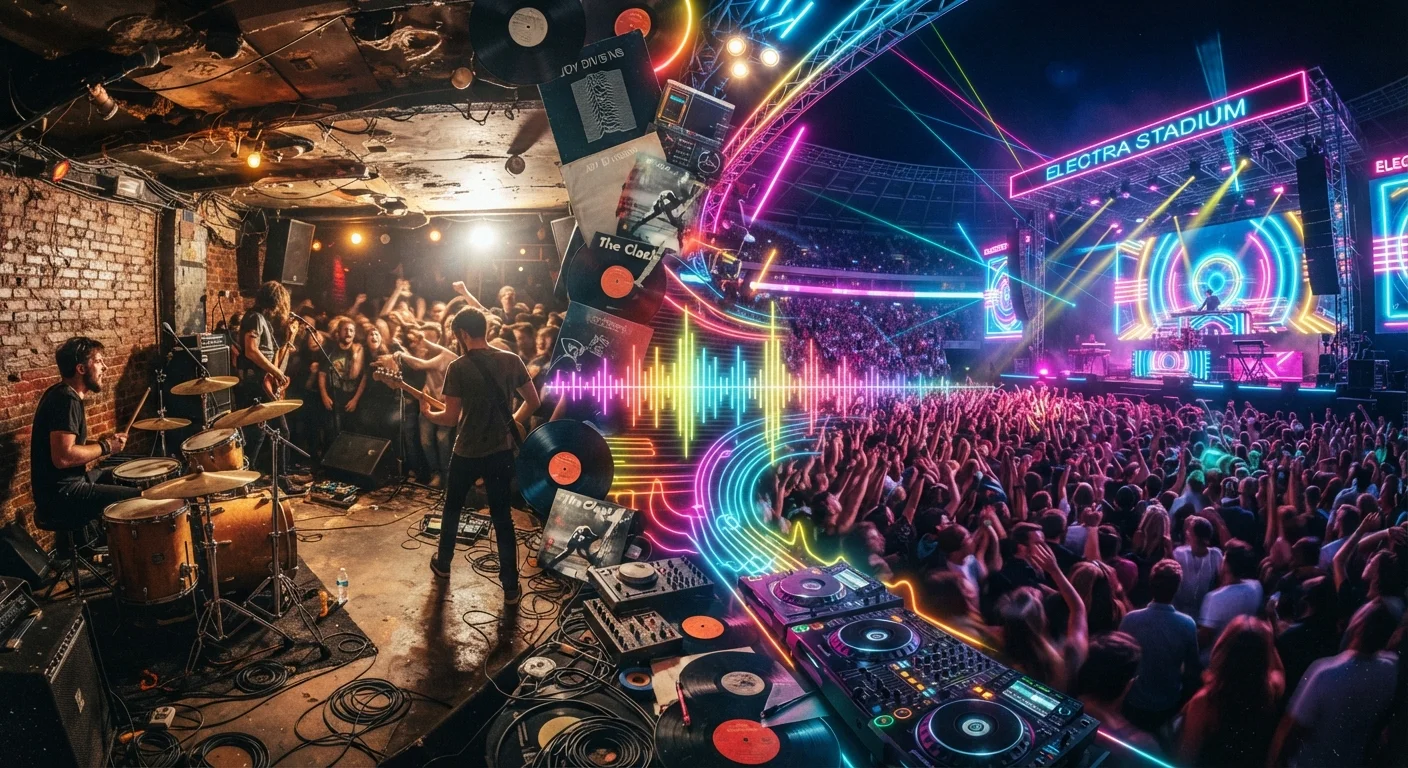
When hip-hop moved from block parties in the South Bronx to the center of global pop culture, or when country music expanded its audience beyond the American South, those transitions didn't happen overnight. Genre crossover - the process by which a musical style migrates from a niche community to the mainstream - is one of the most studied phenomena in popular music, yet it remains widely misunderstood.
A common misconception is that crossover is purely the result of one breakthrough artist or a lucky hit. In reality, it reflects a convergence of cultural readiness, industry infrastructure, and media gatekeeping. Understanding these mechanics matters because music genres don't cross over in isolation - they carry with them the cultural identities, social histories, and communities that produced them. See also: common myths about how the entertainment industry works.
#1
Hip-hop's Billboard Hot 100 dominance since 2017
According to Billboard's genre tracking, hip-hop and R&B have been the most-consumed music genres in the US by streaming volume for several consecutive years running.
40%+
Share of US music consumption via streaming
The Recording Industry Association of America (RIAA) has reported that streaming accounts for the substantial majority of US recorded music revenue, reshaping how genre exposure and crossover occur.
3-10 years
Typical underground-to-mainstream timeline
Music historians and industry analysts generally estimate that genres spend several years building subcultural infrastructure before achieving mainstream chart presence, though the streaming era has compressed some of these timelines.
The Role of Gatekeepers and Infrastructure
For most of the 20th century, radio programmers, record label executives, and music journalists functioned as the primary gatekeepers of mainstream acceptance. A genre could thrive in regional markets or among devoted subcultures for years before those gatekeepers chose - or were pressured - to invest in it. The institutionalization of rap on mainstream radio in the late 1980s and early 1990s, for instance, followed years of commercial success that labels could no longer ignore.
Streaming platforms have reshuffled this dynamic significantly. Algorithmic playlists now introduce listeners to genres they might never have encountered through traditional radio. Latin trap, bedroom pop, and hyperpop are recent examples of sounds that built substantial streaming audiences before receiving significant mainstream media attention. But algorithmic gatekeeping is still gatekeeping - playlist curators and recommendation engineers exercise real influence over which sounds get amplified.
“Genres are not just aesthetic categories - they are social contracts between artists and audiences. When a genre crosses over, what's being renegotiated is that contract, and not everyone agrees to the new terms.”
— Simon Frith, Music sociologist and author of 'Performing Rites: On the Value of Popular Music'
Cultural Moments and Social Forces
Perhaps the most underappreciated driver of genre crossover is the broader cultural and social climate. Genres often break through when their themes align with something the mainstream is already processing. Country music's expansion into suburban and exurban markets in the 1990s coincided with demographic shifts and a nostalgia for rural identity among Americans navigating rapid economic change.
Similarly, the mainstream ascent of hip-hop in the 2010s was inseparable from wider conversations about racial justice, representation, and the cultural authority of Black Americans - dynamics explored in depth in coverage of social movements that reshaped American culture in the 21st century. Genres become vehicles for cultural meaning, and when that meaning resonates beyond the original community, crossover becomes not just possible but almost inevitable.
The mechanics here closely parallel how internet subcultures push niche ideas into broader public discourse - a process examined in our look at the lifecycle of an internet trend.
Tracking Crossover in Real Time
Watching multiple genre charts simultaneously - rather than just the Hot 100 - reveals crossover in progress. When an artist or song climbs both a genre-specific chart and the all-genre pop chart at the same time, that dual movement is a measurable signal of crossover momentum. Streaming platform data, music press coverage volume, and sync licensing deals (music placed in TV and film) are additional indicators worth watching.
The Authenticity Tension
Every significant genre crossover generates internal debate about authenticity. Original community members frequently perceive mainstream success as a dilution of the genre's founding values, aesthetics, or social functions. This tension is not simply sentimental - it reflects real changes in who benefits economically from the genre and whose artistic choices define its future direction.
Scholars of popular music note that crossover rarely preserves a genre intact. Instead, a more commercially accessible variant typically becomes the mainstream face of the genre, while the originating subculture either adapts, fragments, or continues largely outside the spotlight. This dynamic is visible across genres from jazz to punk to K-pop's global expansion. Understanding crossover means accepting that it is simultaneously an opportunity and a disruption for the communities involved. These same commercial forces shape how Americans consume culture and media more broadly.