A Term Used Constantly, Defined Rarely
Few phrases have generated more American cultural heat in recent years than 'cancel culture' - and few have been defined less precisely. Politicians invoke it in speeches, op-ed writers treat it as self-evident, and social media users deploy it as both an accusation and a defense. Yet when pressed, most definitions turn out to be doing very different descriptive work: sometimes referring to coordinated harassment, sometimes to consumer boycotts, sometimes to an employer firing a worker, sometimes simply to public criticism.
That definitional slippage matters. Lumping together a celebrity losing a sponsorship deal, a private individual being doxxed, and a public figure facing a satirical Twitter pile-on as instances of the same phenomenon makes it nearly impossible to evaluate any of them clearly. The conversation this article tries to have - separating what the concept accurately describes from what it distorts - is ultimately an exercise in the kind of critical engagement with cultural narratives that applies across many contested terms. Compare, for instance, how the word 'authentic' gets stretched and emptied of meaning in other contexts, as examined in what 'authentic' travel really means.
Common Misconceptions - and What the Evidence Actually Shows
The myths below represent the most frequently repeated claims in mainstream discourse about cancel culture. Each has circulated widely enough to shape public understanding, and each deserves a closer look against available evidence.
Myth
Cancel culture is a new phenomenon invented by social media.
Fact
Public shaming, boycotts, and social ostracism predate the internet by centuries; digital platforms have changed the scale and speed, not the basic dynamic.
Historical examples of collective social sanction abound: colonial-era public humiliations, Hollywood blacklists of the 1940s and 1950s, and consumer boycotts tied to the civil rights movement all involved organized efforts to diminish someone's standing or income based on perceived moral or political violations. What social media has changed is the velocity at which these responses accumulate and the size of the audience that can participate. The underlying human behavior - judging, ostracizing, and pressuring - is ancient. Treating it as a modern invention misses the broader pattern and makes it harder to evaluate when such responses are proportionate.
Myth
Being 'cancelled' means a person's career is permanently over.
Fact
Most public figures who face high-profile online backlash retain their platforms, audiences, and professional standing.
Researchers and journalists who have tracked the careers of widely discussed 'cancelled' individuals - prominent comedians, authors, media personalities - have generally found that the majority continue working, often with their audience bases largely intact. In some cases, the controversy itself generated renewed attention. This pattern does not mean consequences never follow; in cases involving verified misconduct, institutional responses (firings, dropped contracts) have occurred. But the claim that a social media backlash automatically ends careers does not hold up to scrutiny as a general rule, particularly for people with existing wealth and institutional support.
Myth
Cancel culture uniquely threatens free speech in America.
Fact
The First Amendment restricts government censorship; private social criticism is itself a form of protected expression.
The First Amendment prohibits government actors from suppressing speech - it does not insulate individuals from social or professional consequences driven by other private citizens. When audiences stop watching someone, when a publisher declines to release a book, or when a company terminates a contract in response to public pressure, those are private decisions - which are also, by definition, forms of expression. The 'free speech' framing can obscure this distinction. Legitimate free-speech concerns do arise when, for instance, government bodies or employers penalize speech with no direct bearing on job performance. But these cases are categorically different from audience criticism or consumer choices, and conflating them muddies both conversations.
Myth
Cancel culture is primarily a left-wing tool.
Fact
Organized campaigns to damage reputations or remove people from platforms have been documented across the political spectrum.
Documented examples of coordinated online pressure campaigns targeting academics, journalists, artists, and public figures exist across ideological lines. Right-leaning groups have organized boycotts of companies perceived as too progressive; coordinated harassment of scientists, election officials, and journalists has been linked to communities across the political spectrum. Framing 'cancellation' as exclusively left-wing activism reflects a selective sample of examples. That framing is itself a rhetorical choice worth examining, as noted in broader discussions of how media narratives are constructed - a topic explored in reading pop culture critically.
Myth
The term has always meant what it means today.
Fact
The phrase originated in Black American vernacular culture, used informally among peers - not as a description of mass public shaming.
Linguists and cultural critics have traced 'cancel' as a verb meaning to cut off a person from one's social circle to Black American communities, popularized in part through Black Twitter in the early 2010s. In its original context it was often used humorously between friends, analogous to 'I'm done with you.' The subsequent transformation into a term describing a political and cultural crisis - primarily in mainstream and conservative media commentary - represents a significant shift in meaning, one that largely stripped the phrase of its original cultural context. This etymology is relevant to any serious discussion of what the term actually tracks. It also fits a broader pattern of vernacular terms being adopted and redefined as they travel across cultural boundaries, a dynamic discussed in histories of American cultural movements.
Conflating Criticism with Silencing
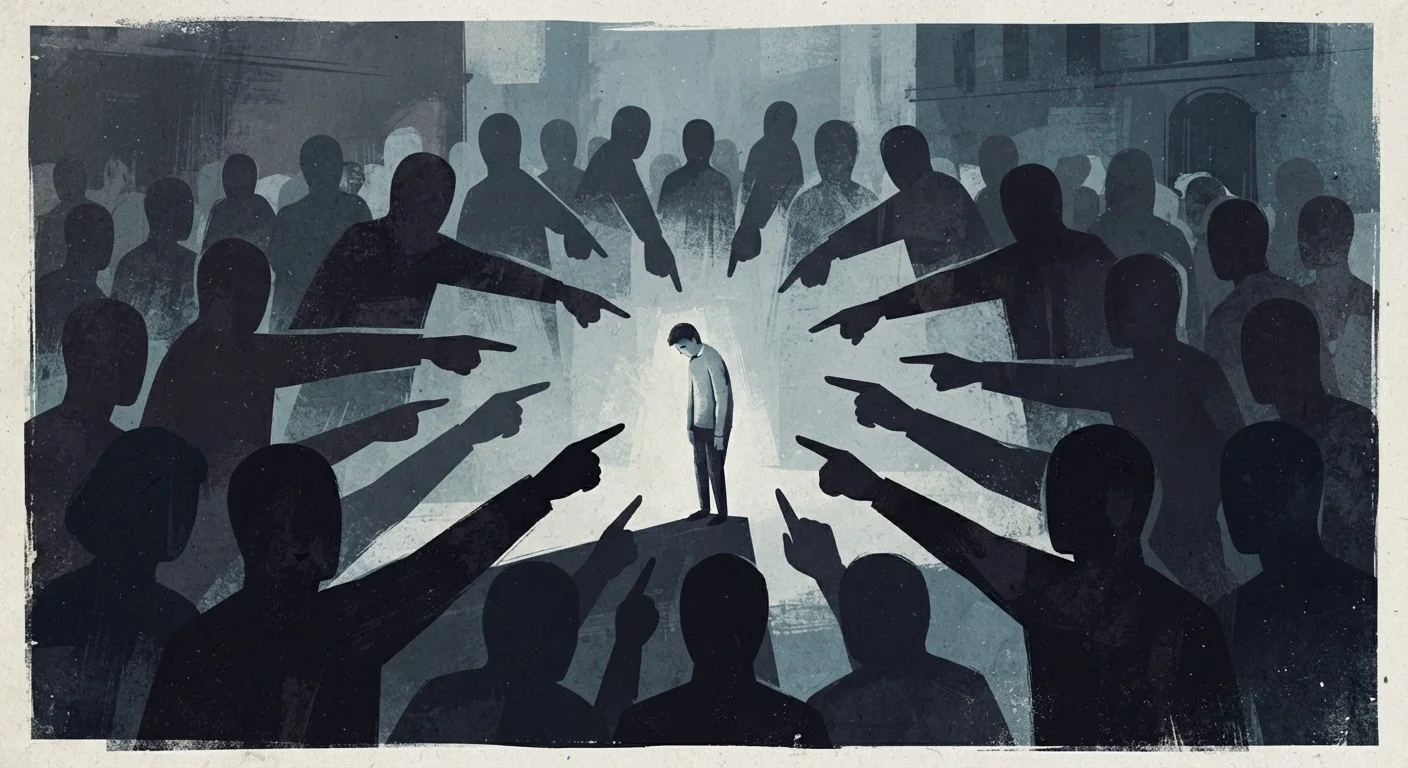
Treating all criticism of public figures as censorship risks obscuring genuine instances of coordinated harassment, doxxing, or threats that can cause real harm to private individuals. The stakes are meaningfully different depending on whether the target is a celebrity with institutional backing or a private person with no comparable resources. Applying the same label to both cases distorts both.
Understanding these distinctions also matters for how media narratives more broadly are evaluated. The same critical questions that help untangle the cancel culture debate apply when examining how terms like 'conscious consumerism' are deployed - explored in what 'conscious consumerism' actually means.
The Framing Shapes the Debate
How the phrase 'cancel culture' is applied often determines which behaviors are treated as legitimate criticism and which are dismissed as mob rule. Understanding those definitional choices is itself a form of media literacy. Before accepting any claim about 'cancellation,' it's worth asking who is being described, what actually happened, and what the real-world consequences were.
What a More Precise Conversation Might Look Like
Replacing a catch-all term with more specific language tends to produce more tractable debates. Useful distinctions include: Is the target a public figure or a private individual? Does the response involve criticism and boycotts, or harassment and threats? Are there verified factual claims at the center of the controversy, or is the campaign based on misattribution or decontextualized clips? Did the person face institutional consequences, or primarily social media friction?
~90%
Of 'cancelled' figures who kept their careers
An analysis by various media critics tracking high-profile 'cancellation' cases found the large majority of public figures retained platforms; precise figures vary by methodology and sample.
2015-2018
Period when 'cancel culture' entered mainstream US usage
Linguistic tracking databases show the phrase shifted from niche social-media slang to mainstream news coverage and political commentary during this period.
None of these questions resolves the normative debate about when public pressure is appropriate. Reasonable people disagree about proportionality, about whether apologies should be accepted, and about how long consequences should last. But those are substantive disagreements worth having. They are harder to have when the framing collapses all cases into a single culture-war data point. Treating the term as a precise description rather than a contested rhetorical frame is where most public discourse on the topic goes wrong first.