Two Seasons, Two Entirely Different Countries
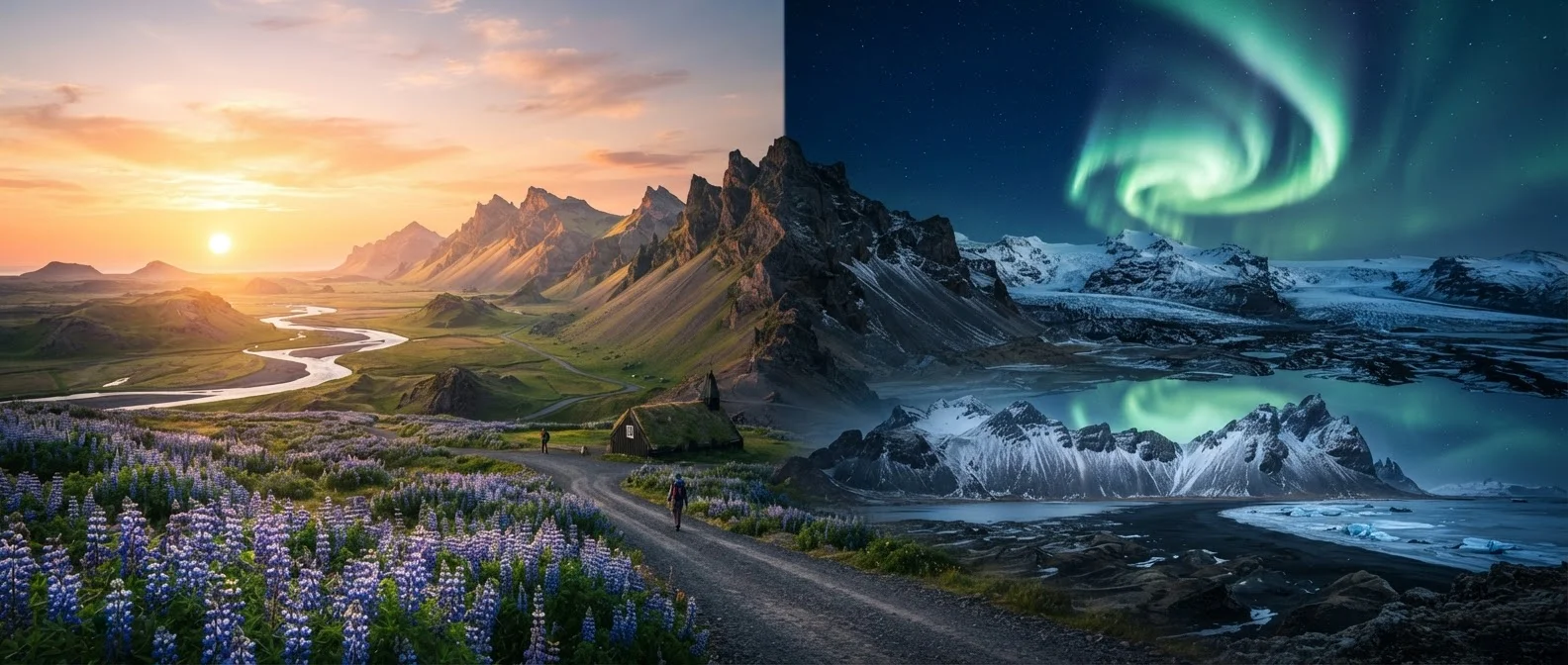
Iceland is one of the few destinations on Earth where the season you choose doesn't just affect the weather - it fundamentally changes what the country is. Summer Iceland and winter Iceland feel like separate places wearing the same volcanic geography. The light is different, the landscapes transform, the road access shifts, and even the wildlife behaves differently. For a curious US traveler planning their first or second trip, choosing a season isn't a scheduling convenience - it's the central travel decision.
In summer, roughly May through August, Iceland receives up to 24 hours of daylight near the solstice. The sun doesn't set; it dips toward the horizon and swings back up, casting an endless golden hour across the island. Wildflowers and vivid green moss coat lava fields. Puffins arrive on coastal cliffs. The F-roads - rough mountain tracks through Iceland's remote Highland interior - thaw open, unlocking Landmannalaugar's rhyolite mountains and the Kjölur route that cuts straight through the country's uninhabited center.
In winter, that same landscape becomes something quieter and more severe. Snow blankets the lava plains. Waterfalls freeze into sculptural curtains of ice. The Highland roads close entirely, and the country contracts around its coastal ring. But in exchange for what closes, winter opens something rarer: near-total darkness that makes the northern lights visible on clear nights, and frozen glacier caves that simply cannot be safely entered any other time of year.
As with many destinations that change dramatically by season, choosing between them often comes down to knowing your own travel style. How you prefer to engage with a place matters as much as the destination itself.
| Criterion | Iceland in Summer | Iceland in Winter |
|---|---|---|
| Daylight | Up to 24 hours near solstice | 4-5 hours in December |
| Northern lights viewing | Not possible (too light) | Best window: Nov-Mar |
| Highland road access | Open June-September | Closed entirely |
| Glacier ice caves | Closed (unstable ice) | Open and accessible |
| Crowd levels | Peak crowds in July-August | Significantly quieter |
| Typical lodging costs | Higher, book far ahead | Generally more affordable |
| Wildlife (puffins, whales) | Active and accessible | Puffins absent; fewer tours |
| Road conditions | Mostly clear and open | Ice and closures possible |
What Each Season Actually Delivers
Summer's pitch is broad access and remarkable natural spectacle. The midnight sun is genuinely disorienting - and for many visitors, deeply affecting. There's something psychologically unusual about cooking dinner at 11 p.m. with full sunlight pouring through your guesthouse window. Waterfall volume peaks as snowmelt feeds Iceland's rivers, making summer the most dramatic time to visit sites like Skógafoss and Seljalandsfoss. Whale-watching tours run regularly, and puffin colonies are visible along the Westfjords and Snæfellsnes Peninsula through August.
The trade-off is crowd density and cost. July and August draw the bulk of Iceland's annual visitors. Popular sites like the Golden Circle and the Blue Lagoon can feel overwhelmed. Accommodation prices spike. Reservations for popular lodges and guesthouses along the Ring Road are often booked months in advance.
Winter narrows the country but deepens it. The northern lights - aurora borealis - require two things: geomagnetic activity and darkness. Iceland's winter provides the latter in abundance, with only four to five hours of daylight in December. Clear nights between November and March offer genuine aurora windows, though sightings are never guaranteed. What is guaranteed is a version of Iceland fewer people see: quieter waterfalls half-frozen in lace ice, black sand beaches without crowds, and Reykjavík's café culture as a genuine refuge rather than a tourist backdrop.
~2M
Annual international visitors to Iceland
Iceland's tourism authority has tracked visitor numbers exceeding two million annually in recent pre-pandemic years, with summer accounting for the large majority of arrivals.
4-5 hrs
Daily daylight in Reykjavík in December
Near the winter solstice, Reykjavík receives fewer than five hours of sunlight per day, creating the prolonged darkness essential for northern lights visibility.
~35
F-roads in Iceland's Highland interior
Iceland's Vegagerðin (Road Administration) maintains dozens of F-roads that open only in summer and require four-wheel-drive vehicles - they are entirely off-limits in winter.
For travelers weighing Iceland against other destinations that reward seasonal timing, understanding how shoulder season shifts by destination can help frame the decision more precisely.
Iceland's Weather Is Unpredictable Year-Round
Icelanders have a saying: if you don't like the weather, wait five minutes. Both seasons can deliver sun, rain, wind, and freezing temperatures within the same day. In winter, storms can shut roads with little warning. In summer, sudden fog can obscure landscapes for hours. Whatever the season, layered waterproof clothing, flexible daily plans, and a reliable local weather app are non-negotiable tools for any Iceland trip. Always verify road conditions before driving, especially outside Reykjavík - the Icelandic Road and Coastal Administration (Vegagerðin) maintains current road status information.