Two Philosophies, One Question
There's a moment every traveler eventually faces: you've arrived somewhere new, the itinerary is loose, and you have to decide - do you head toward the trees or toward the streets? That fork in the road isn't just logistical. It reflects something deeper about how you believe a place reveals itself.
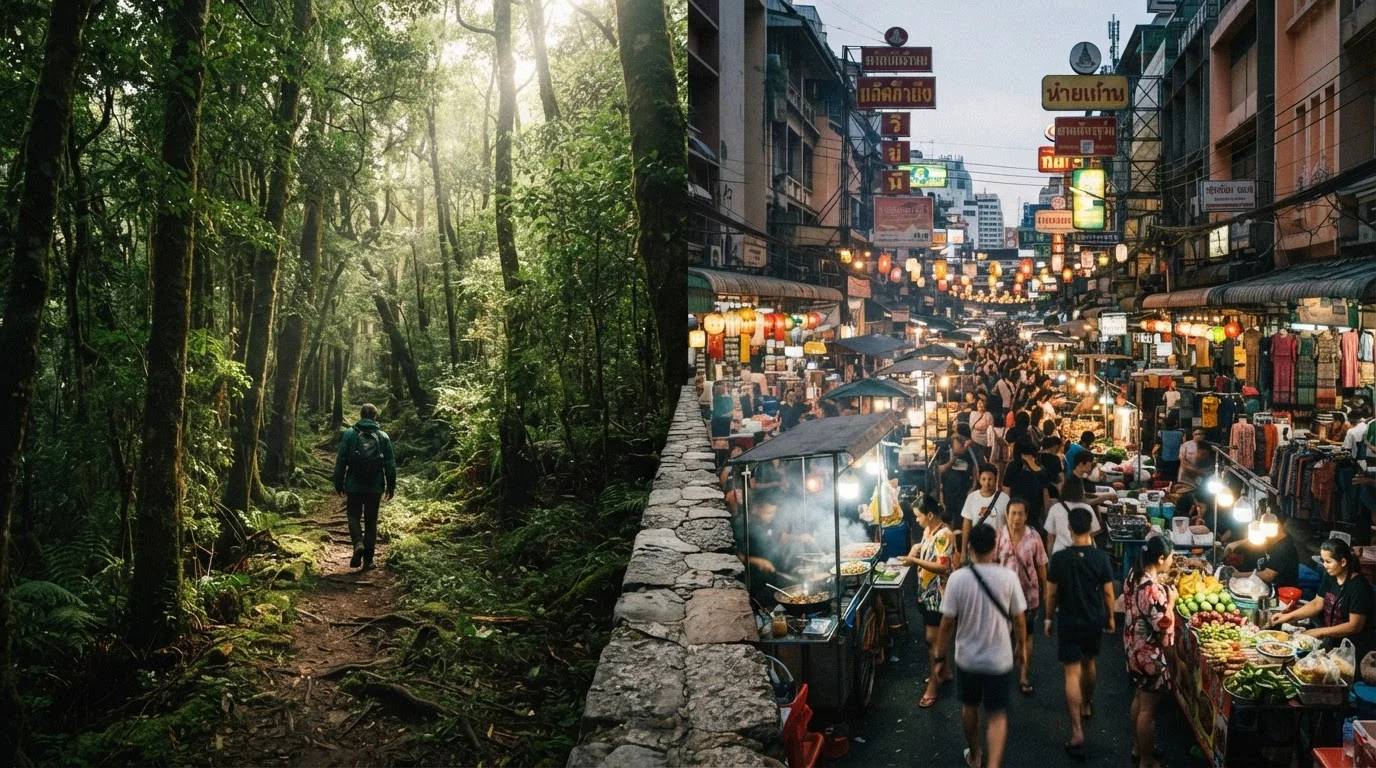
Wilderness immersion and urban exploration sit at opposite ends of the travel experience spectrum. One asks you to slow down, to move through quiet vastness, to let nature set the pace. The other drops you into a living, breathing ecosystem of human culture - noise, history, street food, contradiction, and accidental conversation. Both, when pursued with genuine attention, can cut far below the surface of a destination. Both can change you. But they demand very different things.
For travelers thinking carefully about what immersive travel really means in practice, understanding the distinctions between these two modes is a worthwhile starting point.
What Wilderness Immersion Actually Involves
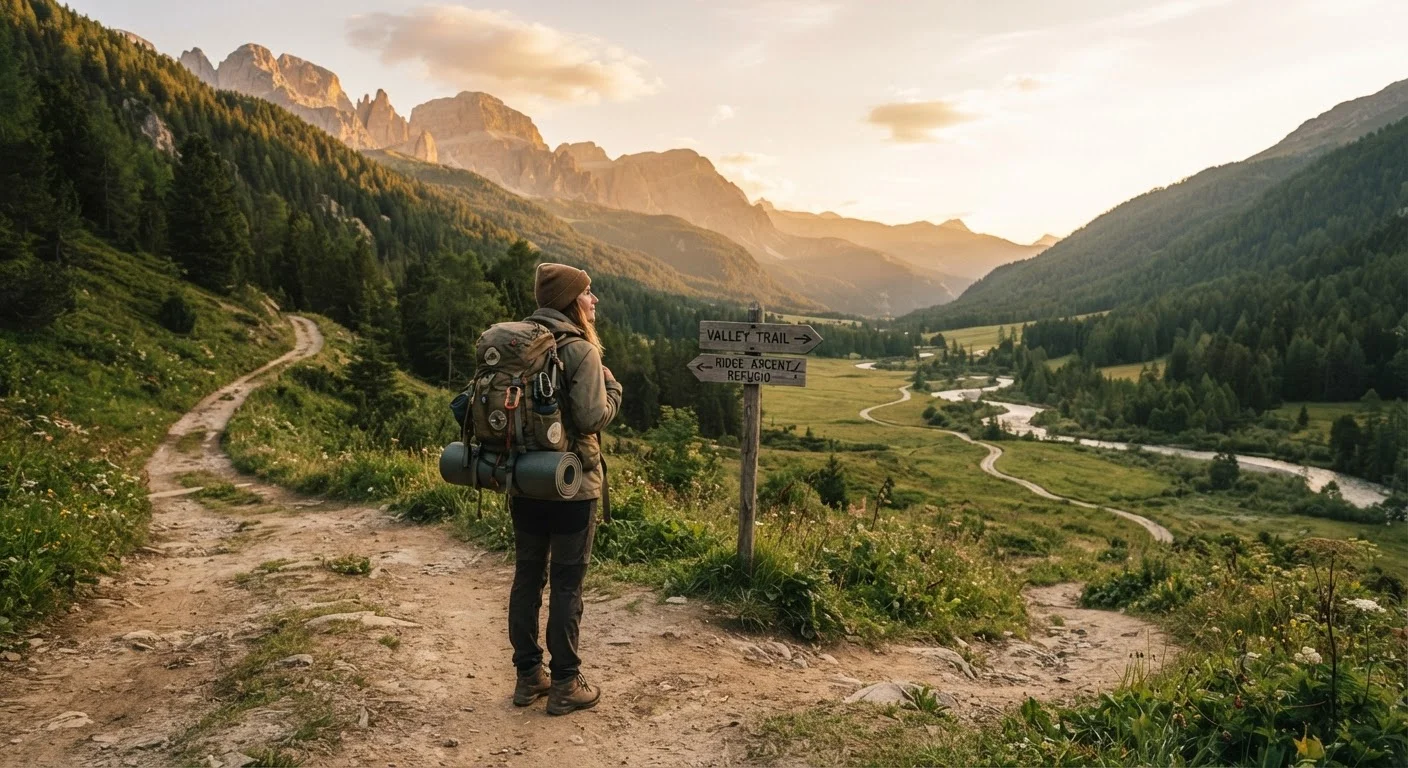
Wilderness immersion isn't simply camping or hiking - it's the deliberate act of spending enough time in a natural environment that its rhythms begin to replace your own. Sunrise becomes your alarm. Weather becomes your schedule. The absence of distraction becomes a kind of clarity.
This approach suits landscapes from the canyon country of the American Southwest to the boreal forests of northern Canada or the high trails of Patagonia. What they share is a requirement: you have to bring your body, your patience, and solid preparation. Navigation skills, weather awareness, appropriate gear, and respect for Leave No Trace principles aren't optional extras - they're the entry fee.
Give Yourself Enough Time
The single most common mistake in wilderness immersion is underestimating how long it takes to decompress from daily life and settle into a landscape's rhythm. Most experienced backcountry travelers note that the first day or two can feel restless or even uncomfortable. Budget enough days that you have time to move past that threshold - often three or more nights in the same area makes a significant difference in how deeply you engage with the environment.
The reward is a specific kind of intimacy with a place that few tourists experience. You begin to understand a landscape by sleeping inside it, by noticing how light moves across it at different hours, by watching it respond to rain or wind. Naturalist and writer Robert Macfarlane has written extensively about how wilderness walking changes perception - the land stops being scenery and starts becoming something you're in dialogue with. That shift doesn't happen on a three-hour guided hike. It takes time.
Safety and planning, of course, matter enormously here. Conditions in wild places can change rapidly, and remote environments amplify the consequences of poor decisions. Travelers should always verify trail and weather conditions with land management agencies, file trip plans with someone reliable, and carry appropriate emergency equipment. The point isn't to court danger - it's to be present enough to meet the landscape honestly.
What Urban Exploration Really Demands
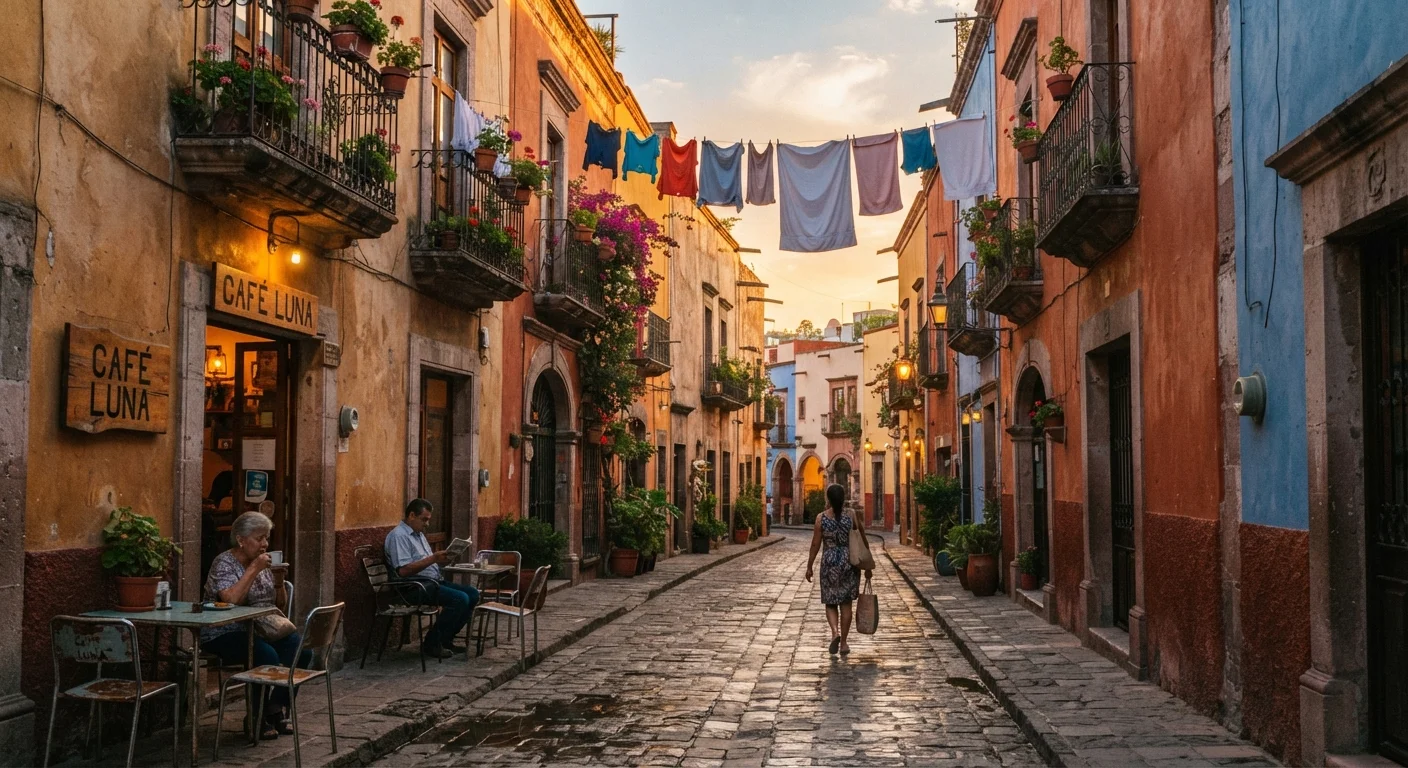
Urban exploration - not to be confused with the illegal practice of entering restricted structures - is the art of reading a city the way a local might: neighborhood by neighborhood, corner by corner, through markets and transit systems and conversations with people who actually live there.
Done well, it requires a particular set of skills. You need to be comfortable with disorientation, willing to wander into the unglamorous parts of town, and genuinely curious about the human stories layered into streetscapes. The payoff is access to a city's living texture: the lunch spots that don't appear in any travel guide, the quiet square where elderly men play chess, the murals that encode decades of neighborhood history.
| Wilderness Immersion | Urban Exploration | |
|---|---|---|
| Primary reward | Solitude, natural intimacy, physical presence | Cultural depth, human connection, spontaneity |
| Physical demands | High - navigation, endurance, weather exposure | Moderate - mostly walking, stamina varies |
| Planning complexity | High - permits, gear, emergency protocols | Lower - flexible, improvisation-friendly |
| Safety considerations | Remote conditions, wildlife, weather, isolation | Urban awareness, petty crime, local customs |
| Best trip length | Multi-day minimum for meaningful immersion | Works even in 2-3 focused days |
| Ideal traveler profile | Self-sufficient, comfortable with silence | Curious, socially adaptable, observant |
Cities reward patience and openness in ways that differ markedly from wilderness travel. Rather than confronting nature's indifference, you're navigating human complexity - and that means cultural literacy matters. Understanding how to behave respectfully in a neighborhood mosque, how to approach a vendor at a local market, or how to read social cues in an unfamiliar culture can transform a surface visit into genuine connection. Our piece on neighborhood immersion as a travel approach explores this further.
For newer independent travelers, urban exploration can also be a gentler on-ramp to experience-driven travel. Infrastructure is usually more forgiving - there are cafes to duck into, transit maps to consult, and other people nearby. That accessibility makes it easier to take risks with your itinerary without the stakes of true wilderness travel. See also our roadmap for first-time independent travelers if you're building these skills from the ground up.
Where the Two Approaches Meet
The most interesting travel experiences often happen at the edges - when a wilderness journey ends in a small regional city, or when urban exploration leads you to a farmers' market run by people who still live off the land nearby. The binary isn't always clean.
Some destinations blur the line almost entirely. Consider the Scottish Highlands, where remote glens give way to whisky towns steeped in centuries of craft culture. Or consider Oaxaca, Mexico, where a rich urban food and arts scene is inseparable from the surrounding mountain villages and indigenous traditions that feed it. In these places, the most complete understanding of where you are requires moving between both modes - and recognizing that neither wilderness nor city exists in isolation from the other.
For travelers drawn to this interplay, it's worth exploring why experience-driven travel tends to leave the deepest impressions. Whether you're standing at a trailhead or at a crowded transit station in a foreign city, the common thread is attention - the willingness to be present enough that a place can actually reach you.
You might also find useful contrast in comparing destination types: our look at coastal vs. mountain destinations covers how the physical character of a place shapes what kind of experience it can offer.