A Country of Islands, Mountains, and Microclimates
Japan stretches roughly 1,500 miles from north to south - a span comparable to driving from Maine to Florida. Along that arc, the country moves from subarctic Hokkaido, where snow blankets the ground for months and dairy farming thrives, down through temperate Honshu and into the subtropical Ryukyu islands of Okinawa. Every degree of latitude brings different crops, different fishing grounds, and ultimately different food on the table.
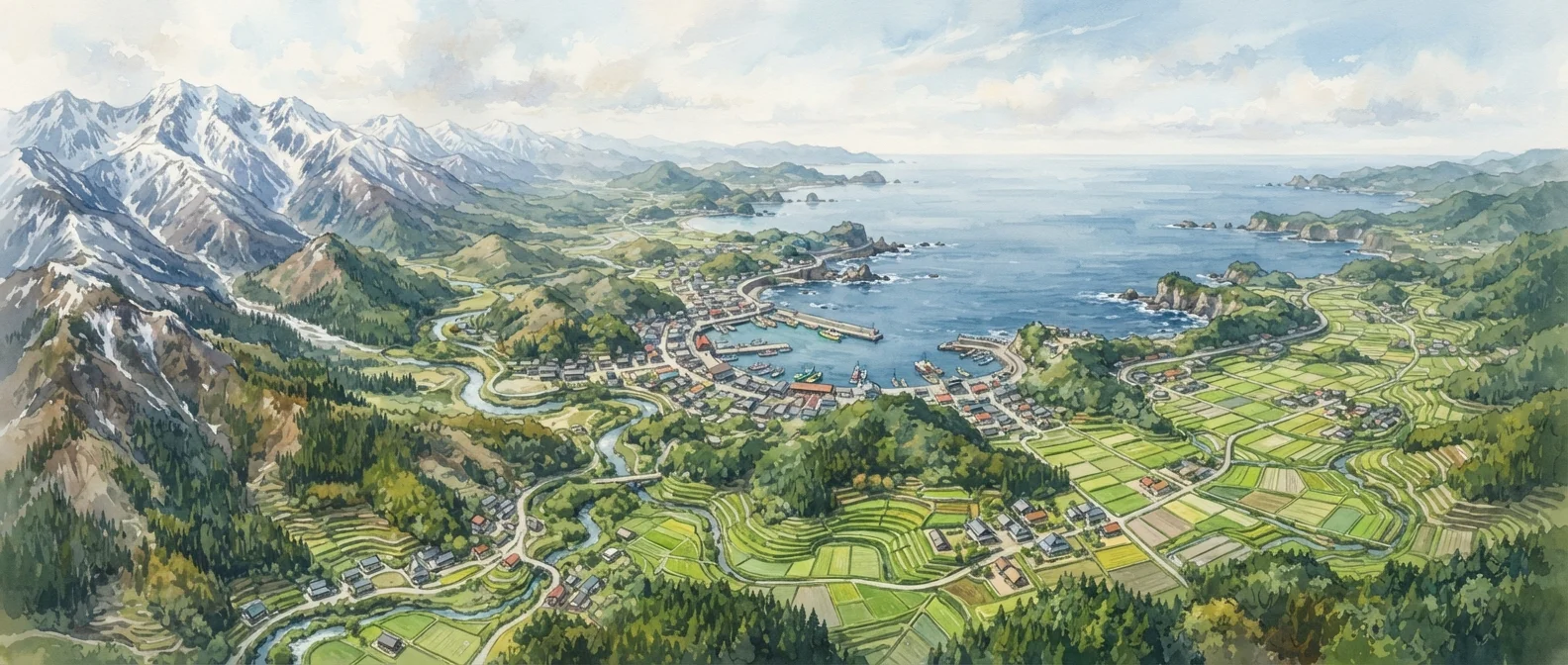
Mountains further fracture the picture. More than 70 percent of Japan is forested highland, meaning that even within a single island, valleys can be climatically isolated from one another. These pockets of geography became culinary laboratories - communities worked with what was near and learned to preserve, ferment, and transform it into something delicious over generations.
73%
Japan covered by mountains and forest
According to Japan's Ministry of Land, Infrastructure, Transport and Tourism, mountains and forests cover approximately 73 percent of the country's total land area.
~1,500 mi
North-to-south span of the Japanese archipelago
Japan's island chain stretches roughly 1,500 miles from subarctic Hokkaido to subtropical Okinawa, according to geographic surveys of the archipelago.
47
Distinct prefectures, each with regional food traditions
Japan's 47 prefectures each carry their own agricultural heritage, local seafood, and cooking styles, shaped by centuries of geographic and climatic difference.
The North: Cold Seas, Rich Broths, and Dairy Country
Hokkaido sits at Japan's northern extreme, where frigid Pacific currents deliver some of the world's most prized cold-water seafood: sea urchin, king crab, scallops, and some of Japan's finest salmon. The cold also creates the conditions for Japan's most productive dairy region - a rarity in a country where traditional cuisine rarely featured milk or butter.
That agricultural character feeds directly into Hokkaido's most famous culinary export: miso ramen. The cold demanded fat and warming calories. Local miso, butter, and corn became natural additions to a bowl of noodles, producing a dish that is almost unrecognizable beside a Fukuoka tonkotsu or a Tokyo shoyu ramen. The geography wrote the recipe.
“Japanese regional cuisines are not variations on a theme - they are separate responses to separate landscapes. The geography of Japan is so varied that its food traditions are perhaps best understood as a collection of distinct cultures that happen to share a writing system.”
— Naomichi Ishige, Japanese cultural anthropologist and food historian, author of works on the history of Japanese food culture
The South and West: Pork, Citrus, and the Open Sea
Travel south to Kyushu and the culinary logic shifts entirely. Here the climate is warmer, pigs thrive, and Fukuoka's position on a busy trade route brought Chinese noodle-making traditions that fused with local pork production to create tonkotsu ramen - a cloudy, collagen-heavy broth that takes hours of boiling to achieve. The warm Tsushima Strait nearby yields different fish than Hokkaido's waters: amberjack, sea bream, and mackerel appear on nearly every table.
Further south, Kagoshima's volcanic soil and subtropical warmth grow distinctively sweet root vegetables, notably the satsumaimo sweet potato that became a regional staple. Okinawa, separated by both geography and history as the former Ryukyu Kingdom, developed an entirely different pantry - bitter melon, pork belly braised in awamori rice liquor, and sea grapes pulled directly from warm coastal shallows. As the culinary travel approach suggests, eating locally is one of the most direct ways to understand where you actually are.
The Interior: Fermentation, Preservation, and Mountain Logic
Japan's mountainous interior posed a challenge that shaped some of the country's most distinctive foods. Communities far from the coast needed ways to preserve protein and flavor through long winters. The answer was fermentation - and Japan developed it into an art form.
In the landlocked regions around Lake Biwa in Shiga Prefecture, funazushi (fermented crucian carp) represents one of Japan's oldest preserved foods, predating modern sushi by centuries. The Nagano highlands, cold and inland, became famous for miso and soy sauce production - environments where brewing cultures develop slowly and complex flavors have time to mature. Even the regional variations in soy sauce across Japan - the lighter usukuchi of the Kansai region versus the darker, richer tamari of the interior - trace back to what local rice crops, water sources, and climates made possible.
Travel Tip: Let Geography Guide Your Eating
When planning a trip through Japan, research what each region is climatically and agriculturally famous for before you arrive. Coastal prefectures will have their best ingredient at the dockside morning market; mountain towns will often center meals around seasonal foraged vegetables and preserved foods. Eating with geography in mind turns every meal into a story about place.
For curious travelers, these flavor differences aren't just trivia - they're a live map of where you are. A different-tasting dashi, a sweeter miso, a surprisingly creamy ramen: each signals that the land beneath your feet has changed.