The Foundational Rule: No One "Owns" the Road
Right-of-way is one of the most misunderstood concepts in everyday driving. Many drivers treat it as something they possess - a privilege they can demand. In reality, traffic law frames it the opposite way: right-of-way is something you yield to others, not something you hold over them.
This distinction matters because it shifts responsibility. If you are required to yield and you don't, you bear legal and safety accountability for what happens next. Understanding the specific scenarios where yielding is required - and why - helps you anticipate other drivers' behavior and reduces the chance of conflict or collision.
For a broader look at how road signage communicates these rules visually, see our guide to US road sign colors and shapes.
~40%
Of US crashes occur at intersections
According to the Federal Highway Administration, roughly 40% of all traffic crashes in the US involve intersections, where right-of-way disputes are a primary contributing factor.
~50%
Of intersection fatalities involve failure to yield
NHTSA research has consistently found that failure to yield is among the top driver-related critical reasons cited in fatal intersection crashes.
Merging: Who Really Has to Move?
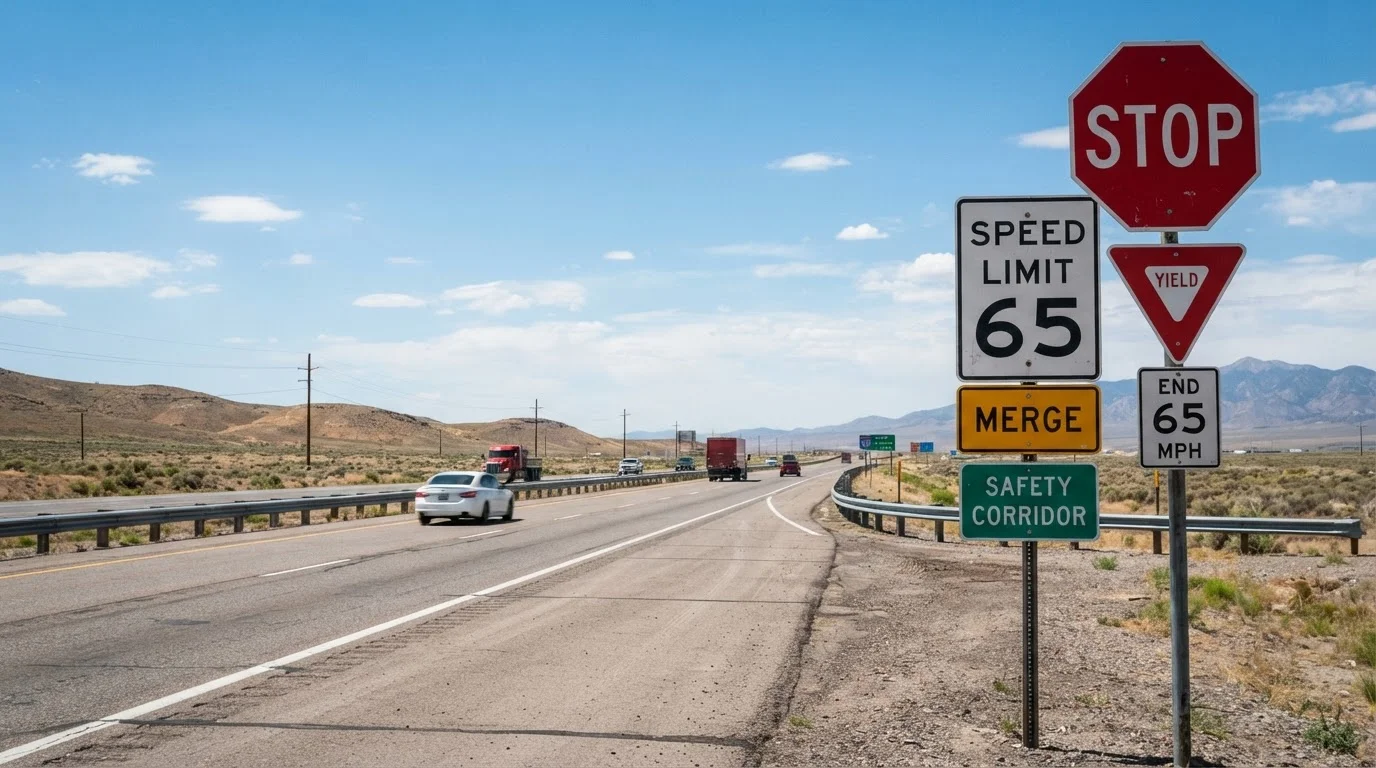
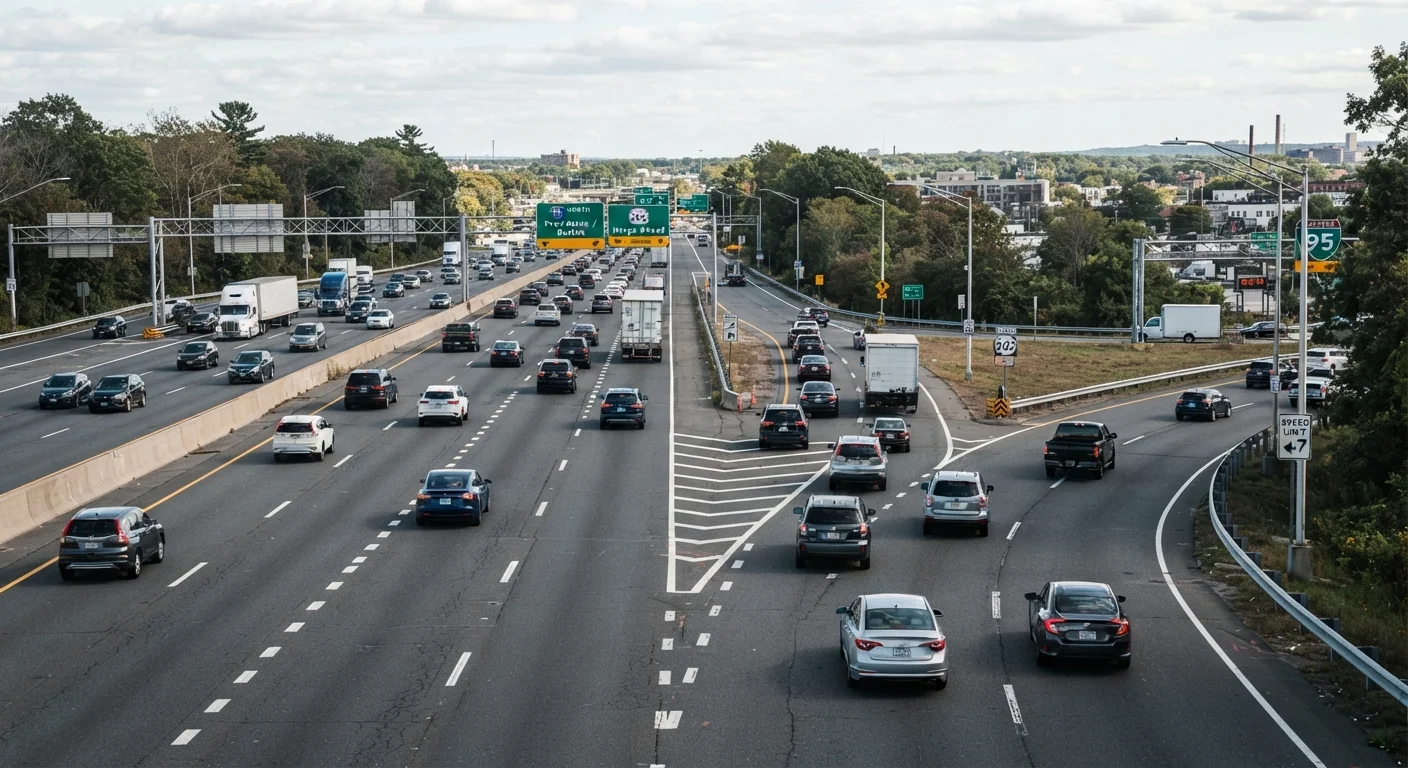
Highway on-ramps are a persistent source of confusion. The standard rule across US states is straightforward: the driver entering the roadway must yield to traffic already on it. If you are accelerating down an on-ramp, your job is to match the speed of highway traffic and find an available gap - not to nose your way in and expect others to brake.
That said, safe merging is a two-part dynamic. Drivers in the through lane are not legally obligated to move over or slow down for merging vehicles, but defensive driving habits often make it practical to create space when traffic allows. The key legal point is that fault in a merge collision typically falls on the merging driver when that driver failed to yield.
Zipper merging - where two lanes of traffic alternate one vehicle at a time into a single lane - is an increasingly recognized technique encouraged by transportation engineers in construction zones and lane-ending scenarios. Several states have updated their driver guidance to acknowledge it, though it is not universally codified.
Match Speed Before You Merge
The most effective merge technique is accelerating on the ramp to match the speed of highway traffic before the lane ends. Merging too slowly forces other drivers to react to you. Use the full length of the ramp to reach an appropriate speed and time your entry with a natural gap.
Yielding at Intersections: Stop Signs, Traffic Lights, and the Right-Hand Rule
Intersections are where right-of-way rules become most detailed. Here is how the main scenarios break down:
- Four-way stop: First to arrive, first to go. Simultaneous arrivals default to the right-hand rule - yield to the driver on your right.
- T-intersection (no signs): Drivers on the terminating road yield to those on the through road.
- Uncontrolled intersection (no signs or signals): The right-hand rule applies - yield to the vehicle on your right.
- Traffic signals: A green light permits you to proceed, but it does not eliminate your obligation to yield to pedestrians lawfully in the crosswalk, or to oncoming traffic when turning left.
- Yield signs: You must slow and stop if necessary for conflicting traffic - but if the road is clear, you are not required to stop completely.
Left turns deserve special attention. When turning left at a green light with no dedicated left-turn arrow, you must yield to all oncoming traffic before completing your turn. This is one of the most common right-of-way violations and a leading cause of intersection crashes.
Yield Signs Are Not Stop Signs
A yield sign requires you to slow and be prepared to stop - but if there is no conflicting traffic, you may proceed without coming to a full stop. This is a meaningful legal distinction: rolling through a stop sign is a violation, but proceeding through a clear yield is not.
State Laws Vary on Some Details
While core right-of-way principles are consistent nationwide, specific rules - such as roundabout yielding, bicycle lane conflicts, or pedestrian right-of-way mid-block - can differ by state. When in doubt, consult your state's official driver handbook or vehicle code for the controlling rules in your jurisdiction.
Pedestrians, Cyclists, and Emergency Vehicles
Right-of-way rules extend beyond cars. Pedestrians in a legal crosswalk - marked or unmarked - generally have the right-of-way, and drivers must yield to them. This applies even mid-block in some states if the pedestrian has clearly begun crossing. Pedestrians stepping into traffic unexpectedly outside a crosswalk, however, may bear liability in that scenario depending on state law.
Cyclists on public roads typically have the same rights and responsibilities as motor vehicles in most states. When a cyclist is traveling in a lane, they are not required to yield simply because a car is behind them.
Emergency vehicles with active lights and sirens require all drivers to pull to the right and stop until the vehicle passes. Failure to do so is a moving violation in every US state.
Staying alert to all road users - not just other cars - is part of what makes right-of-way awareness genuinely useful. Aggressive following and distraction are closely related hazards; for context on following distance, see why tailgating is more dangerous than most drivers realize.