The Word 'Budget' Has a Branding Problem
Ask most Americans what a budget is, and you'll hear words like "restrictive," "stressful," or "something I know I should do but don't." That reaction says more about how budgeting has been presented than what it actually involves.
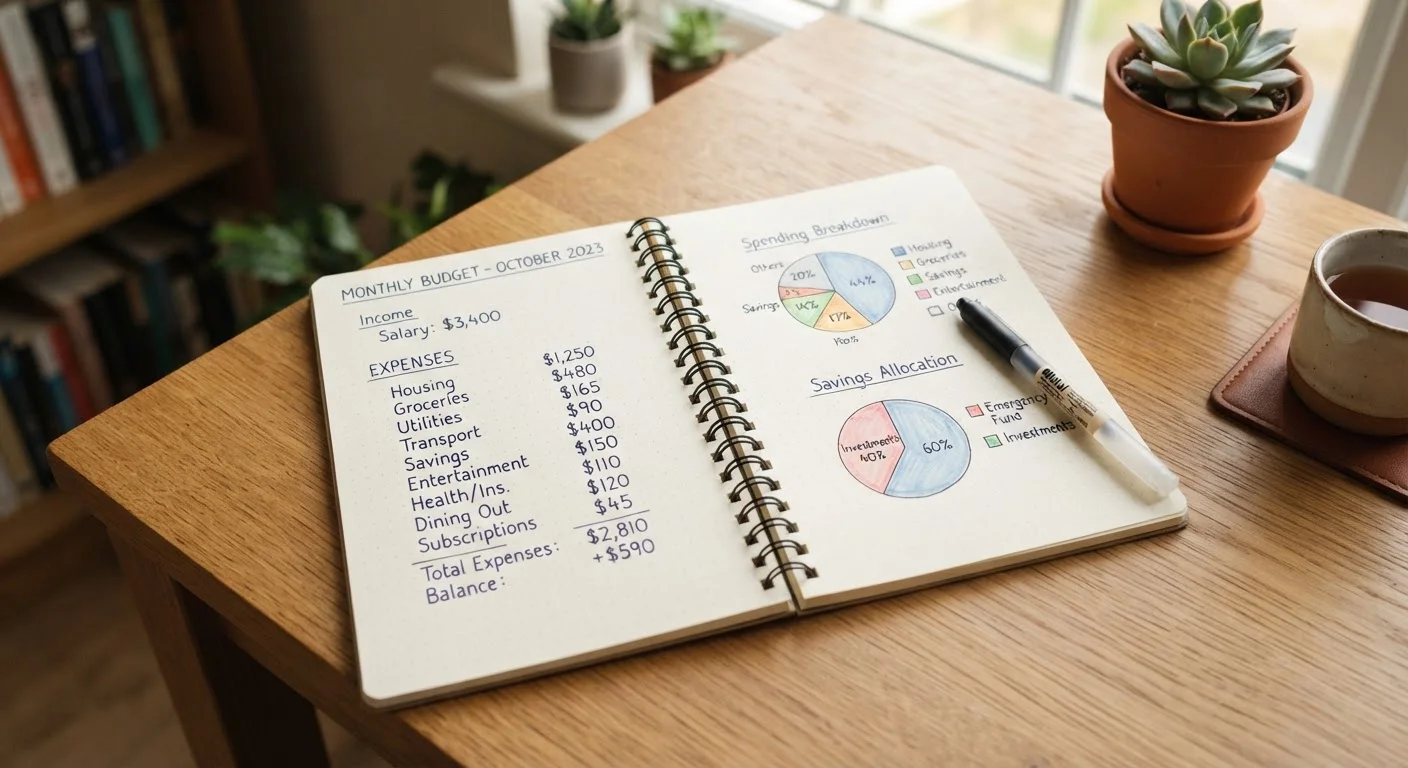
A budget is simply a written intention for your money. It answers one question: given what I earn, where do I want my dollars to go this month? That's it. There's no moral weight attached, no punishment for spending on things you enjoy, and no requirement to track every cup of coffee.
The misunderstanding runs deep because budgeting advice has historically been framed around deprivation - cut this, eliminate that, stop treating yourself. That framing conflates the tool (a budget) with one way of using it (aggressive spending cuts). You can build a budget that includes a restaurant fund, a vacation fund, and a streaming subscription. As long as your plan accounts for your income and covers your priorities, it qualifies.
Budget vs. Spending Tracker: Not the Same Thing
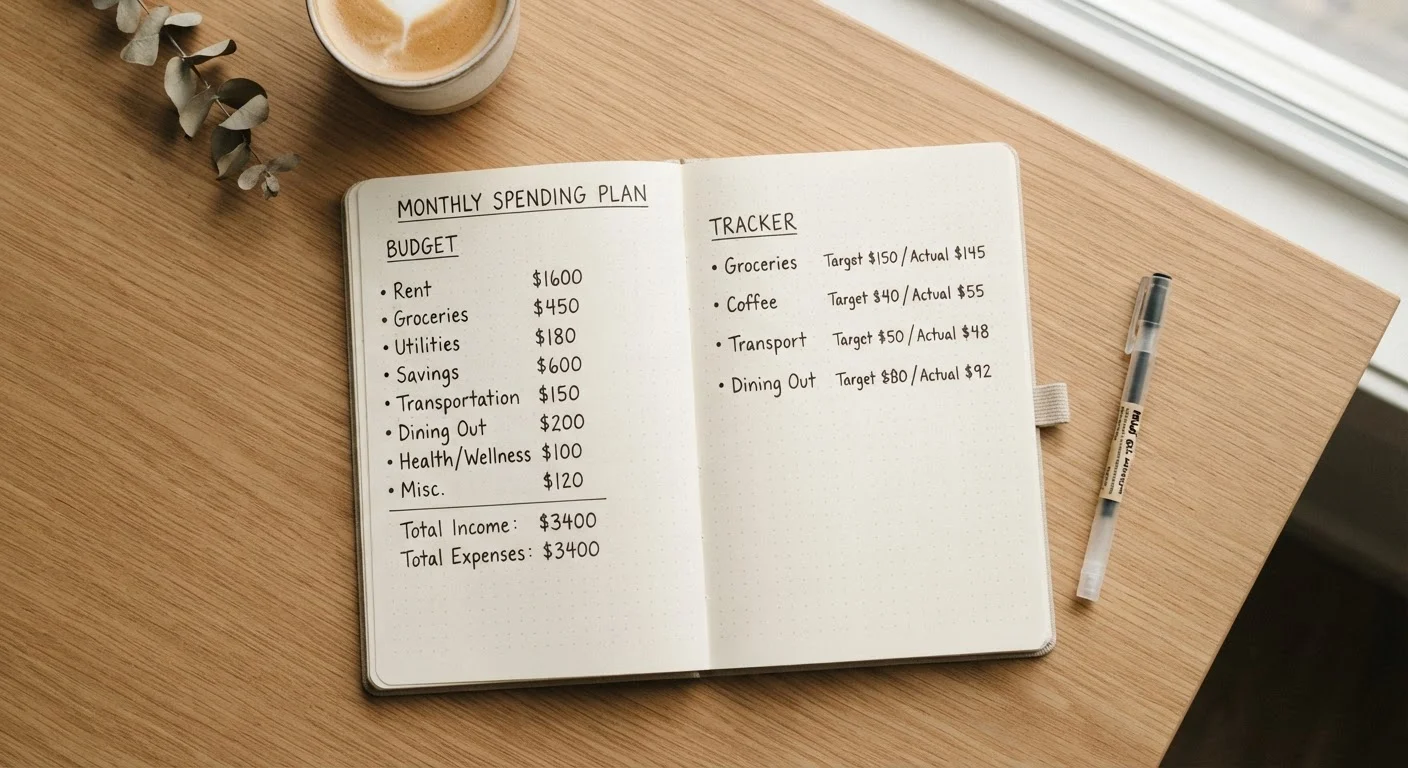
A budget is a forward-looking plan made before you spend. A spending tracker records what you've already spent. Both are useful, but they serve different purposes. Many people start with a tracker to understand current habits, then use that data to build a realistic budget. You don't need to choose one over the other - they work well together.
What a Budget Actually Contains
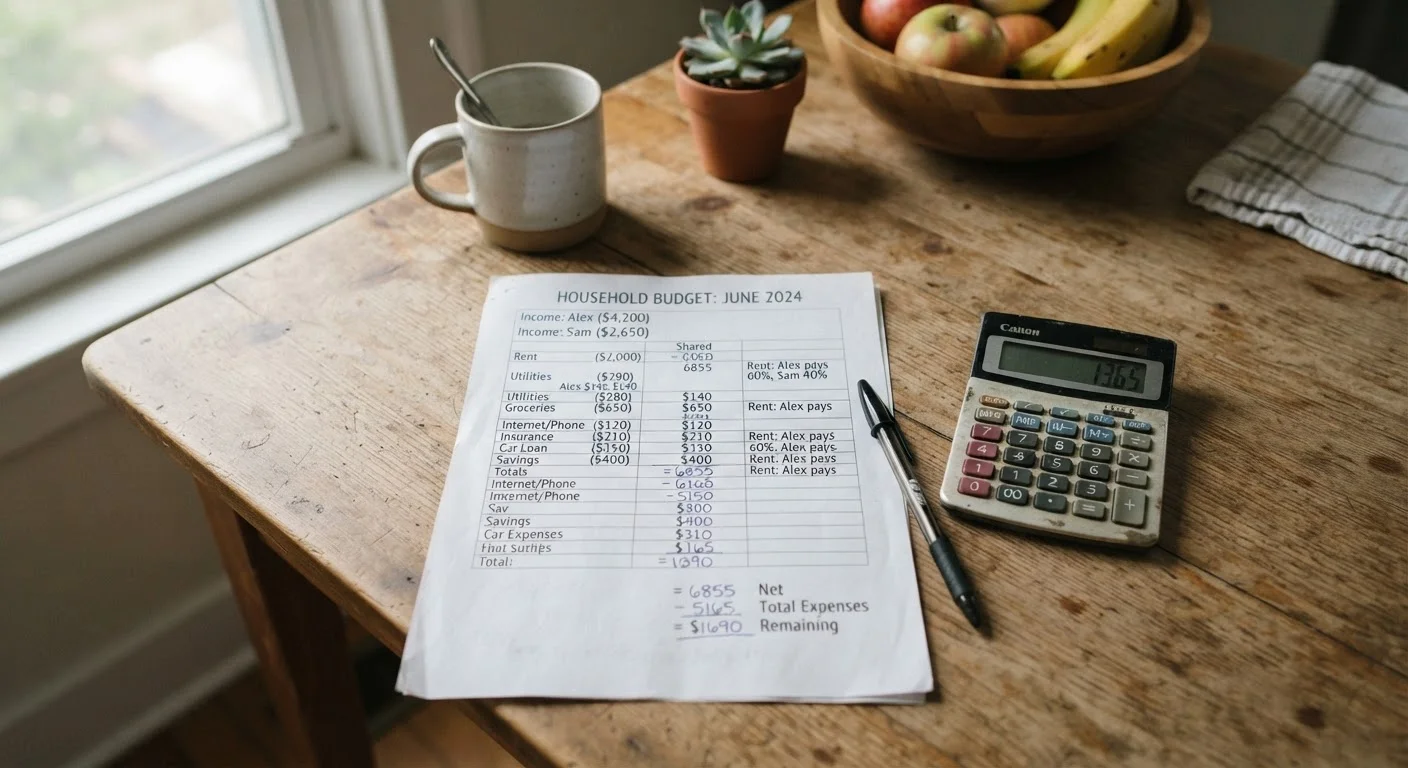
At its core, every budget has two sides: money coming in and money going out. Income includes wages, freelance pay, side income, government benefits - any reliable source of funds. Expenses include everything you spend or plan to spend: rent, groceries, insurance premiums, debt payments, subscriptions, and discretionary spending like clothing or entertainment.
A complete budget also includes savings as a line item, not an afterthought. Treating savings as an expense - something you "pay" at the start of the month - is one of the most effective habits in personal finance, sometimes described as "paying yourself first."
When income minus all planned expenses and savings equals zero (or close to it), you have what's often called a zero-based budget. Every dollar has a job. Other approaches leave more flexibility, grouping expenses loosely rather than assigning exact amounts to every category. Neither method is universally correct - the right structure is the one you'll actually use.
~33%
Americans with a written household budget
Surveys consistently find that fewer than one in three American adults maintains a detailed written budget, despite widespread acknowledgment that budgeting is important.
$1,000+
Typical monthly discretionary spending gap
Research from financial wellness organizations suggests many households underestimate their discretionary spending by hundreds of dollars per month before tracking it formally.
For a plain-language breakdown of terms you'll encounter as you build your first budget, see the Field Guide to Budgeting Terms.
Common Misconceptions That Get in the Way
Several persistent myths stop people from ever starting. Understanding them makes the first step considerably easier.
- "Budgeting is only for people in financial trouble." In reality, people at every income level use budgets - often because having more money makes intentional allocation more valuable, not less.
- "I have to track every transaction perfectly." A budget is a plan, not an audit. You can round expenses, estimate categories, and still gain significant clarity about your spending patterns.
- "A budget that fails once is worthless." Overspending in one category doesn't ruin a budget; it gives you information. Adjusting the plan is part of the process, not evidence that you've failed.
If any of those feel familiar, more of these misconceptions are addressed in a dedicated article that's worth reading before you start.
Start With One Month of Real Numbers
Before building any budget framework, pull your last month of bank and credit card statements and categorize every transaction. This grounds your budget in what you actually spend, not what you assume you spend. Most people find at least one surprise category that immediately reshapes their plan.
Why Budgeting Works - and When to Revisit the Approach
The value of a budget is not that it prevents all overspending. It's that it creates awareness. Most people who build their first honest budget are surprised by at least one category - not because they were irresponsible, but because money spent gradually and automatically is easy to underestimate.
That awareness is the mechanism. Once you can see the full picture of your cash flow, you can make deliberate choices: fund an emergency account, accelerate debt payoff, or simply stop wondering where your paycheck went.
A budget also needs to fit your real life, not a textbook ideal. Popular frameworks like the 50/30/20 rule - which allocates 50% of income to needs, 30% to wants, and 20% to savings - are useful starting points, but they don't fit every household's situation. Why the 50/30/20 rule doesn't work for everyone is a useful read once you understand the fundamentals.
When you're ready to put one together, this beginner-friendly starting point walks through the process step by step, and building a monthly budget that reflects real life covers irregular expenses and income fluctuations that most templates ignore.
This article is for general informational purposes only and does not constitute personalized financial advice. Consider consulting a qualified financial professional for guidance specific to your circumstances.