
Why a Budget Is Worth Making
A budget is not a punishment. It's simply a written plan for where your money goes before the month happens to it. Without one, spending decisions get made by default - a pattern that often leaves people unsure where their paycheck went.
You don't need to be in debt, earning a high income, or especially good at math to benefit from a budget. You just need your income figure, a list of your expenses, and about 30 minutes. If you've heard otherwise, our article on common budgeting myths is worth a quick read before you begin.
Start Simple - Refine Later
Your first budget doesn't need to be detailed or perfect. A rough plan that you'll actually use beats a complex spreadsheet you'll abandon after a week. Aim for good enough to start, then improve it month by month as you learn your own patterns.
Step 1: Know Your Take-Home Income
Take-home income (also called net income) is the money that actually lands in your bank account after taxes, Social Security, Medicare, and any other deductions are withheld. This is the number your budget must be built around - not your gross salary or hourly rate quoted before deductions.
If you receive a regular paycheck, find the net amount on your pay stub. If you're paid biweekly, multiply that amount by 26 and divide by 12 to get a monthly figure. If your income varies - freelance, tips, or seasonal work - use a conservative estimate based on your lower recent months.
Take-home income
The money you actually receive after taxes and other deductions are removed from your paycheck. This is what your budget must be built around.
Fixed expense
A cost that stays the same each month, such as rent, a car payment, or a monthly insurance premium.
Flexible expense
A cost that changes based on your choices, such as groceries, dining out, or entertainment.
Zero-based budget
A budgeting method where every dollar of income is assigned a specific purpose, so income minus all allocations equals zero.
50/30/20 guideline
A simple rule of thumb suggesting you direct roughly 50% of take-home income to needs, 30% to wants, and 20% to savings and debt repayment.
Net income
Another term for take-home income - the amount left in your paycheck after all deductions have been withheld.
Step 2: List Your Fixed and Flexible Expenses
Expenses generally fall into two camps:
- Fixed expenses are the same amount every month: rent or mortgage, car payment, loan minimums, insurance premiums, and subscriptions with a set price.
- Flexible expenses change based on your choices and habits: groceries, gas, dining out, clothing, entertainment, and personal care.
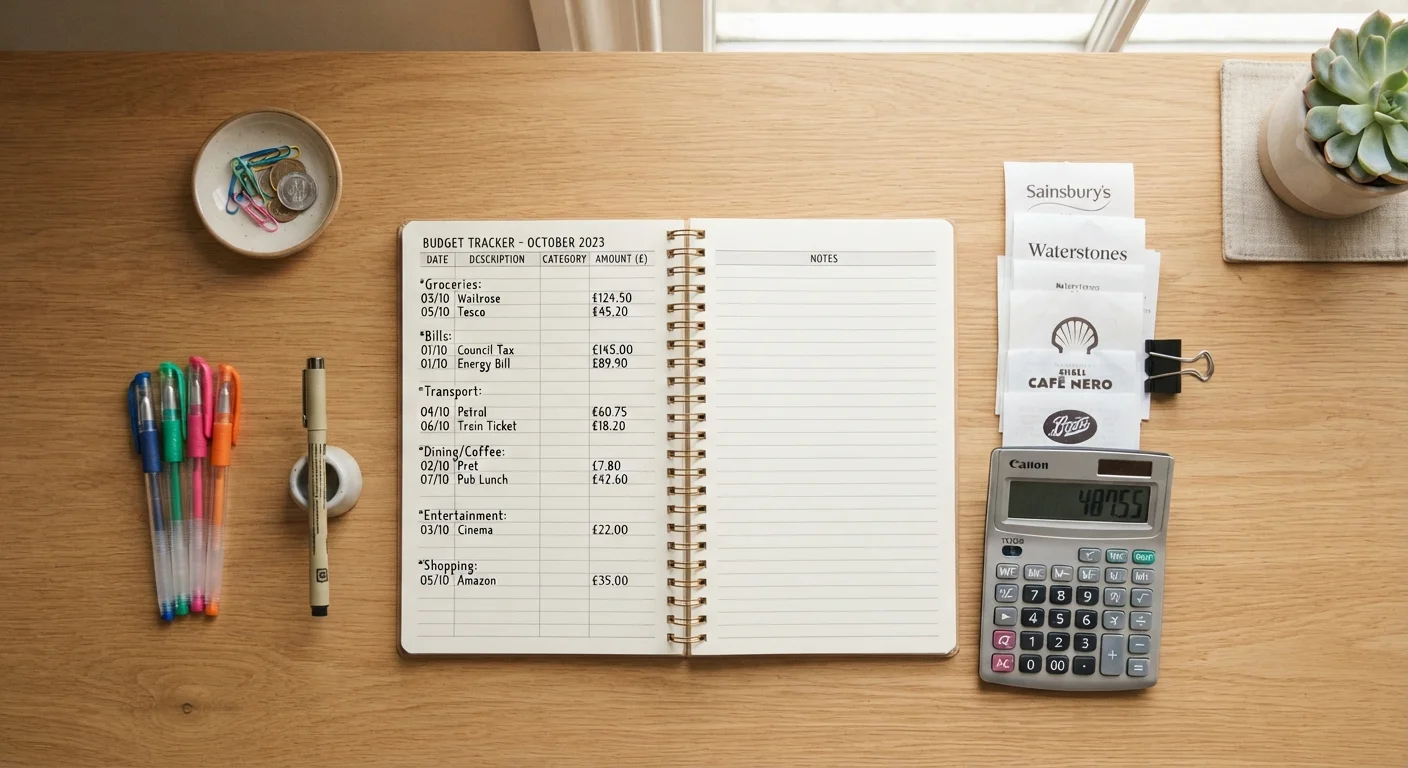
Write down every fixed expense first - these are non-negotiable in the short term. Then estimate your flexible categories based on what you've actually been spending, not what you wish you were spending. Checking the past two or three months of bank or credit card statements gives you a realistic baseline. For a comprehensive list of what belongs in each category, see our household budget category guide.
Irregular Expenses Need a Line Too
Annual or occasional costs - like car registration, holiday gifts, or a yearly subscription - are easy to forget in a monthly budget. Divide the annual total by 12 and add that monthly amount as a separate savings line. Setting that money aside each month means the expense won't blindside you when it arrives.
Step 3: Set Spending Limits by Category
Once you know what you spend, assign a monthly limit to each category. A simple framework many people find useful is the 50/30/20 guideline: roughly 50% of take-home income toward needs, 30% toward wants, and 20% toward savings and debt repayment. Treat this as a loose starting structure - it rarely fits anyone's life exactly.
Needs include housing, utilities, groceries, transportation, and minimum debt payments. Wants include dining out, streaming services, and hobbies. Savings and debt repayment cover emergency funds, retirement contributions, and extra debt paydowns. If you carry debt, our plain-language debt guide explains how borrowing works and where it fits in a budget.
Your numbers won't match the guideline perfectly, and that's fine. The goal is to allocate every dollar intentionally rather than letting spending happen by chance.
A Field Guide to Budgeting Terms
A plain-language glossary of the budgeting terms you'll encounter most - from discretionary spending to pay yourself first - without the finance-textbook tone.
Monthly Budget Reset Checklist
A practical checklist to use at the start of each month: review last month's spending, adjust category limits, and set up for a cleaner financial month ahead.
Step 4: Check the Math and Adjust
Subtract your total planned expenses from your take-home income. The result tells you everything:
- Positive number: You have a buffer. Direct it toward savings, an emergency fund, or a financial goal.
- Zero: Every dollar is assigned - that's the idea behind a zero-based budget.
- Negative number: Planned spending exceeds income. Trim flexible categories until the math balances.
If your expenses consistently exceed income, that's important information - not a reason to give up on budgeting. It tells you precisely where decisions need to be made, which is far more useful than not knowing.
Don't Rely on Your Gross Salary
A common early mistake is building a budget around your gross salary - the number on your offer letter or contract - instead of what actually hits your bank account. After taxes, Social Security, and other withholdings, take-home pay can be significantly lower. Always use your actual net deposit as the starting point.
Keeping It Going Month to Month
Your first budget is an estimate. Expect to revisit and revise it after 30 days, once you have real spending data to compare against your plan. Most people discover one or two categories they consistently misjudged - that's normal, and correcting them makes the next month more accurate.
Once you've built the habit, our guide to building a monthly budget that reflects real life walks through handling irregular expenses, income fluctuations, and the categories people most often forget. You can also use our monthly budget reset checklist at the start of each new month to stay on track.
Budgeting isn't a one-time event - it's a short recurring habit that gives you clearer choices and fewer financial surprises. Once the foundation is stable, you'll be better positioned to focus on saving and building long-term financial stability.
This article is for general informational and educational purposes only. It is not personalized financial advice. For guidance tailored to your specific circumstances, consider consulting a licensed financial professional.