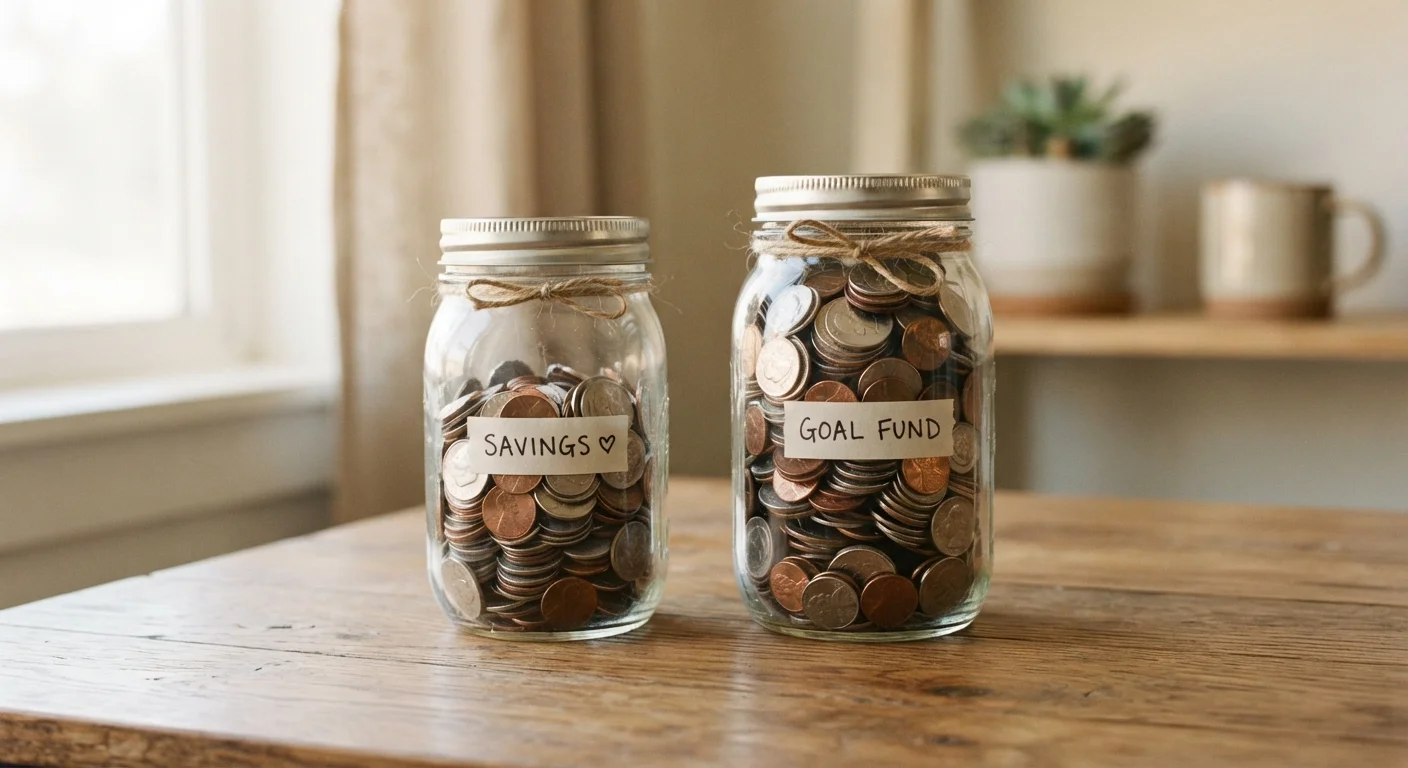
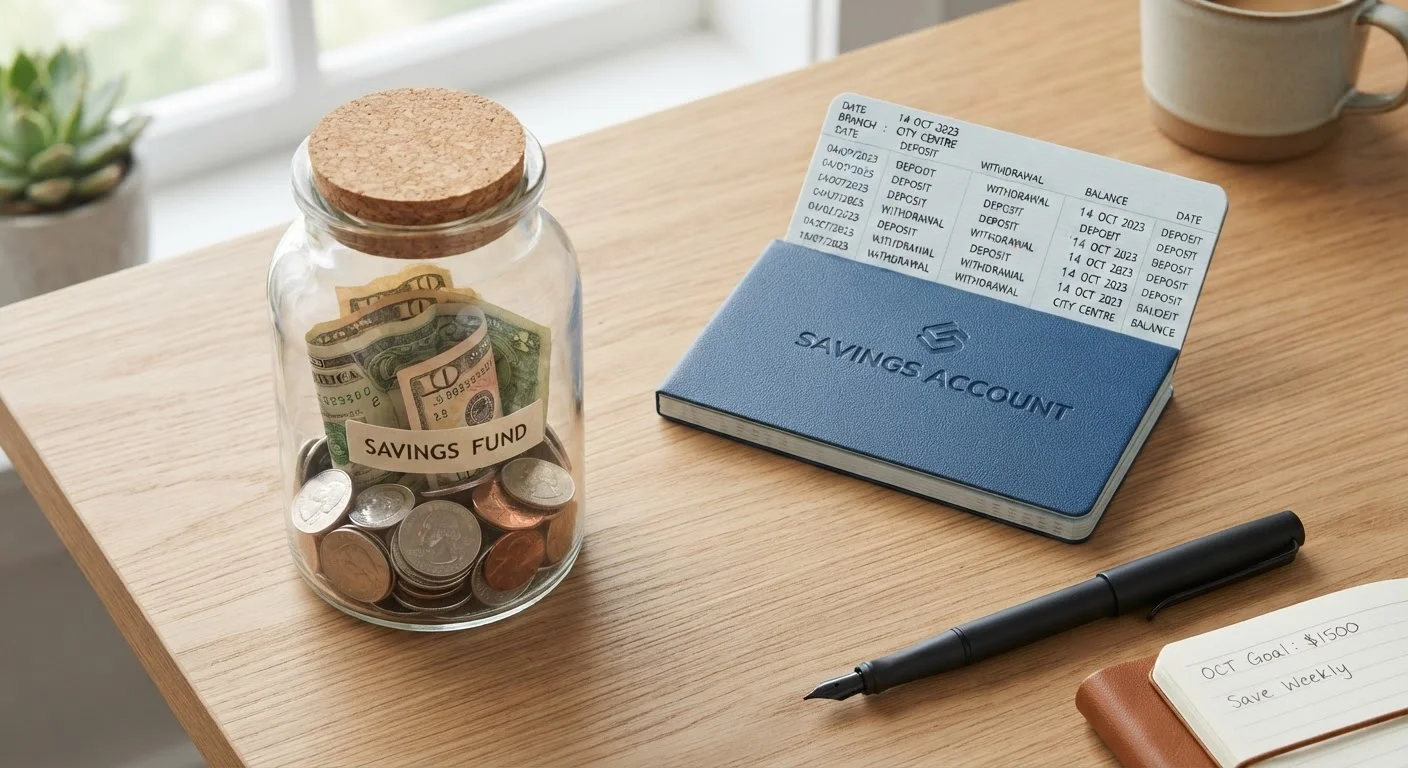
The Core Confusion - and Why It Matters
Many Americans use the terms "emergency fund" and "savings account" interchangeably - but they describe two different things. One is a financial goal; the other is a financial tool. Mixing them up can leave you thinking you're protected when you're not.
A savings account is a deposit account at a bank or credit union that holds cash, earns interest, and keeps your money accessible. An emergency fund is a designated reserve of money set aside specifically to cover unexpected, essential expenses - a job loss, a medical bill, an urgent car repair.
You can absolutely keep an emergency fund inside a savings account. But simply having a savings account does not mean you have an emergency fund. The distinction is intentionality: what the money is for, how much of it there is, and whether you treat it as off-limits for everyday spending.
See our guide to building an emergency fund into your budget for a practical starting framework.
| Criterion | Emergency Fund | Savings Account |
|---|---|---|
| What it is | A financial goal or designation | A type of bank deposit account |
| Primary purpose | Cover unexpected essential expenses | Store and grow cash for any goal |
| Recommended size | 3-6 months of essential expenses | Depends on the savings goal |
| Access | Accessible but reserved for emergencies | Accessible; withdrawals unrestricted |
| Earns interest? | Only if held in an interest-bearing account | Yes, at the account's current rate |
| Behavioral rule | Strict: spend only in genuine emergencies | Flexible: spend toward any intended goal |
| Can they overlap? | Yes - an emergency fund often lives inside a savings account | Yes - a savings account can hold an emergency fund |
What Each One Actually Does
An emergency fund functions as a financial firewall. Its entire job is to exist - to be there when something goes wrong so that you don't have to reach for a credit card or take out a loan at a high interest rate. Financial planners generally suggest an emergency fund that covers three to six months of essential living expenses, though the right target depends on your income stability, household size, and risk tolerance.
A savings account, by contrast, is a general-purpose vehicle. It can hold your emergency fund, but it can also hold a vacation fund, a home repair fund, a holiday gift fund, or an unspecified cash cushion. The account itself carries no built-in rules about how the money should be used.
This is why behavior matters as much as the account type. Someone with $10,000 in a single savings account - earmarked for nothing specific - may drain it on a kitchen remodel, leaving nothing for a genuine emergency. Someone who designates $8,000 of that same account as "emergency only" has effectively created an emergency fund inside a savings account.
~57%
Americans unable to cover a $1,000 emergency from savings
According to a Bankrate survey, a majority of U.S. adults would need to borrow or use credit to handle an unexpected $1,000 expense.
3-6 months
Recommended emergency fund coverage
Most personal finance guidance suggests covering three to six months of essential living expenses, with more for variable-income earners.
For a broader view of how savings fits into your overall financial strategy, understand the difference between saving and investing.
Where to Keep Your Emergency Fund
The best home for an emergency fund is somewhere liquid, safe, and slightly inconvenient to access. You want the money available within a day or two, but not so easy to reach that it gets spent impulsively.
A dedicated savings account - separate from your everyday checking account - fits this profile well. The separation creates a psychological boundary. When you log into your bank and see "Emergency Fund" as a distinct account, it's harder to rationalize dipping into it for non-emergencies.
High-yield savings accounts (HYSAs) are worth considering because they offer meaningfully higher interest rates than traditional savings accounts, while still keeping your money federally insured and accessible. Compare high-yield and traditional savings accounts to see whether the trade-offs make sense for your situation.
What you generally want to avoid: keeping your emergency fund in a certificate of deposit (CD) that locks up your money, or in a brokerage account where its value can drop right when you need it most. Liquidity and stability are the priorities here, not growth.
Keep Emergency Funds Out of Investment Accounts
Stocks, mutual funds, and other investment vehicles can lose value at exactly the wrong moment. If a market downturn coincides with a personal financial emergency, you may be forced to sell at a loss. Emergency funds belong in stable, liquid accounts - not in portfolios designed for long-term growth. For a broader comparison of cash-holding options, see our plain-language comparison of CDs, money market accounts, and savings accounts.
Once your emergency fund is established, automating your contributions can help you reach your goal without relying on willpower alone.
Building Both - Not Choosing Between Them
The real takeaway isn't that you need to pick one over the other. You need both - a clear savings strategy and a funded emergency reserve. The emergency fund is a priority within that strategy, not a replacement for it.
A reasonable sequence for most people: build a starter emergency fund of $1,000 to $2,000 first, pay down any high-interest debt, then grow the emergency fund to a full three-to-six-month reserve, and finally open additional savings vehicles for specific goals.
If you're starting from scratch, building a financial safety net from zero walks through practical steps even on a tight budget.
This article is for general informational and educational purposes only and does not constitute personalized financial advice. Consult a qualified financial professional for guidance specific to your situation.