
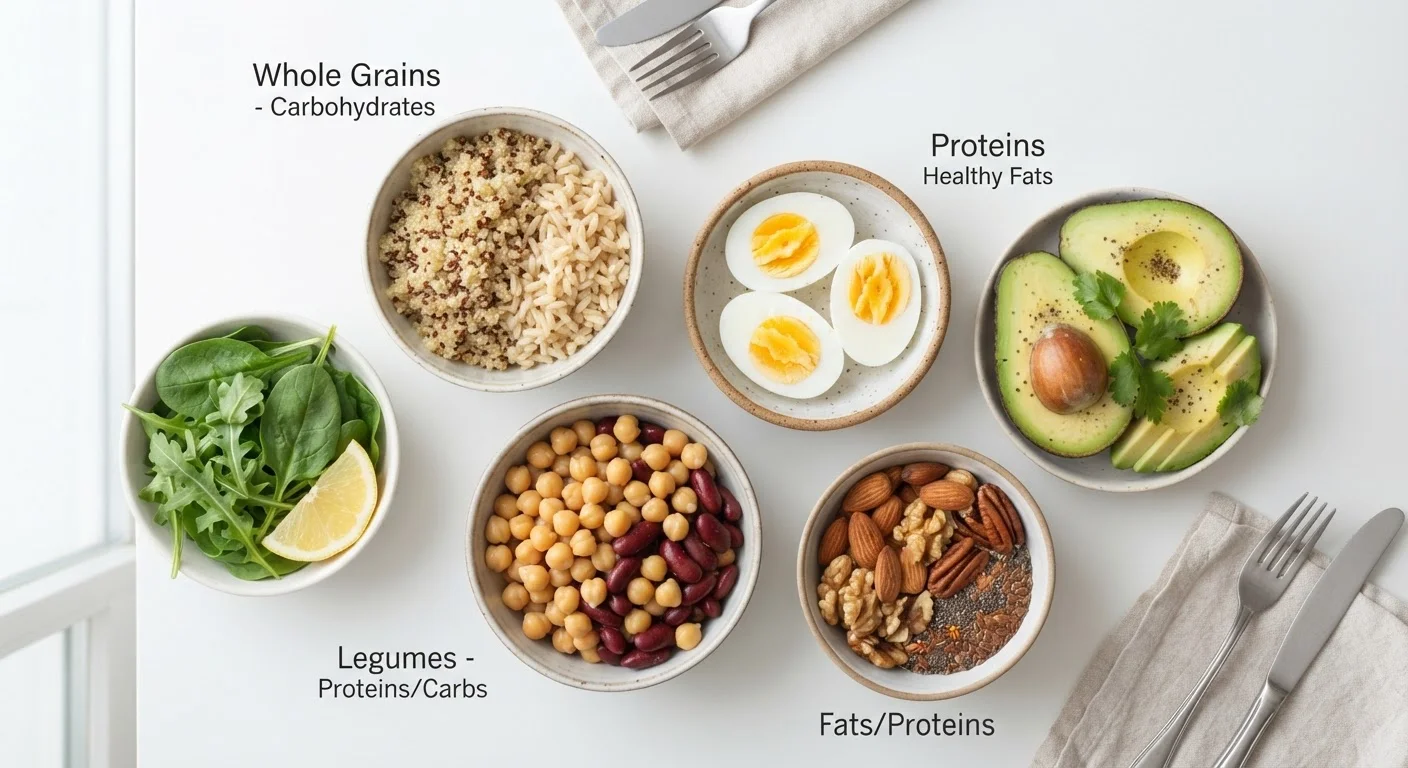
Carbohydrates: Your Body's First Choice for Fuel
Carbohydrates are the body's primary and most readily available energy source. When you eat carbs, the digestive system breaks them down into glucose - a simple sugar - which circulates in the bloodstream and powers cells, particularly in the brain and working muscles. The brain alone relies almost exclusively on glucose for moment-to-moment function.
Carbohydrates come in two broad forms. Simple carbohydrates (sugars) are digested quickly, producing rapid spikes in blood glucose. Complex carbohydrates - found in whole grains, legumes, and starchy vegetables - are digested more slowly due to their fiber content, providing more sustained energy and supporting digestive health.
Fiber, technically a carbohydrate the body cannot fully digest, plays its own critical role: it feeds beneficial gut bacteria, slows glucose absorption, and supports heart health. The source of carbohydrates matters considerably. Legumes, oats, and whole-grain foods deliver fiber and micronutrients alongside energy; heavily refined options deliver energy with fewer accompanying benefits. For a fuller picture of how food processing affects nutritional value, see what the research says about whole vs. processed foods.
Choose carbohydrate sources with fiber
When selecting carbohydrate-rich foods, prioritizing those that retain their natural fiber - whole grains, legumes, fruits, and vegetables - delivers more sustained energy and broader nutritional benefits than refined alternatives. Fiber content is listed on the Nutrition Facts panel and can be a useful quick guide when comparing similar products.
Protein: The Body's Builder and Regulator
Protein is composed of chains of smaller units called amino acids. Of the 20 amino acids the body uses, nine are classified as essential - meaning the body cannot synthesize them and must obtain them through food. Complete proteins (found in animal products and some plant sources like soy and quinoa) contain all nine essential amino acids. Incomplete proteins (most plant sources) can be combined across the day to meet full amino acid needs.
Protein's roles extend well beyond muscle building. It forms structural components like skin, hair, and connective tissue; enzymes that drive chemical reactions; antibodies that support immune defense; and hormones like insulin. The body also uses protein for energy when carbohydrate availability is low, though this is not its primary function.
~10-35%
Recommended daily calorie range from protein
Per the Dietary Reference Intakes established by the National Academies of Medicine for healthy adults.
45-65%
Recommended daily calorie range from carbohydrates
Per the Acceptable Macronutrient Distribution Ranges (AMDRs) set by the National Academies of Medicine.
20-35%
Recommended daily calorie range from fat
Per the Acceptable Macronutrient Distribution Ranges (AMDRs) for adults, emphasizing unsaturated fat sources.
Adequate protein intake supports muscle protein synthesis - the process of building and repairing muscle tissue - which becomes especially relevant with aging. Adults generally experience a gradual decline in muscle mass over time, and research suggests sufficient dietary protein, combined with physical activity, helps mitigate this. Always consult a healthcare provider before making significant dietary changes, particularly for older adults or those managing chronic conditions.
Dietary Fat: Essential, Not the Enemy
For decades, dietary fat carried an undeserved reputation as something to avoid. The evidence is more nuanced. Fats serve multiple irreplaceable functions: they form the structural basis of every cell membrane, enable the absorption of fat-soluble vitamins (A, D, E, and K), support the production of steroid hormones, insulate and protect organs, and supply essential fatty acids the body cannot make on its own.
Fat is classified by its chemical structure. Unsaturated fats - found in olive oil, nuts, seeds, and fatty fish - are broadly associated with cardiovascular benefits in research. Saturated fats (found mainly in animal products and some tropical oils) remain an area of ongoing research, with current mainstream dietary guidance suggesting moderation. Trans fats, primarily from industrial partial hydrogenation, are widely recognized as harmful and have been largely phased out of the food supply in the United States.
Essential fatty acids cannot be made by the body
Omega-3 and omega-6 fatty acids are classified as 'essential' because the human body lacks the enzymes to synthesize them from scratch. They must come from food. Omega-3s - found in fatty fish, flaxseed, and walnuts - are associated with anti-inflammatory effects and cardiovascular support in research. Omega-6s are abundant in many plant oils. Both are needed, and dietary balance between them is an active area of nutritional science.
Because fats provide more than twice the calories per gram compared to carbohydrates or protein, portion context matters - but eliminating fat from the diet is counterproductive and can impair nutrient absorption and hormone balance. For more on the vitamins that fat helps deliver, explore micronutrients: vitamins, minerals, and why they matter.
Putting It All Together: Balance Over Elimination
Diet culture frequently positions macronutrients as adversaries - carbs are villainous, fat is dangerous, or protein is a magic fix. None of these framings holds up under scrutiny. Each macronutrient performs functions the others cannot fully replace, and long-term health is generally best served by a diet that includes all three from quality sources.
The proportions that work best vary depending on individual factors like activity level, age, health status, and metabolic response. Rather than pursuing a single ideal ratio, most evidence-based dietary patterns emphasize food quality: more whole grains, vegetables, legumes, lean proteins, and healthy fats; fewer ultra-processed options. Several well-studied dietary patterns demonstrate this principle in practice.
If you're curious whether a specific macronutrient balance is appropriate for your health goals or medical situation, a registered dietitian is the right resource. And if you want to decode what the macronutrient numbers on packaged foods actually mean in context, learning to read a Nutrition Facts panel is a practical next step.
This article is for general informational and educational purposes only and is not a substitute for professional medical or nutritional advice. Consult a qualified healthcare provider or registered dietitian before making significant changes to your diet.