Why the Nutrition Facts Panel Matters
The Nutrition Facts panel is a federally mandated label required on most packaged foods sold in the United States. Governed by the FDA, its current format was updated in 2020 to reflect newer dietary research and make key information easier to spot. Once you know how to read it, it becomes one of the most reliable tools available at the point of purchase.
If you're newer to thinking about nutrition overall, the foundational concepts guide is a helpful starting point. The Nutrition Facts panel is also just one piece of the label - for a broader look at what other label elements mean, see what product labels are actually telling you.
This Is General Information, Not Medical Advice
The guidance in this article is educational and applies to a general adult audience. Individual nutritional needs vary significantly based on age, health status, medications, and other factors. Consult a registered dietitian or qualified healthcare provider before making significant dietary changes - especially if you manage a chronic health condition.
What You'll Need
Reading a Nutrition Facts label requires no special tools, but having a real product in hand makes the steps below concrete and immediately applicable.
What you will need
Packaged food product
Provides a real Nutrition Facts label to practice reading during each step.
Calculator or phone
Useful for calculating total nutrient intake across multiple servings.
Step-by-Step: Reading the Label
Work through the label from top to bottom. Each section builds on the one above it, which is why starting at serving size - not calories - is essential.
Find and Check the Serving Size
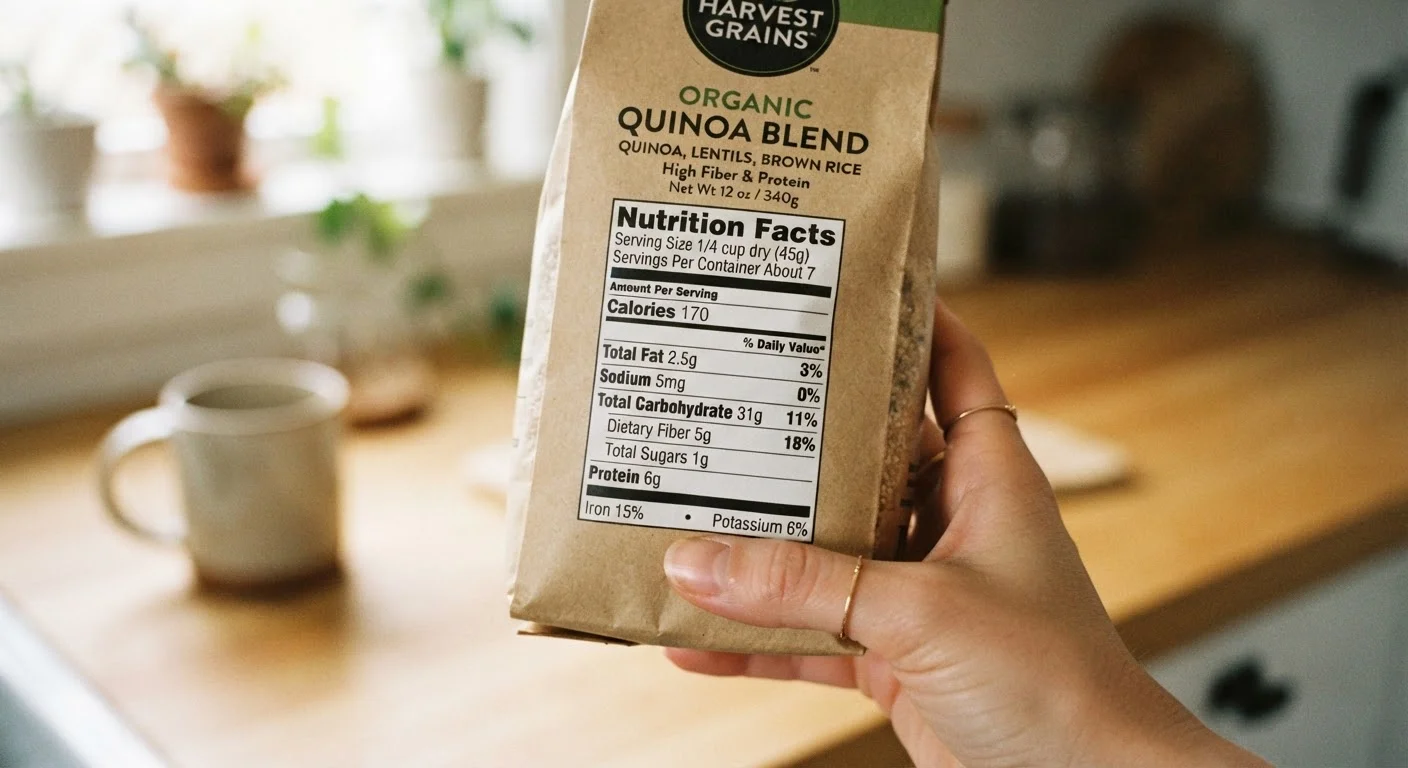
The serving size appears at the very top of the panel, directly below the "Nutrition Facts" header. It is stated in a common household measure (e.g., "1 cup") followed by the metric equivalent in grams or milliliters.
Every number on the label - calories, fat, sodium, everything - applies to one serving, not the entire package. If the package contains 2.5 servings and you consume the whole thing, multiply every value by 2.5.
Read the Calorie Count in Context
Calories per serving appear in large type just below the serving size. This number represents the total energy provided by one serving from all macronutrients combined.
Calorie needs vary considerably between individuals based on age, body size, activity level, and health status. The number on the label is most useful as a relative comparison across similar products or as a proportion of your own daily intake - not as an absolute judgment about a food.
Review Nutrients to Limit
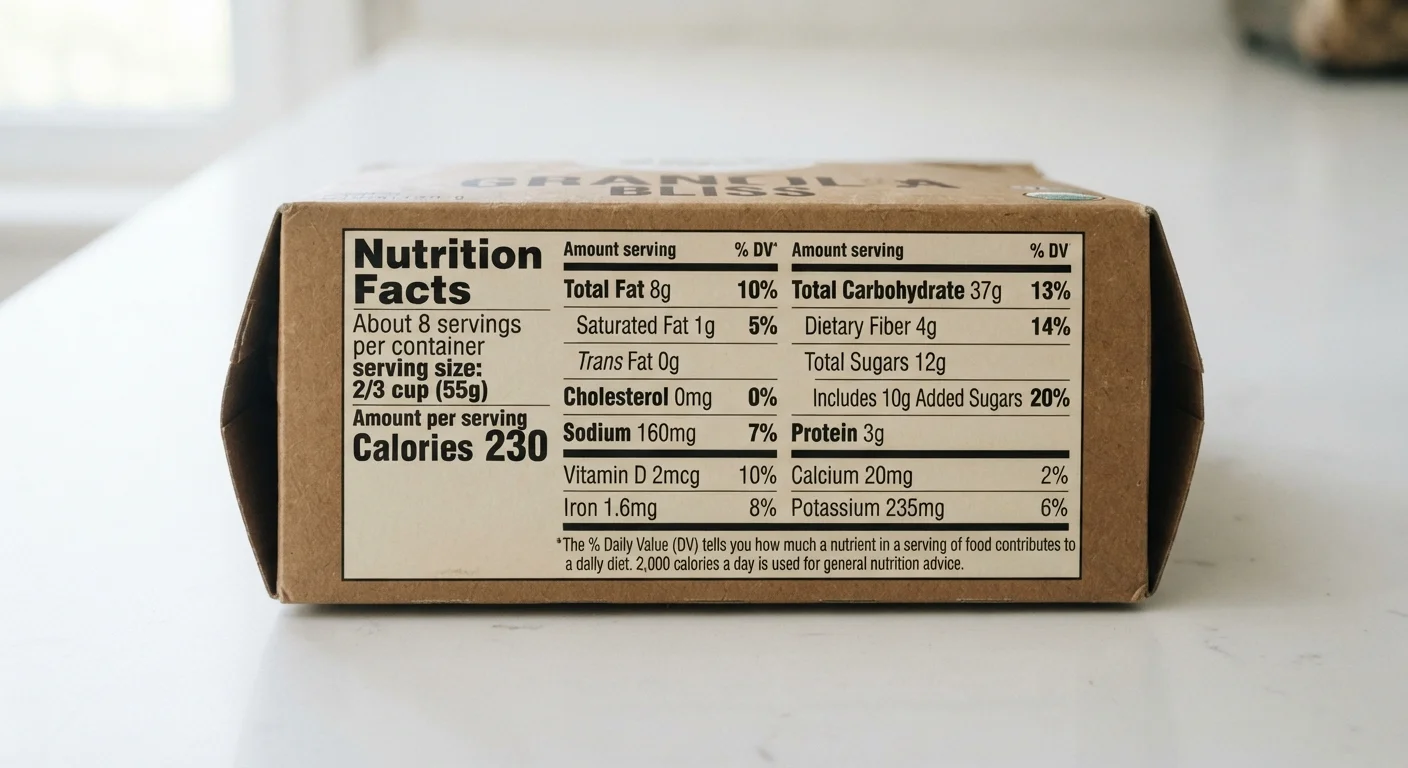
The next section lists total fat (broken into saturated and trans fat), cholesterol, and sodium. These are nutrients the FDA identifies as ones most Americans consume in excess relative to public health guidance.
- Saturated fat - associated in research with LDL cholesterol levels when consumed in high amounts
- Trans fat - artificial trans fats have been largely removed from the US food supply, but trace amounts may still appear; the goal is 0g
- Sodium - the FDA's reference daily value is 2,300mg; processed foods often contribute significantly
Identify Nutrients to Prioritize
Below the "limit" nutrients, the label lists dietary fiber, total sugars, added sugars, protein, and then a micronutrient section. Fiber, potassium, vitamin D, calcium, and iron are nutrients many Americans consume in insufficient amounts.
A higher %DV for fiber and key vitamins and minerals is generally favorable. Protein does not carry a %DV on the standard label because recommended amounts vary significantly by individual.
Interpret Percent Daily Value (%DV)
The right-hand column shows %DV for most nutrients. This percentage tells you how much of that nutrient one serving contributes toward the FDA's reference daily intake, which is based on a 2,000-calorie diet.
Use the 5%/20% benchmark: 5% or less is low; 20% or more is high. This applies to both nutrients you want more of (fiber, vitamins) and those you want to limit (saturated fat, sodium, added sugars).
Use the 5% and 20% Rule of Thumb
A %DV of 5% or less is generally considered low for a nutrient; 20% or more is considered high. This quick benchmark - recognized by the FDA - helps you scan labels faster without doing any math. Apply it especially when evaluating saturated fat, sodium, fiber, and added sugars.
Common Confusion Points and What They Really Mean
Total Sugars vs. Added Sugars
Total sugars include both naturally occurring sugars (such as lactose in dairy or fructose in fruit) and sugars added during manufacturing. Added sugars are the ones most associated with excess calorie intake without nutritional benefit. A plain yogurt may show 12g total sugars with 0g added - that sugar comes from milk naturally. A flavored version might show 20g total with 10g added, signaling that sweeteners were incorporated during processing.
"Light," "Low," and "Reduced" Claims
These front-of-package claims are regulated by the FDA but can still be misleading without context. "Reduced sodium" means at least 25% less sodium than the original product - but if the original was very high, the reduced version may still be substantial. Always verify against the actual %DV on the panel rather than relying on front-label language. The detailed label walkthrough covers these claims in more depth.
The Ingredient List
Ingredients are listed in descending order by weight. If a sweetener appears among the first three ingredients, it constitutes a significant portion of the product by weight. Manufacturers sometimes use multiple forms of sugar under different names - corn syrup, dextrose, cane juice - which can distribute them lower on the list individually while their combined quantity remains high.
Understanding where foods sit on the processing spectrum is also relevant context. The whole foods vs. processed foods guide explains how processing affects nutritional composition in practical terms.
% Daily Values Are Based on a General Reference
The 2,000-calorie daily reference used on Nutrition Facts labels is a standardized benchmark set by the FDA - it does not represent a recommendation for every individual. Children, older adults, pregnant individuals, and those with specific medical needs may have very different requirements. Use %DV as a general directional tool, not a personal target.