
Why Nutrition Basics Matter More Than Diet Trends
Nutrition information has never been louder - or more contradictory. One source declares fat the enemy; another insists carbohydrates are. A new eating pattern trends every few months, often carrying bold claims and thin evidence. For anyone starting out, this noise is the first real obstacle.
The most grounding thing you can do is ignore the trends temporarily and focus on what the science actually agrees on. Decades of research across large populations point to a consistent set of principles: eat a variety of whole foods, prioritize plants, limit highly processed options, and stay hydrated. These fundamentals are far more durable than any diet brand.
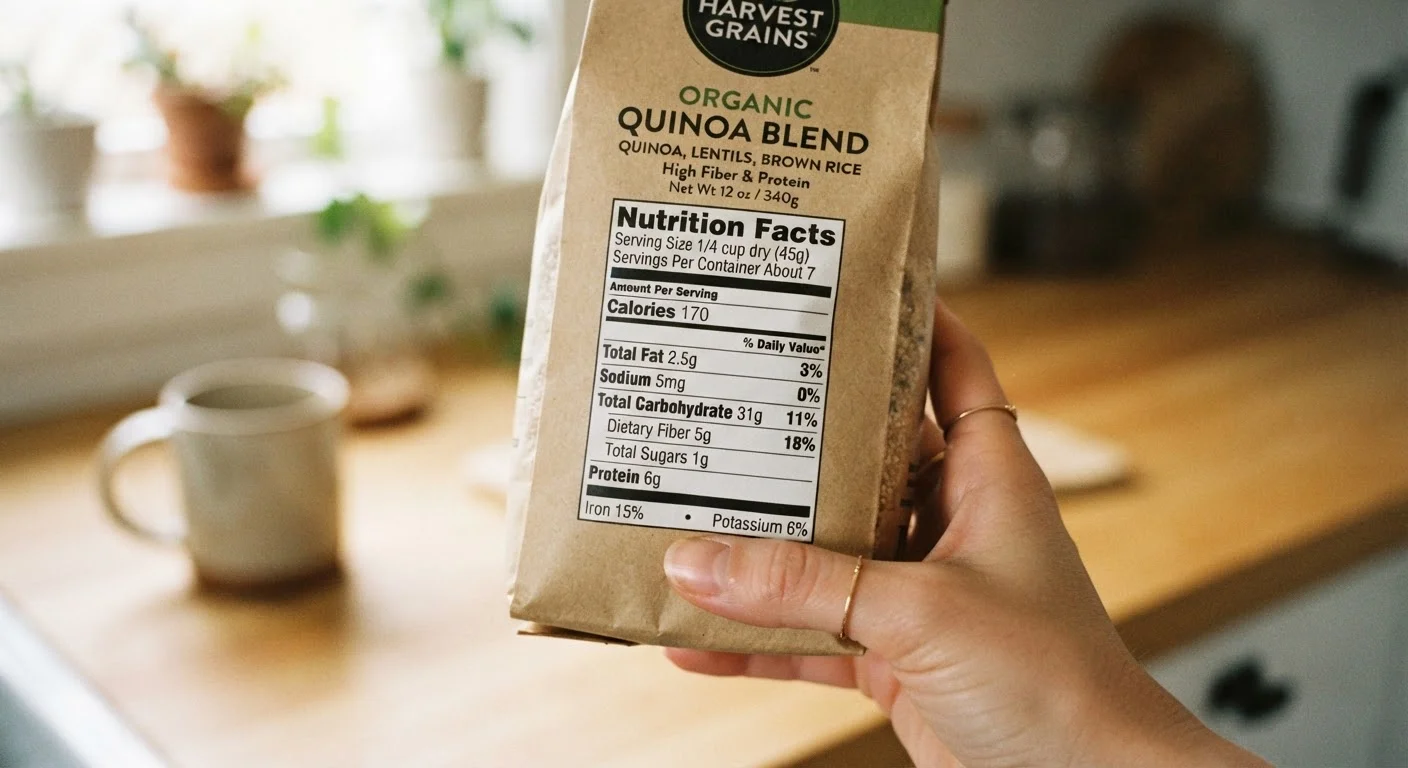
This article is general health information and not a substitute for personalized advice from a qualified professional. It is designed to give you a working understanding of how food functions so you can ask better questions, read labels more confidently - see our guide to reading nutrition labels for practical help there - and make more informed everyday choices.
Macronutrients
The three main nutrients - carbohydrates, proteins, and fats - that the body needs in relatively large amounts for energy and structural functions.
Micronutrients
Vitamins and minerals required in small amounts that regulate body processes, support immunity, and enable metabolism.
Dietary fiber
A type of carbohydrate that the body cannot digest for energy. It supports gut health, slows sugar absorption, and is linked to reduced risk of several chronic conditions.
Energy balance
The relationship between calories consumed through food and drink and calories the body burns through metabolism and activity.
Essential amino acids
Amino acids the body cannot produce on its own and must obtain from food. They are the building blocks of protein.
Ultra-processed foods
Foods manufactured with multiple industrial ingredients - preservatives, artificial flavors, emulsifiers - that go far beyond basic cooking. They are often high in sugar, sodium, and refined fats.
The Three Macronutrients: What They Are and What They Do
Every food you eat contains some combination of three macronutrients: carbohydrates, proteins, and fats. Understanding their roles helps you see food as a system rather than a list of good and bad items.
Carbohydrates
Carbohydrates are the body's primary fuel source. When digested, they break down into glucose, which cells - especially the brain - rely on for energy. The quality of carbohydrates varies considerably. Whole grains, legumes, vegetables, and fruits deliver fiber and nutrients alongside energy. Refined sugars and heavily processed starches provide energy with little else. This distinction, not carbohydrates as a category, is what matters nutritionally.
Proteins
Proteins are structural and functional molecules built from chains of amino acids. The body uses dietary protein to repair tissue, produce enzymes and hormones, support immune function, and maintain muscle mass. Animal sources such as meat, fish, eggs, and dairy provide all essential amino acids. Many plant sources - legumes, tofu, tempeh, edamame - can collectively supply them too, making varied plant-based eating nutritionally viable.
Fats
Dietary fats are essential for absorbing fat-soluble vitamins (A, D, E, and K), producing hormones, and maintaining cell membrane integrity. Unsaturated fats, found in foods like olive oil, avocados, nuts, and fatty fish, are generally associated with cardiovascular benefit in the research literature. Saturated fats, present in red meat and full-fat dairy, are an area of ongoing study. Trans fats produced through industrial hydrogenation are widely regarded by health authorities as harmful and are largely restricted in the US food supply.
A Simple Rule for Protein Variety
If you eat mostly plant-based foods, aim to include a range of protein sources - legumes, soy products, whole grains, nuts, and seeds - across your day and week rather than relying on one. Different plants provide different amino acid profiles, so variety helps cover all your needs.
Micronutrients, Fiber, and Water: The Supporting Cast
Macronutrients get most of the attention, but micronutrients - vitamins and minerals - are equally essential. They do not provide energy directly, but they enable almost every metabolic process the body runs.
Iron carries oxygen in the blood. Calcium and vitamin D work together to maintain bone density. B vitamins support energy metabolism. Vitamin C aids immune function and iron absorption. A diet built around a variety of whole foods - especially colorful vegetables and fruits - tends to cover most micronutrient needs for healthy adults, which is one concrete reason dietary variety is consistently recommended.
Fiber deserves its own mention. Technically a carbohydrate, fiber is not digested for energy; instead it slows glucose absorption, feeds beneficial gut bacteria, supports regular digestion, and is associated with lower risks of certain chronic conditions. Most Americans consume well below the generally recommended intake. Beans, lentils, oats, vegetables, and whole grains are among the richest sources.
Water underpins all of it. Hydration affects cognition, digestion, joint lubrication, temperature regulation, and nutrient transport. Individual needs vary by body size, climate, and activity level, but most health authorities point to urine color - pale yellow being a useful everyday indicator - as a practical gauge.
Supplements Are Not a Replacement
Vitamin and mineral supplements can address documented deficiencies, but they do not replicate the full complexity of nutrients, fiber, and phytochemicals found in whole foods. Most major health authorities recommend food-first approaches. If you think you may have a deficiency, a healthcare provider can test for it and advise appropriately.
Energy Balance: A Useful Framework, Not a Rulebook
Energy balance refers to the relationship between the calories you take in through food and drink and the calories your body expends through basic metabolic functions, physical activity, and digestion. When intake consistently exceeds expenditure, the body stores the surplus, typically as fat. When expenditure exceeds intake over time, stored energy is drawn upon.
This framework is real and grounded in physiology, but it is incomplete on its own. Two people with identical caloric intakes can experience different outcomes based on food composition, hormone function, gut microbiome, sleep quality, genetics, and stress levels. Treating calorie math as the only lever misses most of the picture.
What the research more consistently supports is this: the quality of your dietary pattern - the mix of whole foods, nutrients, and food processing levels - shapes health outcomes at least as much as raw calorie counts. You can learn more about how this translates to everyday meals in our article on building a balanced plate.
Beware of Calorie-Only Thinking
Focusing exclusively on calorie counts can lead to choosing low-calorie but nutritionally poor foods over more nourishing options. It can also create an unhealthy relationship with eating for some people. If you find yourself anxious or preoccupied with food tracking, speaking with a healthcare professional is a sensible step.
Building Better Eating Patterns From Here
Armed with these fundamentals, the practical next step is pattern-building rather than perfection-chasing. Evidence-based eating patterns - such as Mediterranean-style or DASH approaches - share common ground: abundant vegetables and fruits, whole grains, legumes, modest amounts of quality protein, and limited ultra-processed foods. No single meal defines your nutrition; your habits across weeks and months do.
A few grounding principles for beginners:
- Variety is the most reliable insurance policy. Eating across food groups and colors covers nutritional gaps no supplement list fully replicates.
- Minimally processed tends to mean more nutrients. Processing often removes fiber, vitamins, and minerals while adding sodium, sugar, and refined fats.
- Cooking at home more often gives you control over ingredients without requiring perfection or elaborate recipes.
- Sustainable beats optimal. A modest dietary improvement you maintain long-term outperforms any aggressive change you abandon after a month.
Nutrition also does not operate in isolation. Physical activity, sleep, stress, and social connection all interact with how the body processes and uses food. Our overview on starting exercise as an adult is a natural companion to this guide. And as your needs change across life stages, our piece on how nutritional needs shift with age offers useful perspective.
For guidance tailored to your health history, goals, or any specific condition, a registered dietitian is the appropriate professional to consult. General education is a solid starting point - personalized advice is where lasting change is built.
This article is for general informational and educational purposes only and does not constitute medical or nutritional advice. Always consult a qualified healthcare professional or registered dietitian before making significant changes to your diet, especially if you have a health condition.
Dietary Guidelines for Americans
The federal government's science-based nutritional guidance, updated periodically, covering recommended food patterns for the general US population across life stages.
MyPlate (USDA)
A visual framework from the US Department of Agriculture illustrating how to balance food groups at each meal. Useful as a practical starting reference for portion proportions.
Academy of Nutrition and Dietetics - Find a Dietitian
A professional directory to locate a registered dietitian in your area for personalized, evidence-based nutrition guidance tailored to your health needs.