Why Added Sugar Is Hard to Spot
Food manufacturers use dozens of terms for added sugar - a practice that, while not intentionally deceptive, makes it genuinely difficult for shoppers to assess how much sugar a product contains. Understanding the naming landscape is one of the most practical nutrition literacy skills a consumer can develop.
The U.S. Dietary Guidelines recommend that added sugars make up less than 10% of total daily calories. For most adults eating roughly 2,000 calories a day, that works out to about 50 grams. Yet the average American consumes considerably more, partly because sugar is embedded in products that don't taste overtly sweet - bread, pasta sauce, salad dressing, and condiments among them.
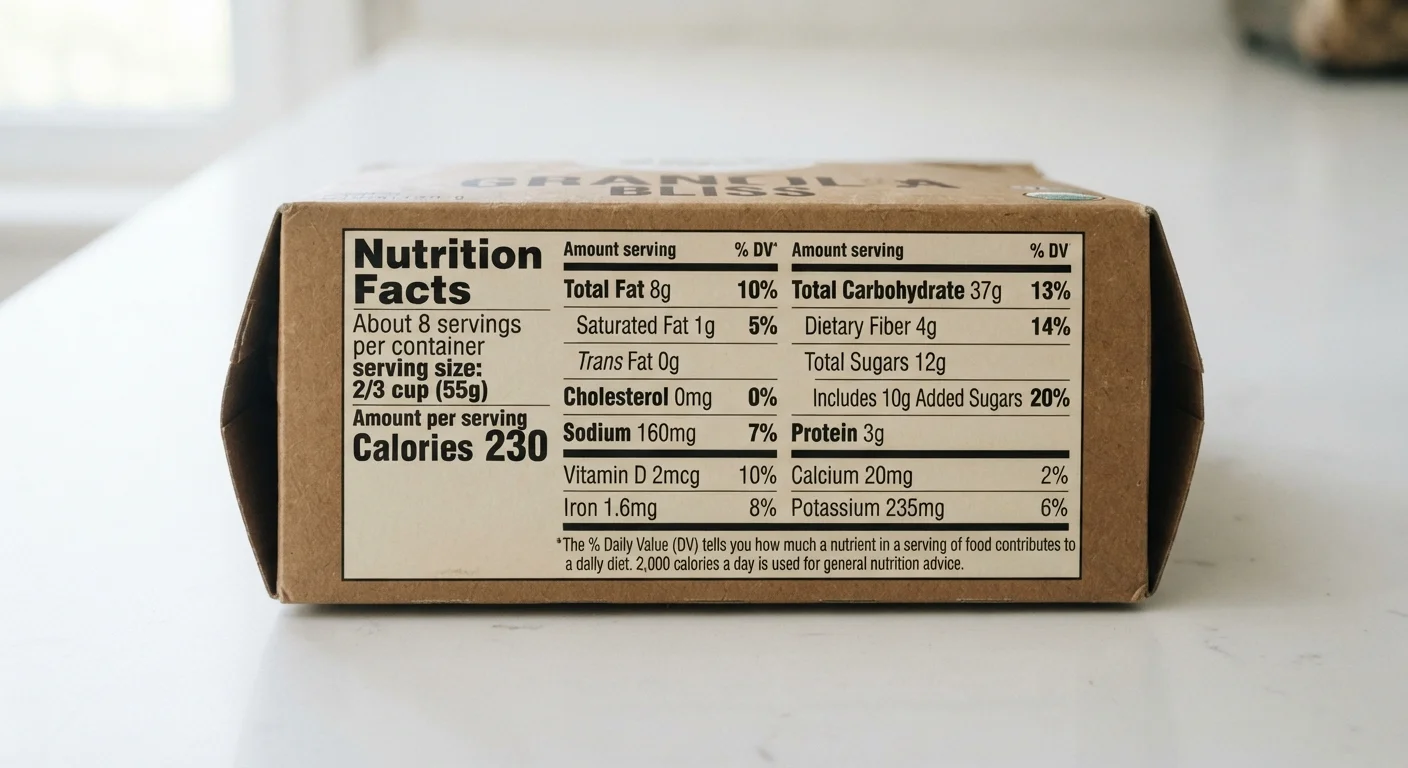
The good news: the current Nutrition Facts label, updated by the FDA, now includes a dedicated "Added Sugars" row, expressed in grams and as a percentage of the Daily Value. This is your fastest checkpoint. But to go deeper - to understand ingredient quality, not just quantity - you need to recognize sugar by all its names on the ingredient list itself. See our plain-language walkthrough of the Nutrition Facts label for context on how to read the panel as a whole.
Use the Nutrition Facts Panel as Your First Filter
The "Added Sugars" row on the updated Nutrition Facts label is the fastest, most reliable indicator of total added sugar - it aggregates all aliases into one number. Use the ingredient list to understand the source and form of sugar, not to calculate the total amount. Both tools together give you the clearest picture.
The Categories of Sugar Aliases
Added sugars generally fall into a few recognizable categories. Learning the category patterns - rather than memorizing every name - makes label-reading far more manageable.
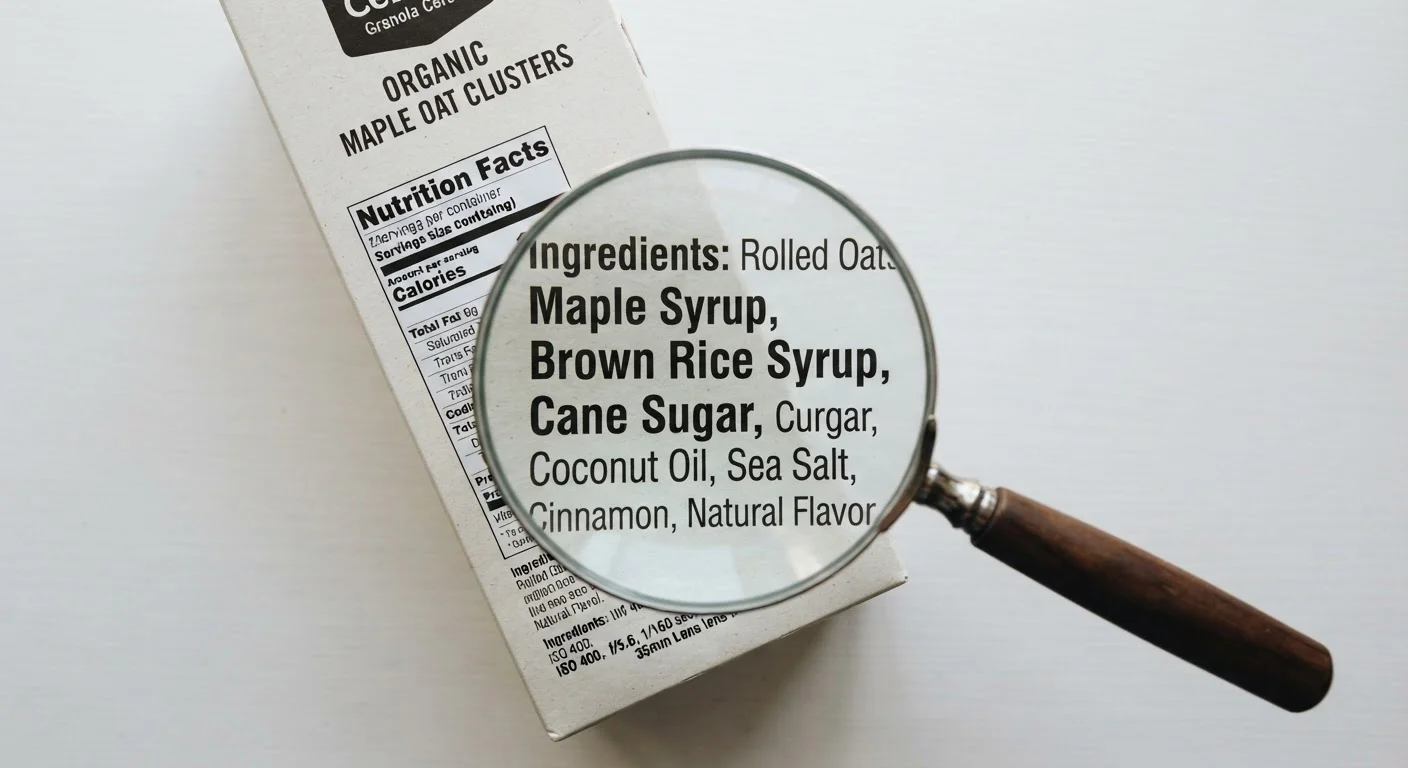
- "Syrup" terms: High-fructose corn syrup, brown rice syrup, malt syrup, tapioca syrup, agave nectar, maple syrup, and similar names all indicate a liquid sugar source.
- "-ose" endings: Sucrose, fructose, dextrose, maltose, and lactose are all sugars. While lactose occurs naturally in dairy, dextrose and maltose are virtually always added.
- "Sugar" variants: Raw sugar, turbinado sugar, cane sugar, invert sugar, coconut sugar, beet sugar, and date sugar are chemically similar despite their premium-sounding names.
- Juice concentrates: Fruit juice concentrate strips out water and fiber, leaving a dense sugar solution. It behaves like other added sugars in the body.
- Honey and molasses: Both are added sugars, even if less refined. They contribute the same caloric load per gram as table sugar.
Ingredient lists are ordered by weight, so a product with five different sugar names scattered throughout may have more combined sugar than the label's ingredient position suggests. This is sometimes called "sugar splitting," and it's worth watching for. Our article on what ingredient list structure signals about a product explains this tactic in detail.
"Natural" Does Not Mean Low-Sugar
Terms like honey, maple syrup, coconut sugar, and fruit juice concentrate often carry a health halo. From a metabolic standpoint, they are still added sugars and are counted as such in the FDA's "Added Sugars" row. Their micronutrient contributions are minimal at the quantities typically used in packaged foods. Don't let the word "natural" or "organic" substitute for actually checking the label.
How to Scan an Ingredient List Step by Step
With the categories in mind, here's a practical process to apply at the store or when evaluating a product at home.
Check the "Added Sugars" line on the Nutrition Facts panel first
Before reading the ingredient list, look at the Nutrition Facts label. The "Added Sugars" sub-row (beneath "Total Sugars") gives you a gram count and a percentage of the Daily Value for added sugar specifically. This single number represents all added sugars combined, regardless of what they're called. Use it to set a baseline before diving into the ingredients.
Scan the ingredient list for "-ose" endings
Work through the ingredient list and flag any word ending in -ose: sucrose, fructose, dextrose, maltose, glucose. These are chemical names for sugars. In most packaged foods, these are added rather than naturally occurring.
Look for any word containing "syrup" or "nectar"
Corn syrup, brown rice syrup, malt syrup, agave nectar, and similar terms all denote concentrated liquid sugars. Agave nectar, despite its health-food reputation, is high in fructose and is classified as an added sugar.
Identify "sugar" variants and juice concentrates
Any ingredient with the word "sugar" in it - cane sugar, coconut sugar, date sugar, turbinado sugar - is an added sugar. Also flag fruit juice concentrate, grape juice concentrate, and similar terms. These are nutritionally distinct from whole fruit and function as added sugars.
Count how many sugar names appear and note their positions
Tally the total number of distinct sugar ingredients. If three or more appear scattered across the list, their combined weight may place sugar collectively near the top even if no single term appears first. This is the "sugar splitting" effect. A product with cane sugar (fourth), brown rice syrup (sixth), and dextrose (eighth) may still have sugar as its dominant ingredient by mass.
Consider the serving size before drawing conclusions
All values on a Nutrition Facts panel are per serving, not per package. If a product's serving size is unrealistically small compared to how much you'd actually eat, multiply the added sugar grams accordingly to get a realistic intake figure.
This article is for general informational and educational purposes only. It is not a substitute for personalized dietary advice from a qualified healthcare professional or registered dietitian. If you have specific health conditions or concerns about your diet, consult a qualified professional.
Putting It in Context
Spotting sugar aliases is a skill, not a mandate to eliminate all products that contain them. Context matters: a tablespoon of ketchup with added sugar is different from a "health" beverage with 40 grams of it. What consistent label reading builds is proportion - an accurate sense of where sugar is concentrated in your diet, which allows for more deliberate choices rather than blanket avoidance.
It also helps to distinguish between naturally occurring sugars (found in whole fruit, plain dairy) and the added variety. The "Added Sugars" row on the Nutrition Facts panel makes this distinction for you numerically. The ingredient list tells you what form that sugar takes. Together, they offer a more complete picture than either alone. For a broader look at what labels are communicating beyond sugars, see what product labels are actually telling you.