Why Ingredient Order Is the First Thing to Check
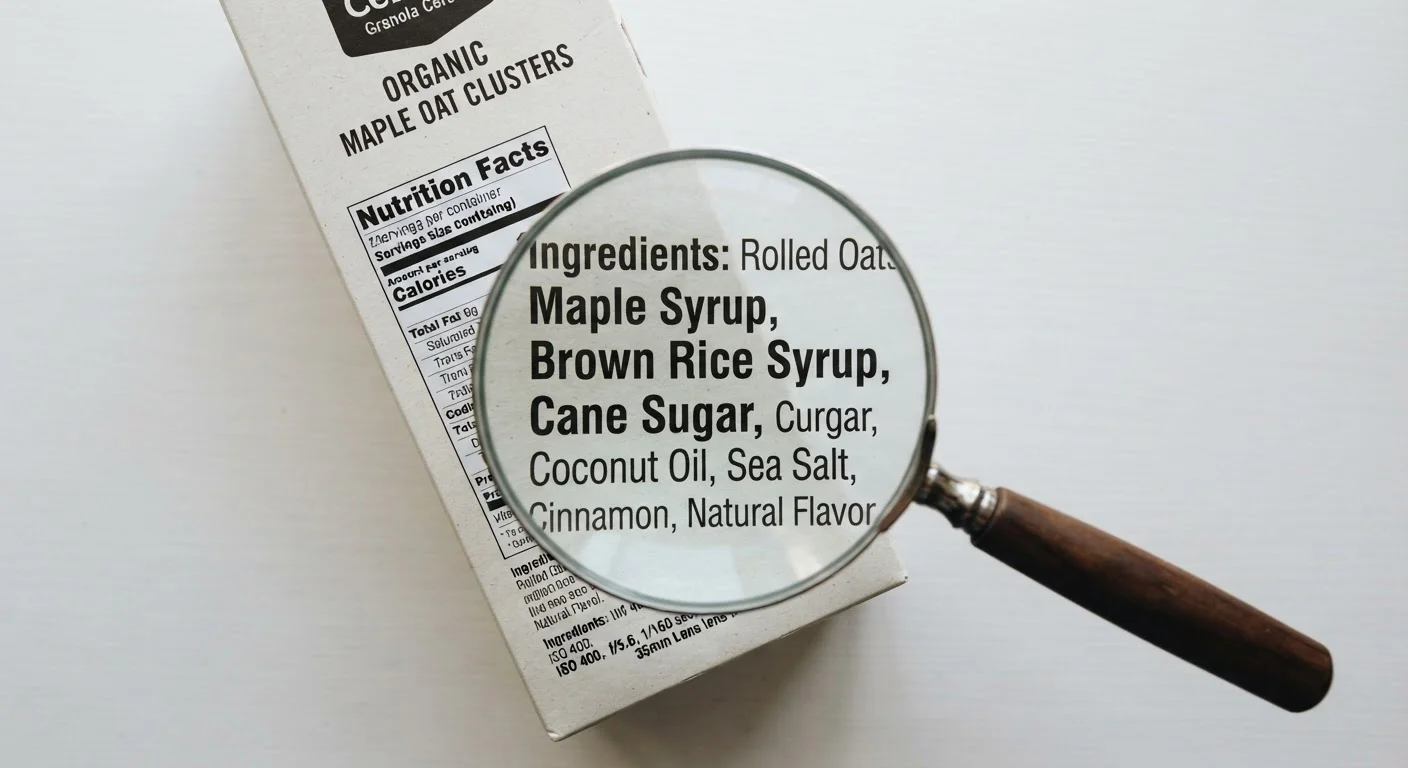
The single most useful rule behind any ingredient list is also the simplest: ingredients appear in descending order by weight. Whatever is heaviest in the formulation comes first. This applies to FDA-regulated foods and cosmetics alike, which means a quick glance at the first three to five entries tells you more about what a product actually contains than most front-of-package claims ever will.
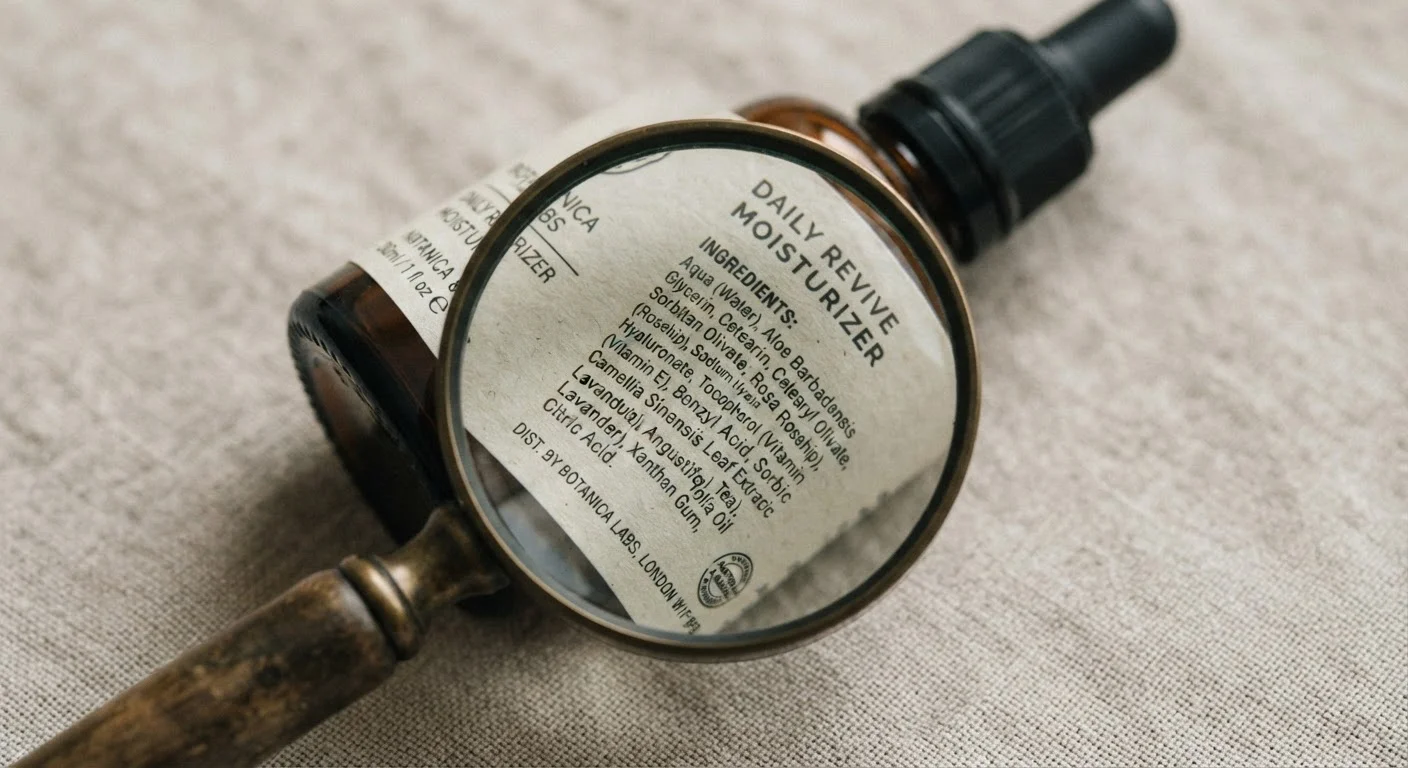
Consider a moisturizer that prominently features a botanical extract on its front label. If that extract appears near the bottom of the ingredient list - after preservatives and stabilizers - it's present in only trace quantities. The same logic applies to food: a bread labeled 'with whole grain' that lists enriched white flour first is predominantly made of the latter.
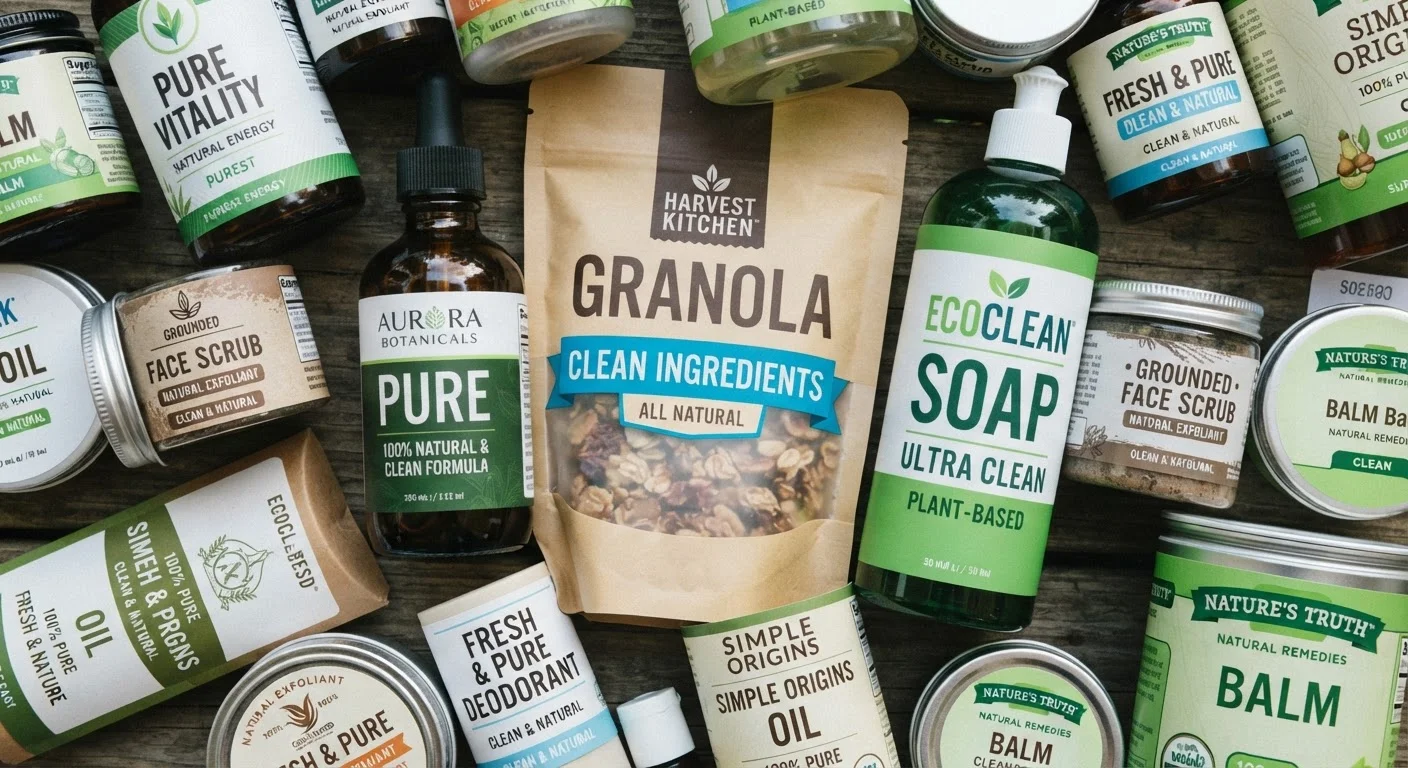
This is why ingredient order is a more reliable signal than marketing language. As the guide to unregulated packaging claims explains, front-of-pack terms like 'pure' or 'clean' carry no legal definition - but the ingredient list does.
Use the 'First Five' Rule as a Quick Screen
When evaluating a new product, read just the first five ingredients - they typically represent the majority of the formula by weight. If those five align with what the front label promises, the product is likely delivering on its core claim. If they don't, the marketing language deserves more scrutiny.
What List Length Actually Signals
A common misconception is that a shorter ingredient list means a healthier or more natural product. Length alone is a poor proxy for quality. A whole-grain cracker might have six ingredients; a high-quality sunscreen might have twenty, each serving a specific functional role in UV stability, skin compatibility, or shelf-life protection.
What matters more than length is what the ingredients are doing. Functional preservatives prevent microbial growth in water-based formulas - their presence is often a safety feature, not a shortcut. Similarly, emulsifiers keep oil and water from separating; without them, many products would be unusable within days.
~10,000
Additives permitted in US food supply
The FDA's database of substances added to food (EAFUS) includes approximately 10,000 entries, reflecting the breadth of functional ingredients across modern food manufacturing.
3-5
Ingredients that typically dominate a formula by weight
Because of descending-weight ordering, the first three to five ingredients in most formulations account for the largest share of the product's composition.
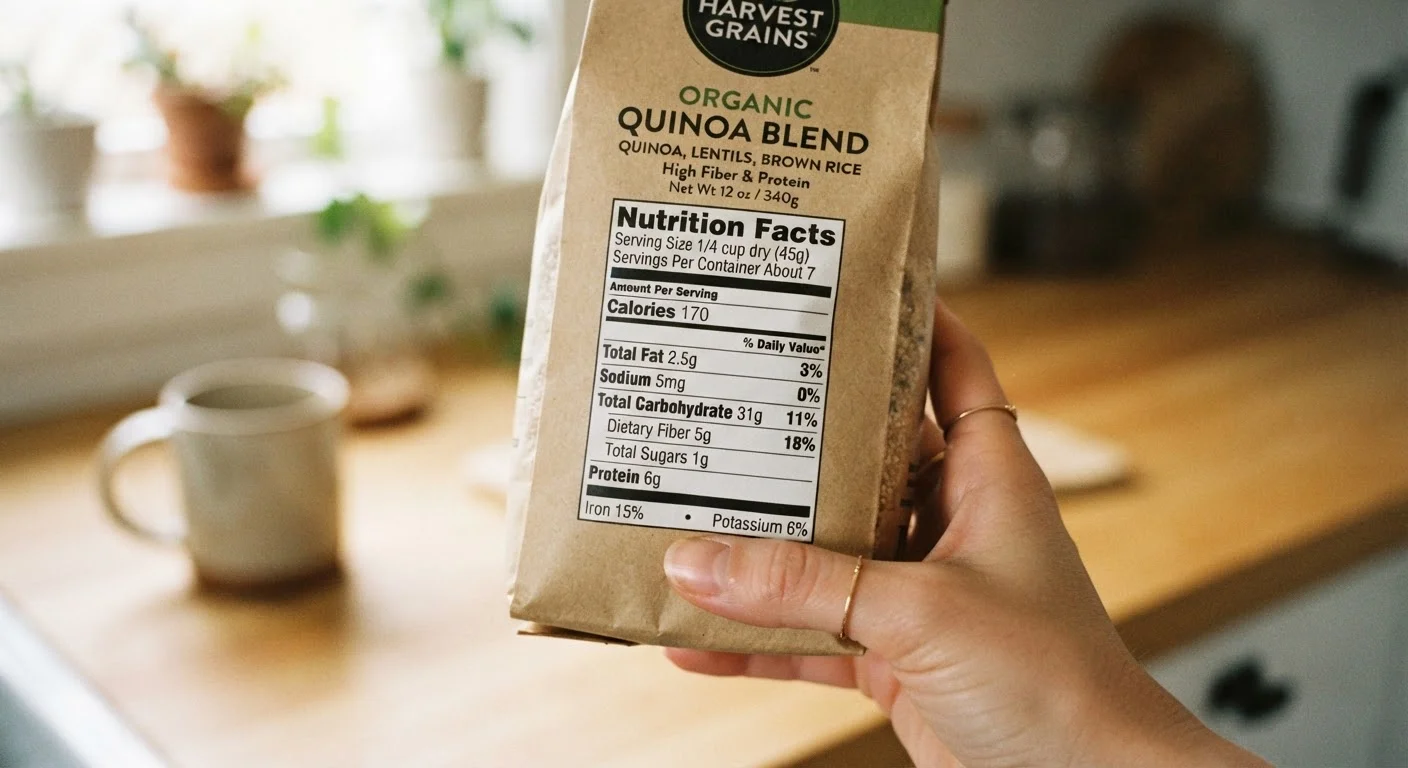
That said, an unusually long list in a product that claims to be minimally processed is worth scrutinizing. The gap between a product's front-panel story and its actual formula often surfaces here. For a parallel exercise with food-specific labels, see the walkthrough of nutrition labels, which covers how serving-size math and daily values can similarly mislead.
Terminology: Chemical Names, Umbrella Terms, and What They Hide
Ingredient terminology trips up even attentive readers. Two dynamics are worth understanding: the use of standardized scientific names, and the legal use of collective terms that group multiple substances under one entry.
Scientific Names Are Not Synonymous With Synthetic
Regulatory bodies and international standards organizations use systematic chemical nomenclature on labels. 'Sodium chloride' is table salt. 'Citric acid' occurs naturally in citrus fruit. 'Butyrospermum parkii' is shea butter listed under its INCI botanical name. A name's complexity tells you nothing about its origin or safety profile.
Umbrella Terms and Trade-Secret Protections
The FDA permits certain collective entries: 'spices,' 'natural flavors,' 'artificial flavors,' and 'fragrance' can each represent a proprietary blend of numerous individual compounds. For most consumers this is inconsequential, but for those managing allergies or sensitivities, these terms create meaningful gaps in disclosure. Some manufacturers voluntarily disclose more; looking for that detail is itself informative about a brand's transparency practices.
Added sugar is a related challenge - it can appear under many distinct names across a single label. The guide to spotting added sugar by name covers the full range of aliases in depth.
Fragrance Disclosure Varies by Category
The 'fragrance' umbrella term is most common in cosmetics and personal care products. Food labels use 'natural flavors' or 'artificial flavors' in an analogous way. Cleaning products have historically faced fewer federal disclosure requirements, though advocacy and some state regulations have pushed for greater transparency in recent years. Always verify current requirements with official regulatory sources, as rules in this space are evolving.
For broader context on how product terminology intersects with certification claims, the breakdown of organic, natural, and non-GMO labels is a useful companion read.
Putting It Together Before You Buy
Reading an ingredient list effectively comes down to three habits: check order first, assess function rather than length, and recognize that unfamiliar names deserve a quick lookup rather than automatic alarm. These skills apply across food, personal care, and household products, even though different categories operate under different regulatory frameworks.
The ingredient list is one part of a broader label ecosystem. Understanding what product labels are telling you - from certifications to date codes - builds a more complete picture. Date labels, for instance, are their own source of confusion, as the explanation of expiration, best-by, and sell-by dates makes clear.
No single element of a label tells the whole story. But the ingredient list, read with an understanding of the rules that govern it, gives consumers one of the most transparent windows available into what a product actually is.
“An ingredient list is a manufacturer's legal disclosure to the public - not a marketing document. Reading it with that frame in mind changes how you interpret every line.”
— Center for Food Safety and Applied Nutrition, FDA division overseeing food and cosmetic labeling standards