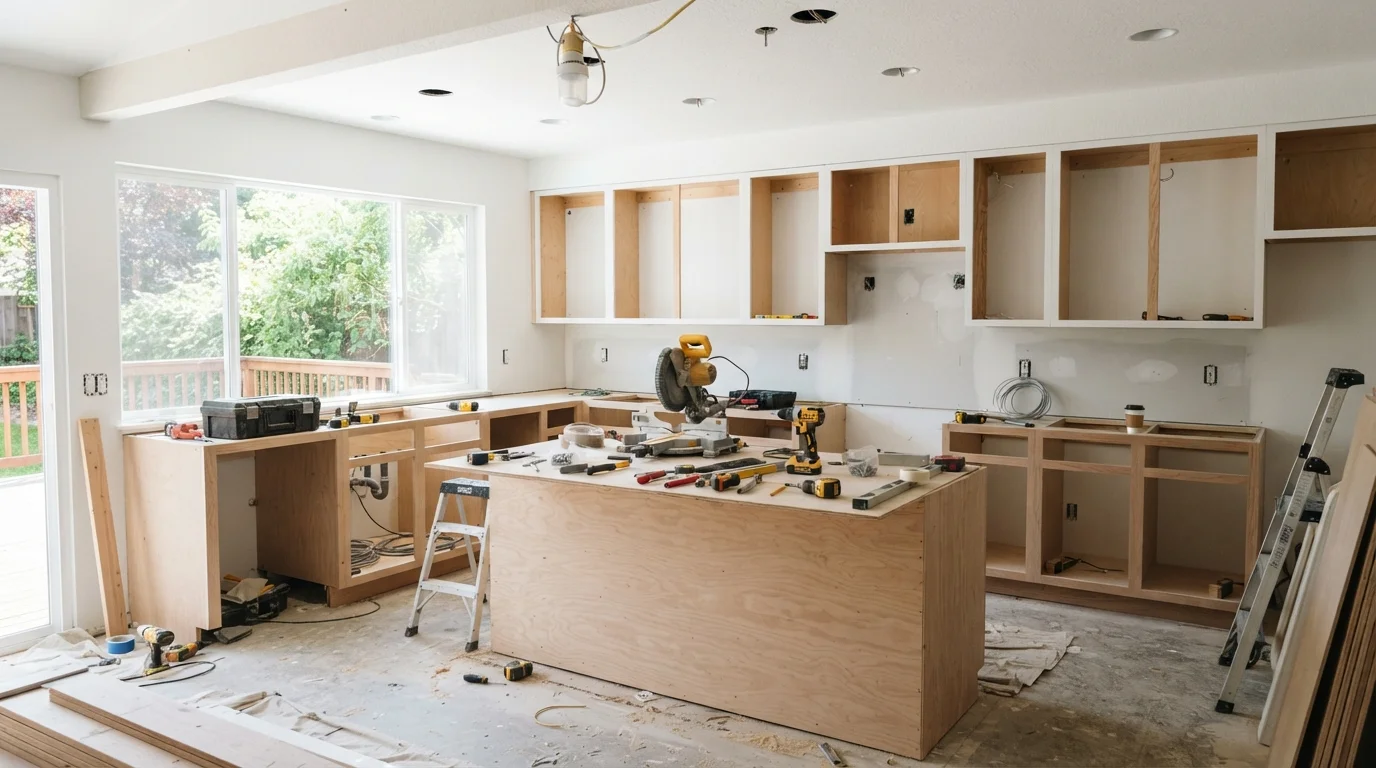

What 'DIY Renovation' Actually Covers
The term DIY renovation spans a wide spectrum - from repainting a bedroom to gut-renovating a kitchen. That range matters enormously when weighing whether to go it alone. Patching drywall and installing a ceiling fan are very different undertakings from rerouting plumbing or replacing a load-bearing wall.
Before deciding, it helps to categorize your project: Is it cosmetic (paint, flooring, trim)? Is it a systems job (electrical, plumbing, HVAC)? Or is it structural (walls, foundations, rooflines)? Each category carries a different risk profile, skill ceiling, and often a different legal requirement for permits and licensed labor.
This distinction is the foundation of every other consideration. For a broader look at how DIY culture fits into current American life, see The DIY Renaissance - it's worth understanding the trend you're part of before diving in.
The Case For Doing It Yourself
There are real, substantive reasons millions of homeowners choose to tackle renovation work on their own - beyond simply wanting to save money.
Significant labor cost savings on simpler projects
Labor can represent 40-60% of contractor quotes on many renovation jobs. For cosmetic tasks within a competent DIYer's skill range, handling the work yourself can meaningfully reduce total project cost.
Full control over materials and timeline
When you manage your own project, you choose exactly which materials are used and can adjust the pace to fit your schedule - there's no waiting on contractor availability or supply-chain delays from another project.
Builds lasting practical skills
Completing a renovation yourself develops problem-solving ability and hands-on competence that carries forward to future projects, potentially compounding savings over time.
Deep familiarity with your own home
Working directly on your home gives you detailed knowledge of what's behind walls, how systems are laid out, and where quirks exist - invaluable for future maintenance and improvements.
Cost savings are the most frequently cited motivation, and for lower-complexity projects, they can be meaningful. Labor typically represents a large share of contractor quotes, and skilled tradespeople command premium rates. Cosmetic work - tiling a backsplash, laying luxury vinyl plank flooring, or installing a new vanity - often requires modest tool investment and can be learned through reputable instructional resources.
Equally important is the sense of agency and skill-building that comes with completing a project yourself. The same principle applies across domains: our guide on DIY car maintenance shows how evaluating your own competence honestly is itself a transferable skill.
The Case Against - Where DIY Gets Complicated
The disadvantages of DIY aren't abstract. They show up as failed inspections, voided warranties, insurance disputes, and in the most serious cases, physical injury or structural damage.
Mistakes can exceed the cost of hiring out
A DIY error in tiling, waterproofing, or framing can require professional remediation that costs more than the original job would have. Complex systems leave little margin for learning on the fly.
Regulated work requires licensed professionals
Electrical, gas, and structural work is legally required to be performed by licensed contractors in most US jurisdictions. Attempting this work yourself can result in failed inspections, fines, or voided homeowner's insurance.
Unpermitted work creates sale complications
Work done without required permits may need to be disclosed or removed during a real estate transaction, reducing home value or stalling a sale entirely.
Time investment is frequently underestimated
First-time renovators commonly find that projects take two to three times longer than anticipated, particularly when unexpected conditions - old wiring, uneven subfloors, hidden moisture - are discovered mid-project.
Physical safety risks on many project types
Working at height, handling power tools, cutting pipes, and working near electrical systems all carry injury risks that increase without proper training, protective equipment, and job-site awareness.
Permit requirements are one of the most overlooked complications. Many US jurisdictions require permits for electrical work, plumbing changes, structural modifications, and even some window replacements. Unpermitted work can surface during a home sale - forcing costly remediation or price reductions. Always verify local code requirements with your municipality before starting.
For projects that grow in scope - like a full kitchen overhaul - the stakes rise sharply. Our comprehensive walkthrough of kitchen remodel planning illustrates how many interdependent trades and sequencing decisions are involved, even before a single tile is laid.
When Permits Are Required
Permit requirements vary by municipality, but electrical panel work, new circuit installation, gas line changes, structural modifications, and additions typically require permits and inspections almost everywhere in the US. Working without a required permit isn't just a technical violation - it can affect your homeowner's insurance coverage and your ability to sell the property. Check with your local building department before starting any project where you're unsure.
How to Make the Call: A Practical Framework
Rather than defaulting to either extreme, most experienced renovators use a few key questions to guide decisions:
- Is the work regulated or permitted in your jurisdiction? Electrical panels, gas appliances, and structural changes almost universally require licensed contractors and inspections. Verify before you start, not after.
- What's the cost of failure? A badly painted wall is easy to fix. A poorly installed shower pan that leaks inside a wall is not. Scale your DIY ambition to the reversibility of mistakes.
- Do you have the time to do it properly? Half-finished projects create real problems - exposed wiring, missing subfloor, or an unusable bathroom can disrupt daily life for weeks if momentum stalls.
- What does your skill baseline honestly look like? Online tutorials make many tasks appear more straightforward than they are. Factor in a realistic learning curve.
If you ultimately decide to hire out, knowing what questions to ask matters. Our guide to hiring a contractor covers licensing verification, written scopes of work, and payment schedules - protection you'll want regardless of project size.
For plumbing specifically, this breakdown of DIY plumbing draws a clear line between faucet swaps and work that genuinely requires a licensed plumber.
40-60%
Share of renovation cost typically attributed to labor
Industry estimates consistently place labor at a significant portion of contractor quotes, making it the primary target for DIY cost reduction on qualifying projects.
2-3×
How much longer first DIY projects often take
Experienced tradespeople and renovation coaches frequently note that beginners underestimate time by a factor of two or three, particularly on projects involving unfamiliar materials or hidden conditions.