The Real Reason Your System Breaks Down
You spent a Saturday organizing everything - labeled bins, cleared surfaces, a place for every item. By the following month, the clutter was back. This pattern is so common it has a name in organization circles: the "rebound effect." And almost always, the cause is the system itself, not the person using it.
Most people approach organization as a one-time event rather than a designed structure. They tidy reactively when things feel out of control, rather than building systems that match how they actually live. Understanding the specific mistakes that cause organized spaces to collapse is the first step toward creating something that lasts. See our complete home organization overview for room-by-room strategies built on these same principles.
Organizing items you should have discarded first.
Why it happens: People focus on finding homes for everything they own rather than questioning whether all of it belongs. The result is storage that's immediately overcrowded and hard to maintain.
Building a system based on how things look rather than how you behave.
Why it happens: Aspirational organizing - matching bins, open shelving, minimalist aesthetics - is visually appealing but often ignores actual daily routines and household traffic patterns.
Treating an organizing session as a permanent solution.
Why it happens: The relief of a freshly organized space makes it easy to believe the work is done. But without a routine for maintenance, entropy naturally sets in over days and weeks.
Creating systems that require too many steps to use.
Why it happens: Elaborate storage solutions - lids on every bin, nested containers, multi-step sorting - feel thorough at setup but create friction that discourages daily use.
Imposing a single system on everyone in the household.
Why it happens: One person typically drives the organizing effort and designs a system around their own habits, leaving others to either comply or quietly abandon it.
Building Systems That Actually Stick
Once you understand where your current approach is going wrong, you can begin designing smarter. The goal isn't a perfectly curated home - it's a functional one that recovers quickly from daily use.
80%
Of clutter from indecision, not lack of space
Professional organizers commonly cite that the majority of household clutter accumulates because items have no designated home, not because there isn't enough storage.
10 min
Weekly reset to maintain most systems
Organization professionals generally suggest that a brief weekly maintenance routine prevents the buildup that leads to full decluttering sessions.
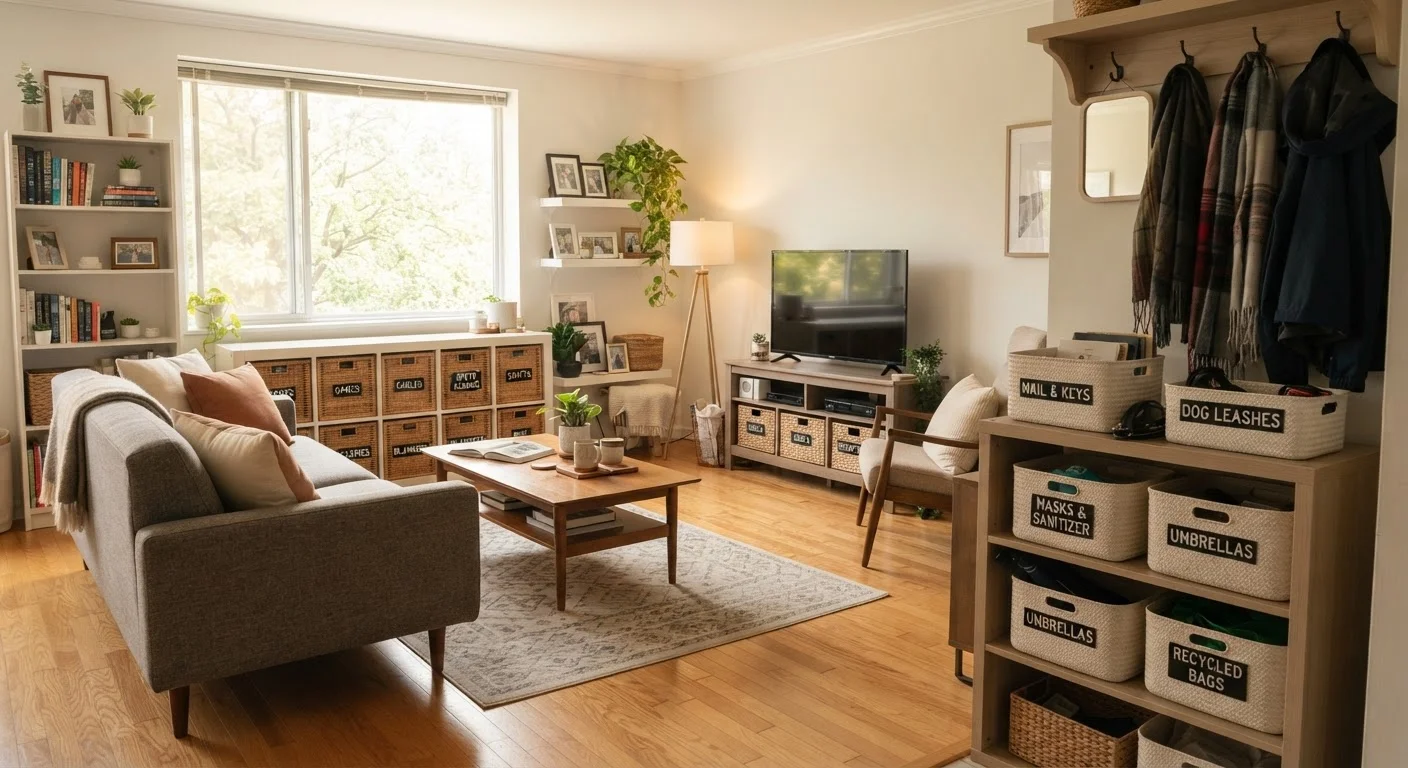
Start by observing where items actually land throughout your day. Dropped keys, piled mail, abandoned shoes - these spots reveal what your household genuinely needs. Storage that lives near the point of use is almost always maintained better than storage that requires a deliberate trip across the room.
If others share your home, involve them in the process. Systems designed by one person for everyone rarely hold up. Our guide to organizing a home with others covers how to build shared systems that accommodate different habits without constant friction.
Finally, plan for maintenance rather than assuming your system will stay pristine. A ten-minute weekly reset is far more effective than waiting for chaos to return and starting over. If you're unsure where to begin with excess belongings, decluttering room by room at your own pace can help you reduce what you're storing before you organize it.
Avoid Over-Organizing Small or Shared Spaces
Adding more bins, dividers, and labels doesn't always help - it can make a system harder for everyone to use, especially in kitchens and shared common areas. Before adding storage products, consider whether reducing items or simplifying access would be more effective. Our article on kitchen organization principles covers this balance in detail.