Why Shared Homes Need Different Organization Logic
Organizing a home you share with others - whether that's a partner, family members, or roommates - is genuinely different from organizing a space you control alone. Most organization advice assumes a single decision-maker with consistent habits. Shared living introduces competing preferences, different schedules, and varying standards for tidiness that a rigid system can't accommodate.
The solution isn't finding the "right" system and enforcing it. It's designing storage and routines that work across different habits - building in flexibility and reducing the effort required to keep things orderly. For a foundational overview of organization principles before diving into shared-space specifics, see our room-by-room introduction to home organization.
Understanding why clutter accumulates differently in shared homes is also useful. The psychology behind clutter and letting go plays a role here - each person brings different emotional associations with their belongings, which affects how willing they are to participate in shared systems.
Labeling supplies (label maker or adhesive labels)
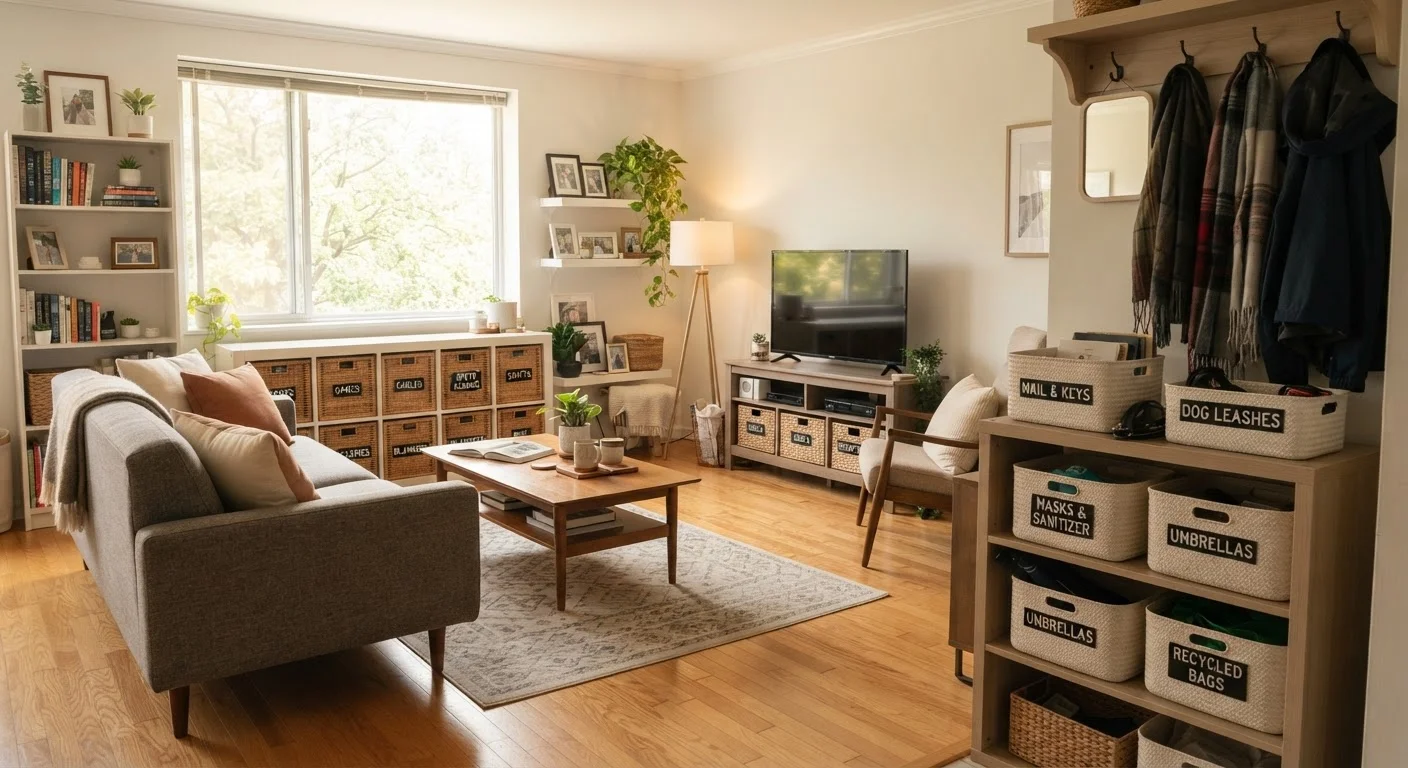
Clearly mark zones and containers so every household member knows where things belong.
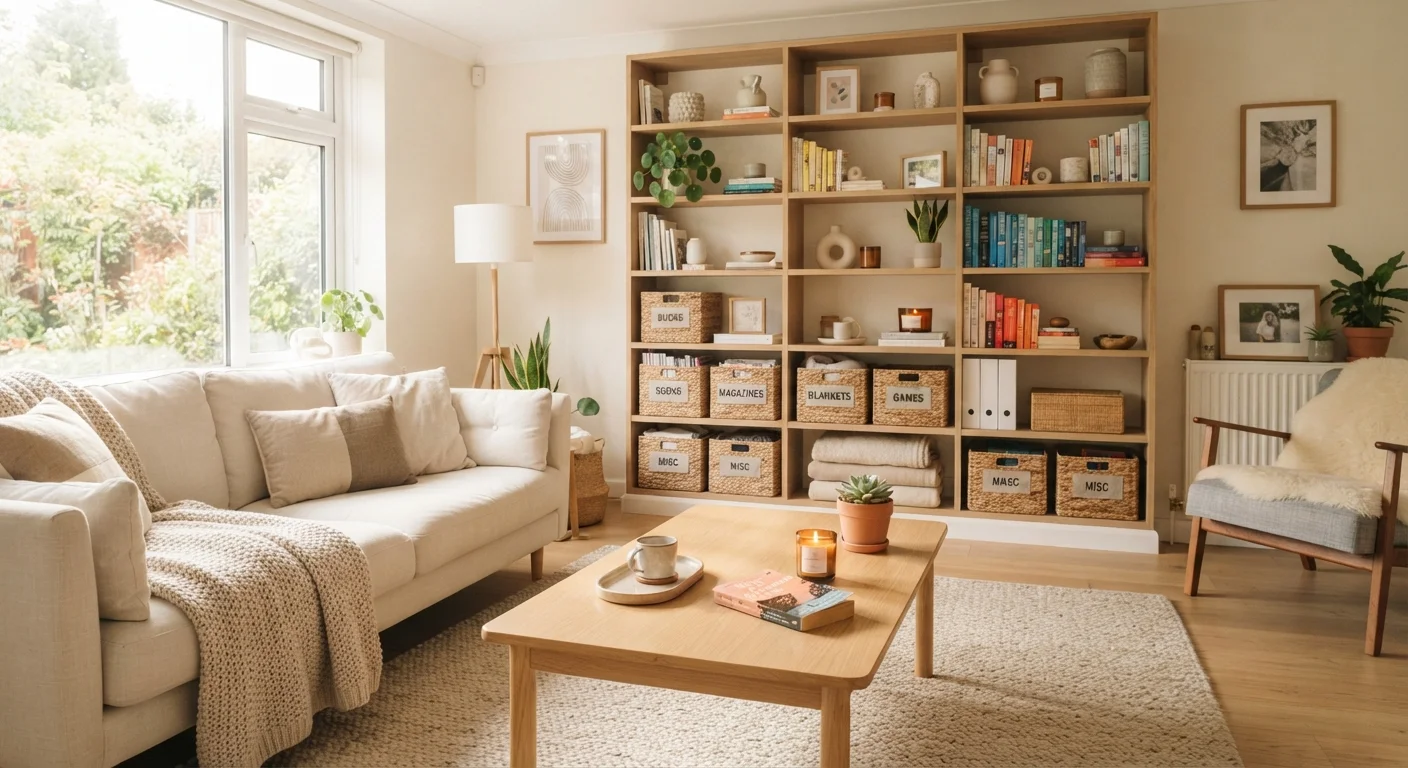
Bins and baskets in varying sizes
Create contained zones within drawers, shelves, and shared surfaces.
Drawer dividers
Separate personal items in shared storage like bathroom vanities or kitchen junk drawers.
Whiteboard or shared notepad
Track household restock needs or flag organizational issues without confrontation.
Step-by-Step: Setting Up a System That Works for Everyone
What you will need
Map how each person actually uses the shared spaces
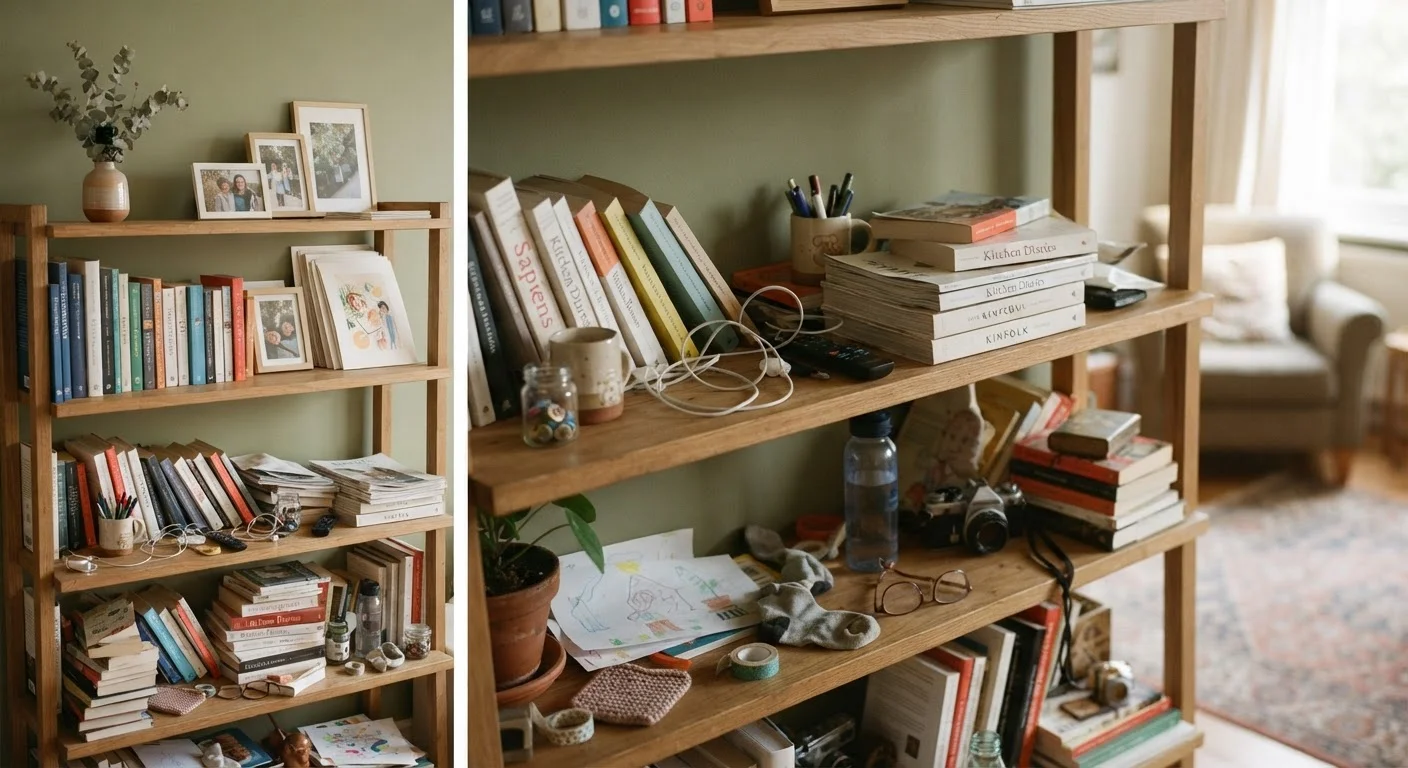
Before rearranging anything, spend a few days observing - or simply asking - how each person in the household naturally moves through shared rooms. Where do bags get dropped? What ends up on the kitchen counter most often? Where does mail pile up?
This step is about working with real habits, not idealized ones. A system built around how people actually behave is far more likely to hold than one designed for how they think they should behave. Note friction points: the spots where things consistently accumulate or where one person's items crowd another's.
Have a short, expectation-setting conversation
A five-minute household check-in prevents weeks of low-grade frustration. You don't need a formal meeting - just align on a few basics: What does "clean enough" mean for shared areas? Are there any non-negotiables for specific people? Who handles which recurring tasks?
The goal isn't to impose one person's standard on everyone but to land on a shared minimum that everyone can realistically maintain. Acknowledge that people have genuinely different comfort levels with clutter - neither is inherently wrong.
Designate clear personal zones within shared rooms
One of the most effective strategies in shared living is giving each person a defined, sanctioned space for their belongings in common areas. This might be a dedicated shelf in the living room, a hook at the entryway, or a basket on a shared console table.
When people have a legitimate place for their things, items are less likely to spread across shared surfaces. Personal zones also reduce the ambiguity that leads to conflict - no one has to guess whose item is whose or where it belongs.
Build shared storage systems that require minimal effort to maintain
The most common reason shared organization systems fail is that they were designed for a single motivated person, not a household with varying energy levels and schedules. Prioritize storage solutions with low return-to-order friction: open bins that don't require lids, wide drawers that don't need precise folding, and labeled containers that make the right action obvious.
This is especially important in high-traffic areas like the kitchen and bathroom. See our guide to why organized spaces revert to chaos for a deeper look at why design - not discipline - is usually the root cause.
Separate shared supplies from personal items in every room
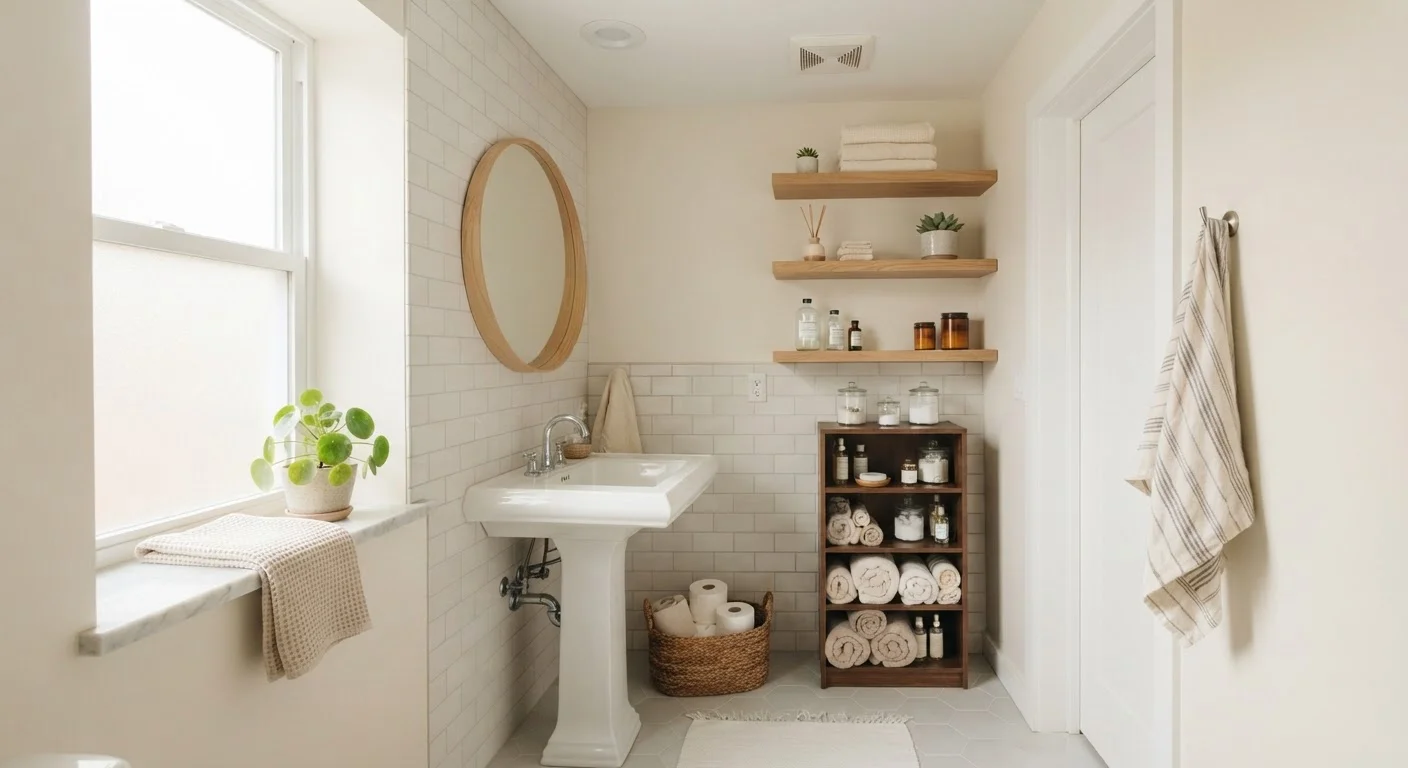
In bathrooms, kitchens, and home offices, a major source of friction is shared vs. personal items occupying the same space without clear division. Use drawer dividers, labeled baskets, or separate shelves to distinguish what's communal (dish soap, toilet paper) from what belongs to an individual (medications, specialty coffee gear).
This is particularly important in bathrooms with limited counter space. For more on that, see our storage strategies for small bathrooms.
Schedule brief, regular resets instead of periodic deep cleans
A shared home rarely stays orderly through willpower alone. Instead, build a lightweight reset routine: a 10-to-15-minute weekly pass through shared areas where everyone returns items to their designated zones and surfaces get cleared. This is far more sustainable than infrequent deep-organization sessions that feel like punishment.
Consider rotating responsibility for shared tasks rather than assigning them permanently - this distributes the mental load and reduces resentment. A simple shared notepad or whiteboard can help track when communal supplies are running low without requiring anyone to interrupt their housemate.
Flexible Storage Outlasts Rigid Systems
Modular or adjustable storage tends to hold up better in shared homes because it can be reconfigured as the household changes. If one person moves out or a new routine emerges, you're not stuck with a fixed layout. See our comparison of fixed shelving vs. modular storage to weigh your options.
Avoid Over-Optimizing for One Person's Preference
A shared organization system designed entirely around one household member's aesthetic or tidiness standard will almost always fail. If only one person finds the system intuitive, only one person will maintain it. Prioritize usability and buy-in from everyone over visual perfection.
Once your system is in place, the underlying logic - zones, categories, and frequency of use - applies across every room. Our article on the core logic of smart storage is a useful reference for refining how you think about where things belong. And if you're working with limited square footage on top of shared-living challenges, storage strategies for small apartments and compact homes offers additional approaches worth considering.