The Logic Behind Home Organization
Home organization isn't about achieving a showroom look - it's about creating systems that reduce friction in your daily life. When items live where they're naturally used and returned, maintaining order becomes almost effortless. When they don't, even a tidy space feels chaotic within days.
The foundation of any effective system is understanding how you actually move through your home. Before buying a single bin or shelf, observe which surfaces collect clutter, which drawers never get closed properly, and which areas cause the most daily frustration. Those friction points are your starting map.
If you're new to this process, our beginner's room-by-room guide covers the core principles in detail. And if clutter feels overwhelming before you even start, a low-pressure decluttering approach can help you clear the way first.
1 in 4
Americans can't park in their own garage
According to the U.S. Department of Energy, roughly one-quarter of homeowners with garages use the space primarily for storage rather than vehicles.
40%
Of housework time spent looking for items
Research cited by the National Association of Professional Organizers suggests a significant portion of household time loss stems from searching for misplaced items.
Entryway: Setting the Tone
The entryway is where organizational systems succeed or fail in plain sight. It handles the highest-traffic transitions in your home - shoes, bags, keys, mail, outerwear - and does so under time pressure every single day.
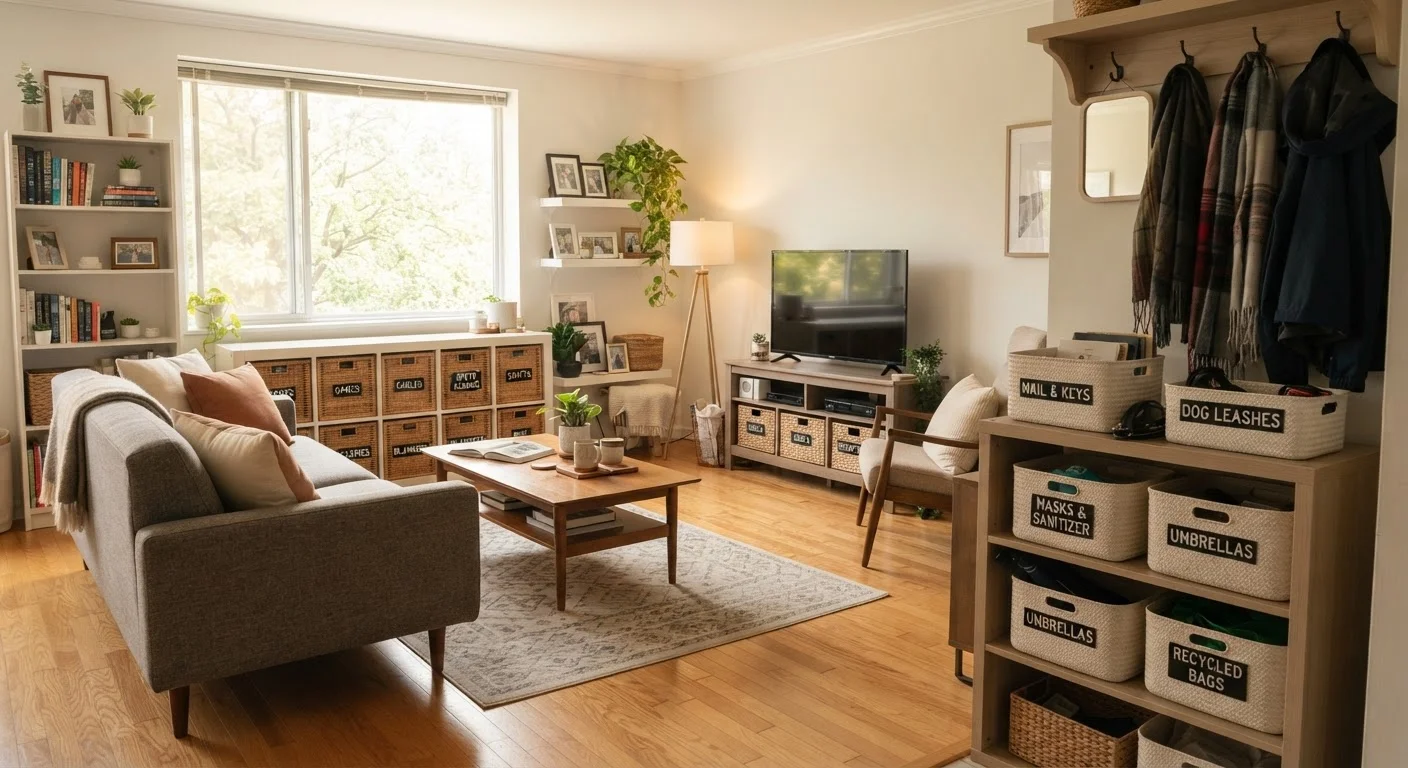
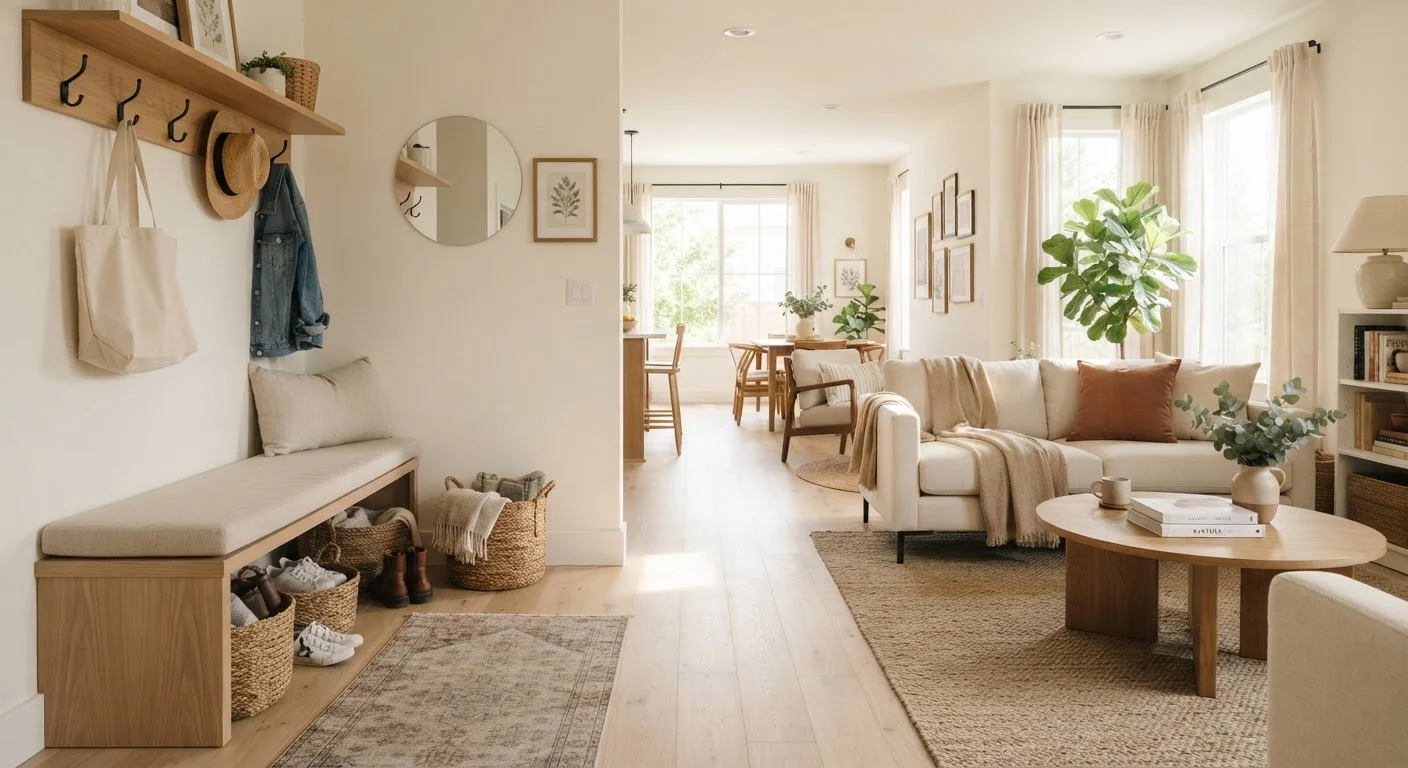
Prioritize vertical storage here. Wall-mounted hooks for coats and bags keep floor space clear. A shallow bench with storage underneath handles shoes without creating a tripping hazard. A small wall-mounted tray or bowl for keys and small items eliminates the daily search ritual.
Resist the urge to treat your entryway as a permanent staging area. Designate it strictly for transitional items - things moving in or out of the house. Anything that lives in the home permanently should have a home elsewhere.
Create a 'Not Sure' Zone in Your Entryway
If you're unsure whether an item belongs in the entryway or elsewhere in the home, place it in a small designated basket for one week. If you reach for it daily from the entryway, it earns a permanent spot there. If not, it belongs somewhere else. This prevents premature decisions and clutter by default.
Kitchen and Pantry: Function First
Kitchens present unique challenges because they store items of vastly different sizes, frequencies of use, and categories - from spices to stand mixers. The most effective kitchen storage strategy groups items by task zone: prep, cooking, cleaning, and food storage.
Store items at the point of use. Cutting boards belong near the prep area, not across the room. Pots and pans should be accessible from the cooktop. Pantry items used daily - cooking oils, frequently-used spices - should sit at eye level, while bulk backstock can live on lower or higher shelves.
Drawer dividers transform chaotic utensil drawers into functional ones without any major investment. In pantries, clear containers for dry goods make inventory visible at a glance and reduce duplicate purchases. Lazy Susans (rotating turntable trays) are particularly effective in deep corner cabinets.
Before labeling and loading a newly organized pantry, leave it empty for 24 hours and note which items you reach for first - those belong at eye level.
Most pantry systems fail because they're organized logically on paper rather than by actual usage patterns, which differ from household to household.
Use the 'one in, one out' principle in closets and storage areas: when something new enters, something old leaves. Apply it consistently rather than occasionally.
Storage capacity is fixed; volume management through habit prevents the gradual accumulation that forces large-scale reorganization projects.
Bedrooms and Closets: Personal Spaces Done Right
Bedrooms carry extra organizational weight because they serve multiple functions: sleep, dressing, sometimes work or hobbies. Clutter here tends to affect sleep quality and mental downtime, making good organization more than a convenience.
Closets benefit most from an honest audit of what you actually wear. A common rule of thumb is to examine items you haven't touched in 12 months - not as a strict rule, but as a prompt to make intentional decisions. Once you've cleared space, categorize by type (tops, bottoms, outerwear) and consider hanging items by frequency of use rather than color-coding, which is visually appealing but rarely functional.
Under-bed storage is a legitimate and underused option for off-season clothing, extra bedding, or items used infrequently. Flat bins on wheels make access easy without disrupting the room's appearance.
Shared Living Areas and Home Offices
Living rooms, dining rooms, and home offices often serve multiple people with different habits - a challenge that requires systems flexible enough to accommodate variation. Rigid, highly specific systems tend to fail in shared spaces because they require buy-in that's difficult to sustain.
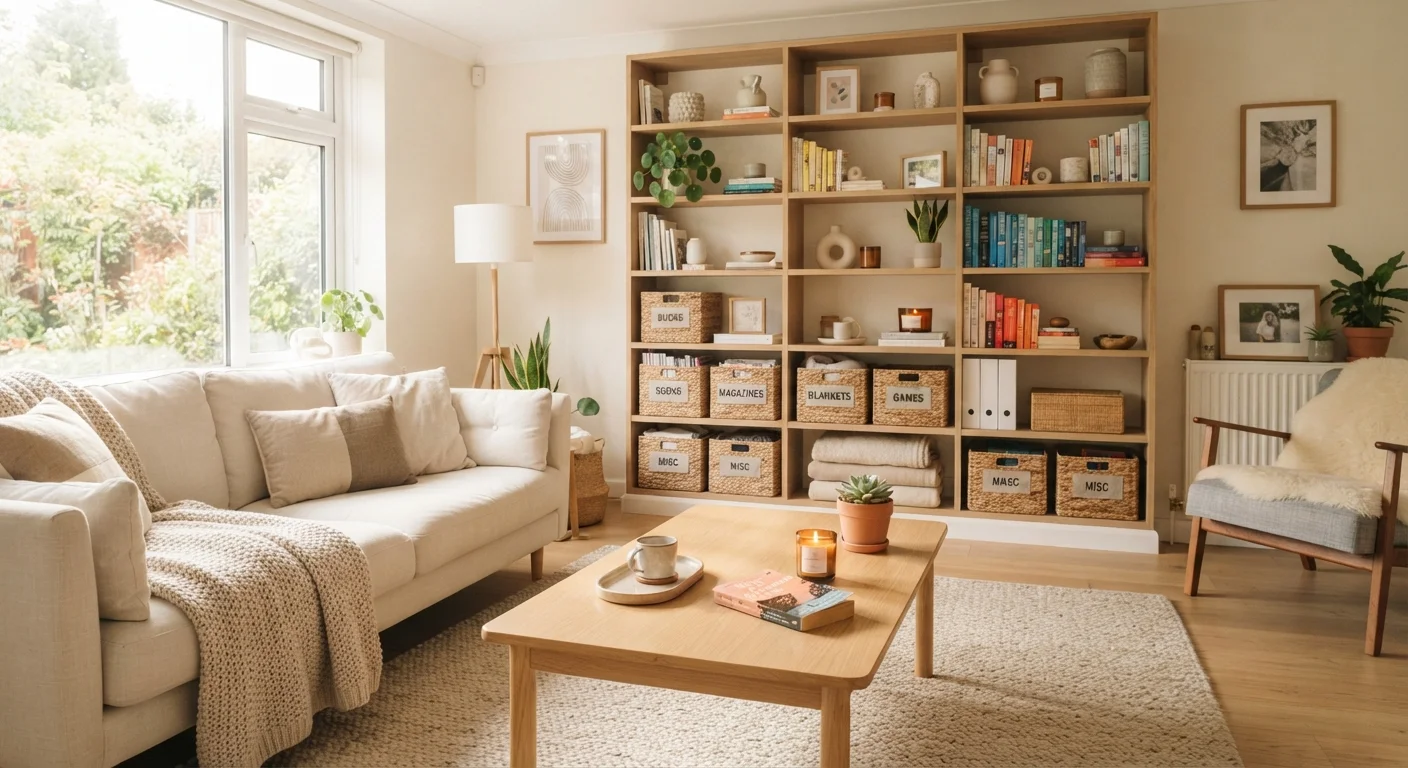
Focus instead on capture zones: clearly defined spots where each category of item belongs when not in use. Baskets for blankets and remotes, a dedicated shelf for books and magazines, a tray for charging cables. The system doesn't require perfection - just a consistent enough default that items find their way back.
For home offices, paper is often the hardest material to manage. An inbox tray for unprocessed papers, a filing folder for active documents, and a clear-out cadence (weekly or monthly) prevents paper piles from becoming permanent fixtures. For households navigating different tidiness habits, strategies for organizing shared spaces can help align expectations without conflict.
“A place for everything and everything in its place isn't a rigid rule - it's a question worth asking about every object in your home.”
— Julie Morgenstern, Professional organizer and author of 'Organizing from the Inside Out'
Garage and Utility Spaces: Practical Storage at Scale
Garages and utility rooms - laundry areas, basement storage, mudrooms - are where good intentions most often break down. These spaces tend to collect items displaced from the rest of the home, eventually becoming inaccessible catch-alls.
The most effective garage organization strategy is vertical wall systems. Pegboards, slatwall panels, and wall-mounted shelving reclaim floor space and keep tools visible. Group items into functional zones: automotive, lawn and garden, sports and recreation, seasonal décor. Label everything, especially bins on high shelves.
Seasonal rotation helps prevent garage buildup. When holiday decorations go up, the storage bins they came from should be clearly labeled and stacked accessibly for the return. Garden tools and outdoor furniture covers follow the same logic - store them together, ready for the season they belong to. If your garage doubles as a workspace for home improvement projects, maintain a dedicated tool zone that stays accessible year-round.
For those who also store car care supplies, keeping them in a clearly labeled bin near the garage entrance simplifies the routine described in resources like basic car maintenance guides.
Maintaining an Organized Home Over Time
Organization isn't a one-time project - it's an ongoing practice. The most common reason tidy spaces revert to disorder is that the system wasn't designed for real-life use. If your organized spaces keep falling apart, the system itself may need adjustment, not your willpower.
Build maintenance into existing routines rather than treating it as a separate task. A five-minute reset at the end of the day is more effective than a monthly deep-clean scramble. Seasonal reviews - twice a year is a common cadence - catch accumulation before it becomes unmanageable.
For smaller homes or apartments, the margin for disorganization is naturally tighter. Storage strategies designed for compact living address the specific constraints that standard organization advice tends to overlook.
Finally, remember that an effective system is one you'll actually use. Adjust, simplify, and iterate as your household changes - because the goal is a home that supports your life, not one that demands constant management.
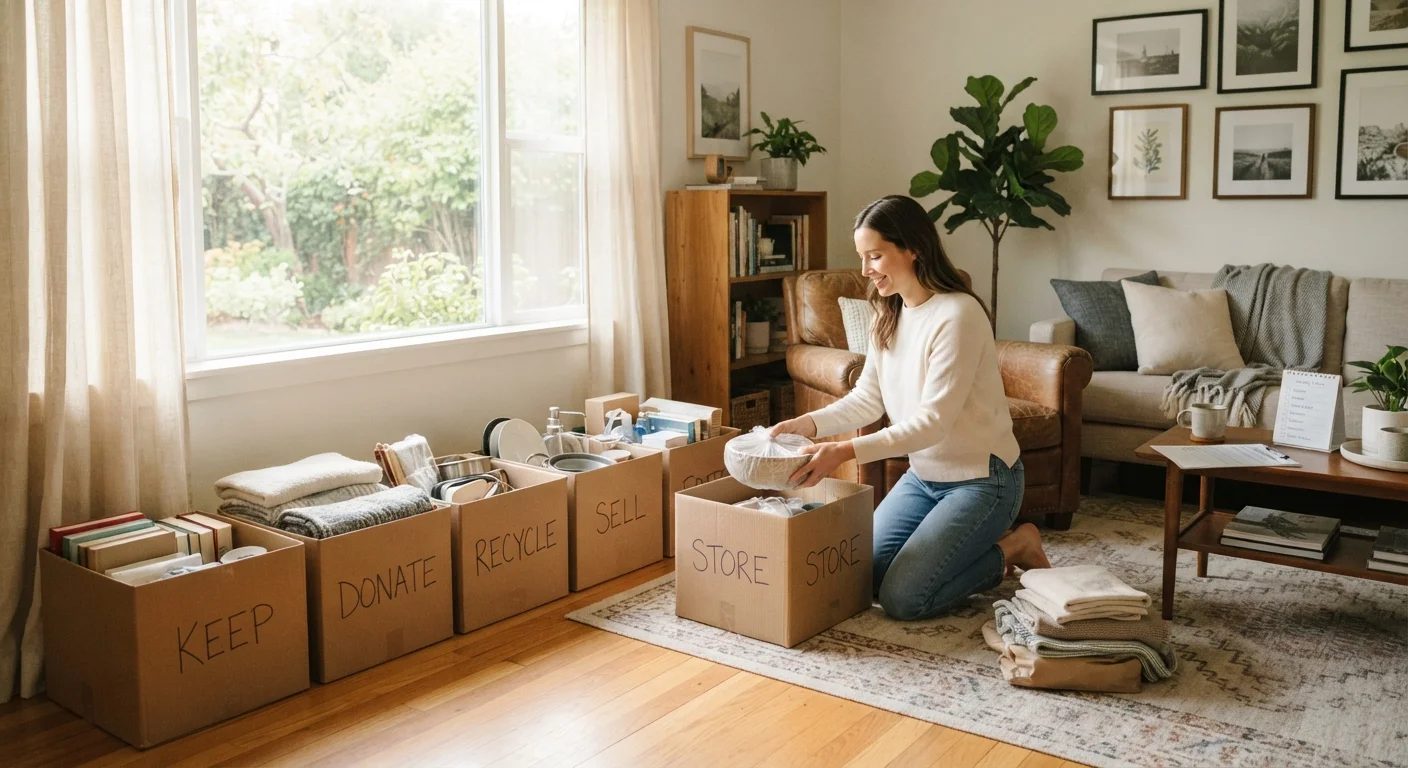
Avoid Buying Storage Before Decluttering
One of the most common and costly organization mistakes is purchasing bins, baskets, and shelving before sorting through what you actually own. You'll almost certainly buy the wrong sizes, quantities, or types. Always declutter a space completely before measuring and sourcing storage solutions.