Why Date Labels Cause So Much Confusion
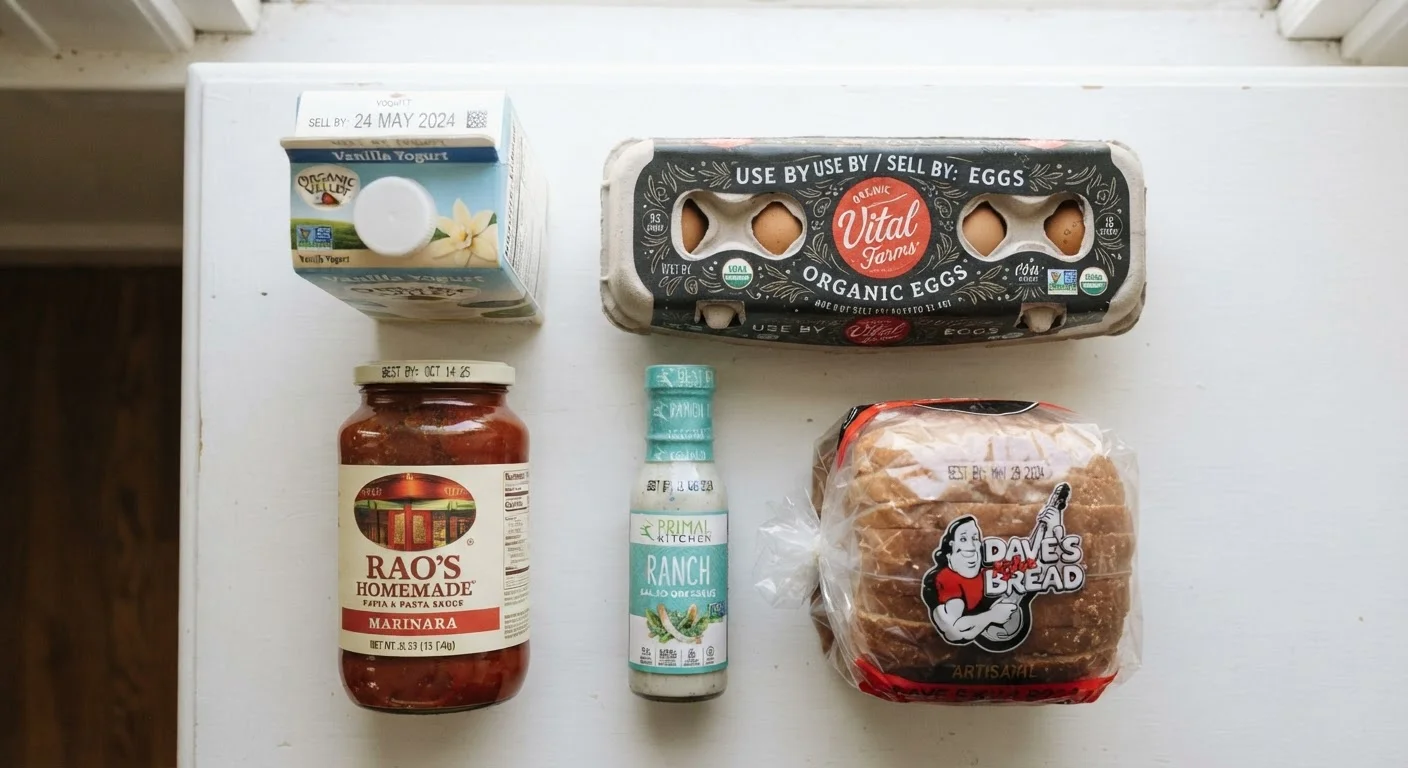
Walk down any grocery aisle and you'll find packages stamped with phrases like "Best By," "Sell By," "Use By," and "Expires On." Most shoppers treat all of these as equivalent - and assume they signal the moment a product becomes unsafe. That assumption is wrong, and it costs American households billions of dollars in needlessly discarded food each year.
The core problem is inconsistency. Unlike nutrition facts panels, which follow strict federal formatting rules, date labels on most food products in the US are not federally standardized. Manufacturers apply them according to their own internal quality assessments, state regulations that vary widely, or industry convention. The result is a patchwork of terminology with no shared legal definition - and widespread consumer misunderstanding. For a fuller picture of how product labels communicate (and sometimes obscure) information, see our guide to what product labels are actually telling you.
Myth
A "Best By" date means the food is unsafe to eat after that date.
Fact
"Best By" indicates peak quality, not safety. Products are often still wholesome and edible well beyond this date.
"Best By" (sometimes printed as "Best If Used By") is a manufacturer's estimate of when a product will be at its optimal flavor, texture, or potency. It is a quality marker, not a safety threshold. Non-perishable items like canned goods, dry pasta, and cereals are routinely safe to consume months or even years past their best-by dates, provided they've been stored properly and show no signs of spoilage.
Myth
"Sell By" dates tell consumers when they need to eat or discard a product.
Fact
Sell-by dates are logistical instructions for retailers about inventory rotation - they are not consumer safety or quality guides.
A sell-by date tells a store how long to display a product to allow adequate shelf life remaining for the consumer after purchase. It has no direct bearing on when the food becomes unsafe. Milk, for example, typically remains good for several days past its sell-by date when refrigerated properly. Consumers who discard food on its sell-by date are likely throwing away perfectly usable products.
Myth
"Use By" and "Expiration Date" mean the same thing as "Best By."
Fact
"Use By" is the closest label to a safety-based date, and it carries different implications than a quality-focused "Best By" date.
"Use By" is generally applied to more perishable products and reflects the manufacturer's assessment of when safety or quality can no longer be assured. While still not universally regulated (except on infant formula), it is the label that most closely approximates a meaningful deadline. "Expiration Date" is less commonly used on food and more prevalent on medications and supplements, where potency genuinely degrades over time. Treating all these labels interchangeably leads to both unnecessary waste and, occasionally, overlooked genuine risk.
Myth
Federal law requires manufacturers to put expiration dates on all food products.
Fact
Federal law mandates date labeling only on infant formula. All other food date labels are largely voluntary and governed by a mix of state rules and manufacturer choice.
There is no comprehensive federal statute requiring most food manufacturers to include any date label at all. Some states impose their own requirements - particularly for dairy and certain perishables - but these vary significantly in terminology and enforcement. The FDA and USDA have issued guidance encouraging voluntary standardization, but as of now, most date labels reflect manufacturer discretion rather than legal obligation. This is a key reason the same product can carry different date formats depending on where it's sold.
Myth
If a product has passed its date label, it will smell or look obviously bad.
Fact
Some genuinely unsafe foods - particularly those harboring certain bacteria - show no visible, olfactory, or textural warning signs.
While sensory checks are useful for many products, they are not foolproof. Pathogens like Listeria monocytogenes and certain strains of E. coli can multiply in refrigerated, seemingly normal-looking food without producing detectable odors or visible changes. This is why date labels on highly perishable, ready-to-eat items - deli meats, soft cheeses, prepared salads - deserve more serious attention than, say, a can of chickpeas. Context and product type matter when deciding whether to rely on sensory evaluation alone.
What the Evidence and Regulation Actually Say
The USDA's Food Safety and Inspection Service and the FDA have both acknowledged the confusion created by inconsistent labeling, and industry groups like the Consumer Brands Association have pushed for voluntary standardization. The most widely recommended reform - collapsing most labels down to just "Best If Used By" for quality and "Use By" for safety - has gained traction but remains voluntary for most categories.
~30-40%
Share of US food supply wasted annually
The USDA estimates that between 30 and 40 percent of the US food supply is wasted, with consumer misreading of date labels identified as a significant contributing factor.
$1,500+
Estimated annual food waste cost per household
According to USDA Economic Research Service analyses, the average American family of four discards an estimated $1,500 or more in food each year, much of it still edible.
The one firm federal rule: infant formula must carry a use-by date, and retailers cannot legally sell it past that date. This is a genuine safety-based requirement, not a quality estimate. For nearly everything else in the grocery store, the date on the package is the manufacturer's best estimate of when the product will be at its peak - not a guaranteed expiry.
Higher-Risk Categories Deserve Closer Attention
While most date labels are quality guides, certain product categories carry genuine safety implications when mishandled - including raw meat and poultry, unpasteurized products, ready-to-eat deli items, and soft cheeses. For these categories, use-by guidance and proper refrigeration should be taken seriously. When in doubt about a perishable item, the USDA's advice is straightforward: "When in doubt, throw it out."
Understanding these distinctions is part of reading product packaging critically. Just as ingredient lists follow rules that reveal a product's true composition - explored in our ingredient list decoding guide - date labels follow their own logic once you know what to look for.