
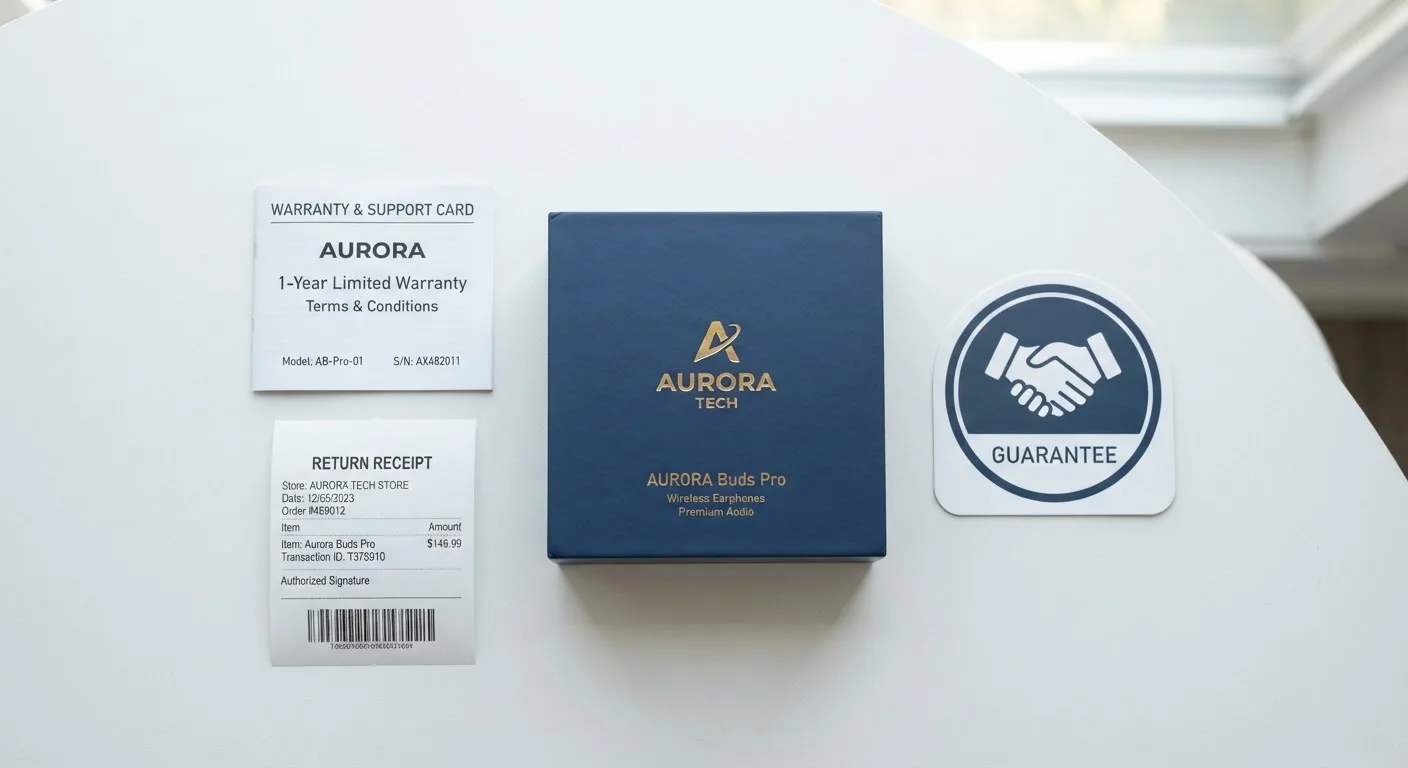
Why These Three Terms Get Confused
"Warranty," "guarantee," and "return policy" are often used interchangeably in marketing language, but they carry distinct meanings with different legal standing and practical implications. Confusing them can leave consumers surprised - or without recourse - when something goes wrong.
Each protection operates at a different point in the consumer-seller relationship. A warranty is typically activated at the time of manufacture. A guarantee often reflects a seller's confidence pledge. A return policy is a retail-level rule that applies in the days or weeks after purchase. Understanding the difference means knowing who you're dealing with, what time window applies, and what outcome you can realistically expect.
Just as insurance policies differ significantly in what they cover - a point worth reviewing in our overview of auto insurance coverage - consumer product protections require equally careful reading of the fine print.
Warranties: Legally Binding Promises
A warranty is a formal promise - usually from the manufacturer - that a product will function as described for a defined period. In the United States, the Magnuson-Moss Warranty Act (enforced by the Federal Trade Commission) governs written warranties on consumer products. Under this law, if a written warranty is offered, it must clearly disclose what it covers, what it excludes, how long it lasts, and how to obtain service.
There are two broad categories:
- Express warranties - explicitly stated, either in writing or verbally. A printed warranty card is a common example.
- Implied warranties - automatic legal protections that exist even without documentation. The most common is the "implied warranty of merchantability," meaning a product must function for its ordinary intended purpose.
Warranties typically cover manufacturing defects and component failures under normal use. They generally do not cover accidental damage, misuse, or normal wear and tear. Duration varies widely - from 90 days on budget electronics to lifetime coverage on certain tools or cookware.
Extended Warranties Are Not Manufacturer Warranties
Extended warranties - often pitched at checkout - are service contracts sold by retailers or third-party administrators, not by manufacturers. They come with their own exclusions, deductibles, and claim processes. The FTC advises consumers to read extended warranty contracts carefully before purchasing, since coverage often overlaps with the manufacturer's warranty already included with the product.
Extended warranties sold at checkout are separate service contracts - not manufacturer warranties - and are governed by different rules. Read those terms independently.
Guarantees: Confidence Claims With Variable Weight
A guarantee is typically a voluntary pledge made by a seller or brand - often phrased as a "satisfaction guarantee" or "money-back guarantee." Unlike warranties, guarantees are not standardized by federal law, which means their terms, duration, and fulfillment processes vary significantly from one company to the next.
A strong guarantee may offer full refunds with no questions asked for an extended period. A weak one might require the buyer to pay return shipping, prove dissatisfaction, or accept store credit only. The enforceability of a guarantee depends on how clearly it is stated and whether it constitutes a binding contract under the seller's terms of sale.
Read Terms Before You Buy, Not After
Warranty cards, guarantee terms, and return policies are all available before a transaction is complete - either on the retailer's website, product packaging, or by request in-store. Taking five minutes to review them beforehand eliminates most post-purchase surprises. Pay particular attention to what's excluded, not just what's covered.
When evaluating a guarantee, look for specifics: How long does it last? What counts as a valid claim? Is cash refunded, or only store credit? Vague language like "we stand behind our products" without defined terms offers little practical protection.
Guarantees can be a useful signal of a seller's confidence in product quality - but they work best when paired with transparent terms. This is similar to how third-party certifications provide external validation: see our guide to product certifications for context on other trust signals consumers encounter.
Return Policies: Retailer Rules, Not Legal Rights
A return policy is a store-level rule - not a legal entitlement. In most US states, retailers are not legally required to accept returns unless a product is defective. However, most retailers voluntarily offer return windows (commonly 15 to 90 days) because it builds consumer trust and drives repeat purchasing.
Return policies typically specify:
- The number of days you have to initiate a return
- Whether the item must be unused, unopened, or in original packaging
- Whether a receipt or proof of purchase is required
- What form of refund is issued (cash, original payment method, or store credit)
- Which items are excluded (often electronics, perishables, or final-sale goods)
Return policies sit at the intersection of practical convenience and consumer habit. Unlike warranties, they don't require a product to be defective - you can often return something simply because you changed your mind. But that window closes quickly, and the conditions can be strict.
| Warranty | Guarantee | Return Policy | |
|---|---|---|---|
| Who provides it | Manufacturer | Seller or brand | Retailer |
| Legal standing | Federally regulated (Magnuson-Moss Act) | Voluntary; contract law applies | Voluntary; no federal mandate |
| Typical duration | 90 days to lifetime | Varies widely; often 30-365 days | 15 to 90 days post-purchase |
| Requires defect to claim | Yes - covers defects/failures | Often no - satisfaction-based | Usually no - buyer's discretion |
| Common exclusions | Misuse, accidents, wear and tear | Varies by seller's terms | Opened items, final-sale goods |
| Typical outcome | Repair, replacement, or refund | Refund or replacement | Refund, exchange, or store credit |