Why the Images We Watch Matter
Every time an audience sits with a film or television series, it is absorbing more than entertainment. It is encountering a set of implied claims about who matters, what kinds of people are heroic or villainous, and which lives are worth centering in a story. That process is rarely conscious, which is part of what makes it consequential.
Cultivation theory, one of the most influential frameworks in media studies, holds that heavy viewers of television gradually come to perceive social reality through the lens of what they repeatedly see on screen. When certain groups appear mainly in subordinate, comic, or threatening roles, those associations can calcify into assumptions - not just for viewers who don't belong to those groups, but sometimes for members of those groups themselves.
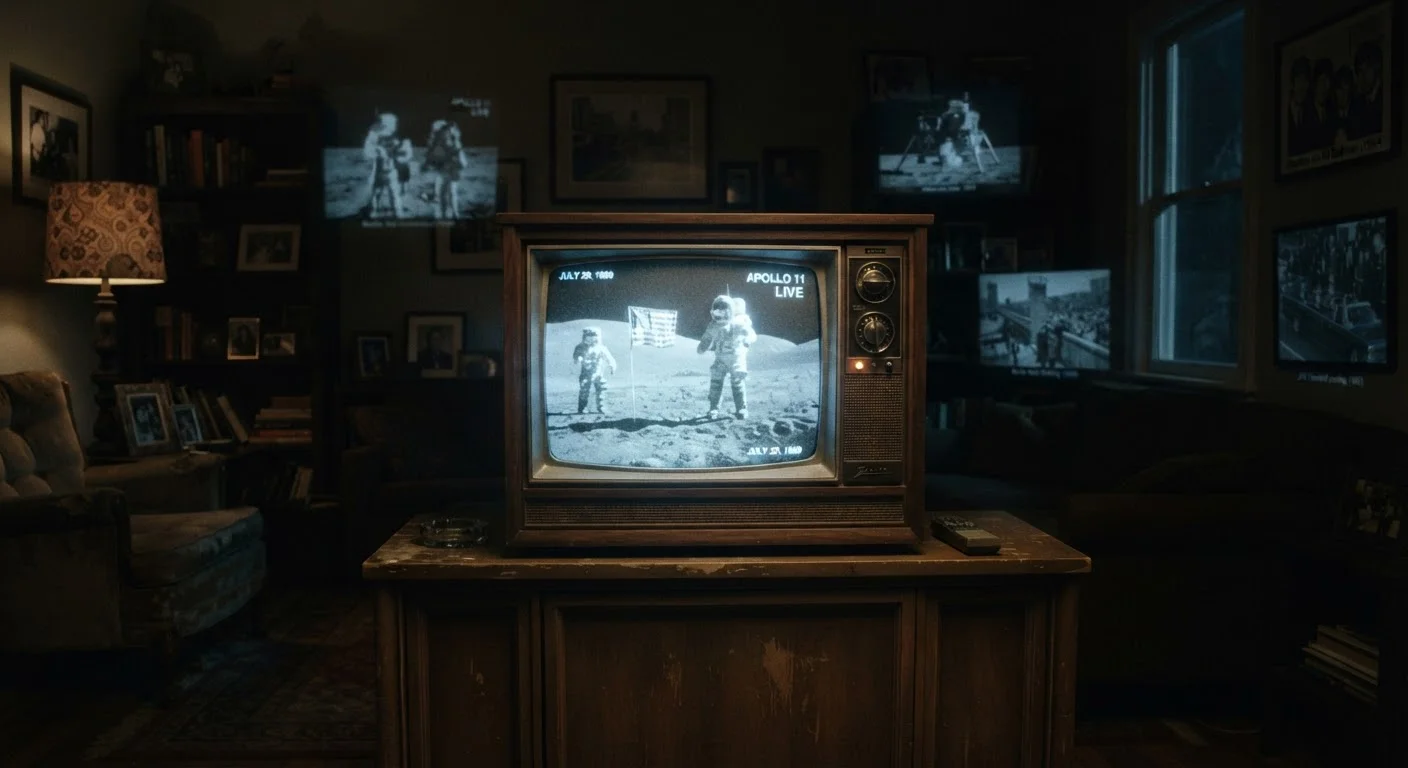
This is why the question of representation is treated as both a cultural and an empirical one. It sits at the intersection of storytelling, identity, and measurable social outcomes. Key television moments across American history illustrate just how powerfully the medium has shaped national conversations about race, gender, and belonging.
~39%
Share of speaking characters who are people of color
USC Annenberg Inclusion Initiative analysis of top-grossing U.S. films found that people of color account for roughly 39% of speaking characters, still below their share of the U.S. population.
2.8%
Film characters identified as having a disability
The Ruderman Family Foundation has reported that people with disabilities represent only a small fraction of characters in top films, despite comprising approximately 26% of U.S. adults.
~3%
LGBTQ+ characters in top-streamed films
GLAAD's annual Studio Responsibility Index has found LGBTQ+ characters consistently represent a small single-digit percentage of characters in major studio releases.
What the Research Shows
A substantial body of peer-reviewed literature connects media exposure to attitude change. A frequently cited line of research involves the 'parasocial contact hypothesis,' which extends the social-psychology concept of intergroup contact to fictional relationships. Studies have found that viewers who develop parasocial bonds with characters from groups different from their own can exhibit reduced prejudice toward those groups in real-world contexts.
Research conducted around television series that introduced LGBTQ+ characters in positive central roles found measurable shifts in audience attitudes in communities where those programs aired. Similar findings have emerged around portrayals of racial minorities, people with disabilities, and immigrant characters.
It is worth noting that effects are not uniform. A viewer's existing beliefs, the degree to which they identify with a character, and the overall media environment all moderate outcomes. Critics of strong-effects models argue that audiences actively interpret media rather than passively absorb it. The emerging consensus is that representation matters most as a cumulative, systemic phenomenon rather than as the result of any single film or episode.
The Cost of Absence and Distortion
Underrepresentation and misrepresentation carry distinct harms. When a group rarely appears on screen at all, the implicit message - however unintended - is that their stories are peripheral to the common human experience. Research on young viewers has documented that children who see characters resembling themselves in aspirational roles report higher self-efficacy; conversely, chronic absence or stereotyped roles can contribute to what scholars call 'symbolic annihilation.'
Distorted portrayals present a different problem. Linking specific groups to crime, incompetence, or comic relief - when those are the dominant modes of depiction - can activate and reinforce implicit associations. Annual content analyses by groups such as the USC Annenberg Inclusion Initiative and the Geena Davis Institute have consistently found that women, people of color, people with disabilities, and LGBTQ+ individuals are underrepresented in speaking roles relative to their share of the U.S. population, and that when they do appear, narrative context often constrains how they are shown.
Understanding these patterns requires looking beyond the screen itself. Structural realities of the entertainment industry - from development deals to greenlight decisions - help explain why certain stories reach wide audiences while others don't. Representation on screen is, in large part, a downstream consequence of who holds decision-making power behind the camera.
“Representation is not just about seeing yourself - it's about being seen as fully human by everyone else in the audience.”
— Stacy L. Smith, Founding Director, USC Annenberg Inclusion Initiative
Progress, Complexity, and What Comes Next
The last decade has produced notable shifts in mainstream American entertainment: films centered on Black protagonists reaching blockbuster status, disabled characters written with narrative agency, and LGBTQ+ storylines moving from subtext to explicit representation. Audiences and critics have rewarded many of these departures from historical patterns, providing market evidence that diverse storytelling carries broad appeal.
Yet progress is uneven and contested. Advocates caution against conflating visibility with authentic representation - a character's presence does not guarantee dimensional writing or meaningful narrative weight. Tokenism, where a single character is asked to 'represent' an entire community, draws criticism from within those communities. Social movements of the 21st century have increasingly placed media accountability within a broader framework of equity, pushing studios and networks to address hiring practices alongside on-screen content.
How representation interacts with how people construct identity in digital spaces is an emerging area of study, as streaming platforms and social media enable audiences to seek out content that reflects their own experiences more precisely than broadcast television ever could. The conversation about who gets to see themselves on screen - and how - is likely to remain one of the defining cultural questions of this era.
How to Be a More Critical Media Consumer
When watching a film or series, consider who is centered in the story and who appears only at the margins. Notice whether characters from underrepresented groups are given interior lives, complexity, and narrative agency - or whether they exist primarily to serve the story of someone else. This kind of active viewing doesn't require abandoning enjoyment; it simply adds a layer of awareness that researchers say helps audiences engage more thoughtfully with the cultural messages embedded in entertainment.