
The Spark: What Sets a Moment in Motion
Every viral moment begins with a trigger - something that breaks from the expected and demands a reaction. Research in social psychology suggests that content generating strong emotional responses, particularly surprise, amusement, or moral outrage, is shared at significantly higher rates than neutral material. The trigger alone, however, is not enough.
Timing matters enormously. A moment that lands during a cultural lull may quietly disappear, while the same event arriving during a period of heightened public attention can ignite within minutes. The collective mood of an audience - shaped by news cycles, social anxieties, and shared cultural references - acts as kindling. The triggering event is merely the match.
Platform conditions determine the initial trajectory. A clip posted on a short-video platform with strong algorithmic amplification reaches a different audience, at a different speed, than one shared through a text thread or niche forum. Understanding how trends move from niche spaces to mainstream awareness helps explain why the same content can smolder invisibly for days before suddenly exploding into broad visibility.
59%
Share of adults who get news from social media
According to Pew Research Center data, more than half of U.S. adults report encountering news on social media platforms, making these channels central to how viral moments enter public consciousness.
~24 hrs
Typical peak window for viral content engagement
Social media analytics studies consistently find that the majority of a viral post's total engagement occurs within the first 24 hours of widespread circulation, after which attention typically drops sharply.
3x
Greater sharing rate for high-arousal emotional content
Research published in academic communications journals has found that content triggering high-arousal emotions - awe, anger, or anxiety - is shared at roughly three times the rate of low-arousal neutral content.
The Fuel: Why Ambiguity and Debate Extend Reach
One of the more counterintuitive findings in viral content research is that ambiguity often outperforms clarity. When a moment invites multiple interpretations - when people genuinely disagree about what it means, who was right, or what should happen next - participation expands. More people have a reason to post, comment, or share their take.
Consider the cultural mechanics at play when a public figure's comment or an awards show incident generates competing narratives simultaneously. Supporters, critics, and neutral observers all feel compelled to contribute. This multi-directional engagement creates what communications researchers sometimes call a "controversy multiplier," where the volume of discourse itself becomes part of the story.
“Virality is not a property of the content itself - it is a property of the audience's readiness to receive it. The same video can be ignored one week and ignite a national conversation the next, depending on what people are already primed to feel.”
— Jonah Berger, Marketing professor and researcher, author of studies on social transmission and word of mouth
Moments that connect to ongoing cultural tensions are particularly durable. A viral incident touching on questions of identity, fairness, or values doesn't resolve quickly - it becomes a lens through which larger conversations continue. This is why some pop culture events feel culturally significant weeks after their initial peak, while purely novelty-driven content evaporates within a single news cycle.
The Architecture: How Platforms Shape What Spreads
No viral moment exists independently of the infrastructure carrying it. Platform design - share buttons, duet and stitch features, quote-tweet mechanics, notification systems - actively shapes which content gains momentum and which does not. These systems reward high early engagement, meaning a moment that captures attention quickly is disproportionately boosted relative to one that builds slowly.
Legacy media still plays a bridging role. When a moment that originated online is covered by major newspapers, television programs, or radio, it crosses from the engaged minority who saw it first into the broader public consciousness. This handoff from digital-native audiences to mainstream coverage is often the threshold between a moment that trends briefly and one that enters broader cultural memory.
Watch for the Moment the Story Becomes the Story
One reliable sign that a viral moment has staying power is when coverage of the coverage begins - when media outlets start analyzing the public reaction rather than just the original event. This meta-layer of commentary signals that the moment has graduated from trending content to cultural event, and it often marks the beginning of its longer arc in public memory.
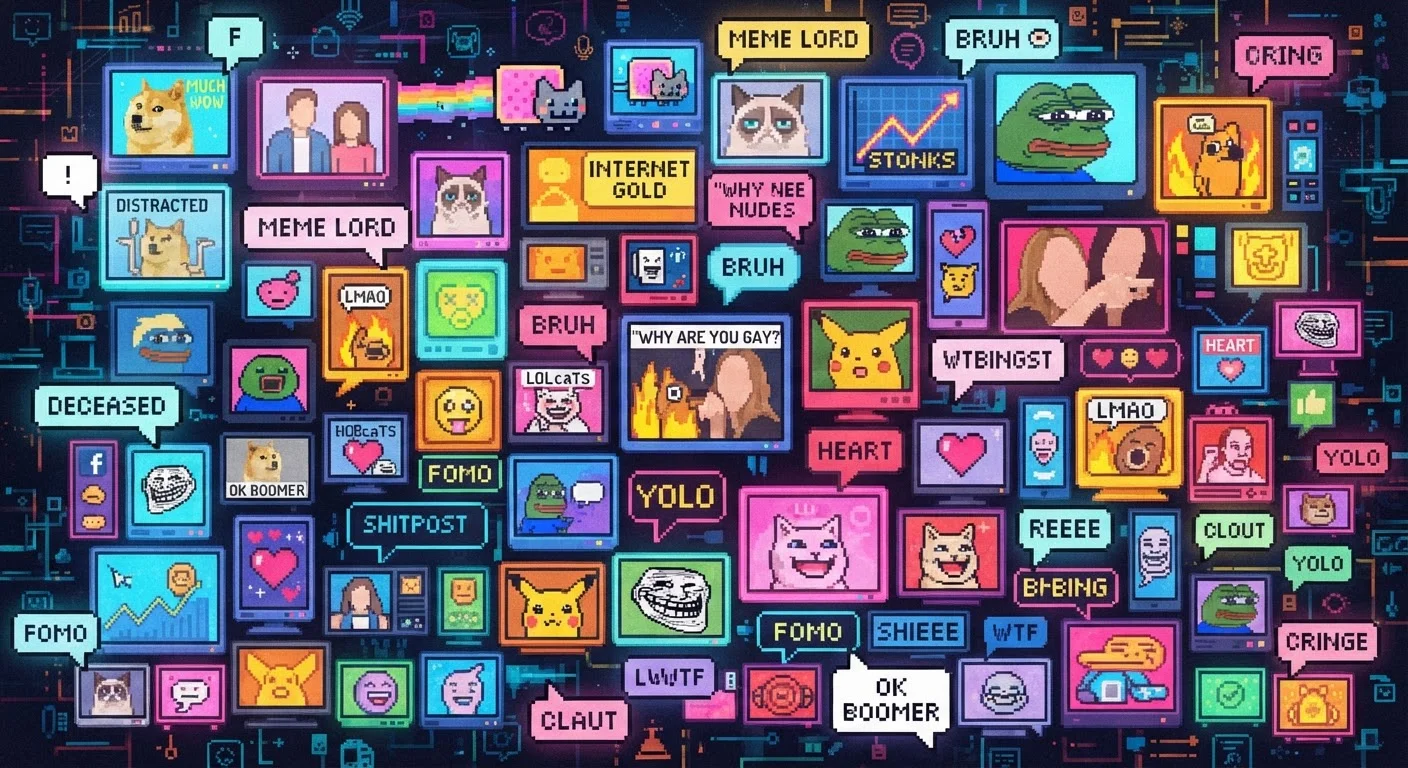
The mechanics of sharing also introduce editorial choices at the audience level. When someone shares a clip, they are implicitly endorsing it as worth attention - but they are also often framing it with their own commentary. That layering of context and interpretation, multiplied across millions of users, is part of what gives a viral moment its cultural texture. For a deeper look at how these cultural signals function symbolically, understanding the language of memes offers useful grounding.
The Aftermath: What Makes a Moment Last
Most viral moments have a short half-life. Public attention is finite, and the same platform dynamics that elevate a moment can quickly redirect that attention to the next one. What separates fleeting virality from lasting cultural significance is usually connection - to a movement, an identity, or an unresolved question that a society is still working through.
Television has produced some of the most enduring cultural moments in American life, precisely because shared viewing created genuine collective experience. Decades of American television history illustrate how moments that felt enormous in real time could either crystallize into permanent cultural reference points or quietly recede, often depending on whether they articulated something the audience was already feeling but hadn't yet named.
In the digital era, moments that endure tend to be those that gave communities a shared vocabulary - a phrase, an image, or a reference point that continues to carry meaning. They become shorthand for something larger. Whether that "something larger" is humor, collective grief, political tension, or cultural pride, the most persistent viral moments function less as isolated events and more as anchors in an ongoing cultural conversation. For those interested in reading pop culture more critically, asking why a particular moment resonated - and for whom - is often the most revealing question of all.