Why the Title Transfer Gets Skipped - And Why That's a Problem
When you buy a used car, the excitement of driving it home can overshadow one critical step: filing the title transfer with your state's DMV. Many new owners assume the signed title in their hand is enough. It isn't. The title only becomes legally yours once your state's motor vehicle agency officially records the change of ownership.
Skipping or delaying the transfer creates real exposure. Parking tickets, toll violations, or even accidents involving the vehicle can still be traced to the previous owner of record - who now has every incentive to dispute involvement. Meanwhile, you're driving a car you can't definitively prove you own. For a broader look at what's involved in taking on a vehicle legally and financially, see our guide for first-time car owners.
Don't Drive on an Untransferred Title
Until the title is in your name, you are not the legal owner of the vehicle - even if you paid for it and have the keys. If the car is involved in an accident, a traffic stop, or a dispute, the registered owner on record is still legally accountable. Complete the transfer before regular use, not after.
Most states impose a deadline - typically between 10 and 30 days from the date of sale - to complete the transfer. Miss that window and you may face late fees. The good news: the process itself is straightforward once you know what's required.
What You'll Need Before You Start
Having the right documents assembled before you visit the DMV is the difference between a quick errand and multiple wasted trips. Requirements vary by state, but the core documents are consistent across most of the country.
What you will need
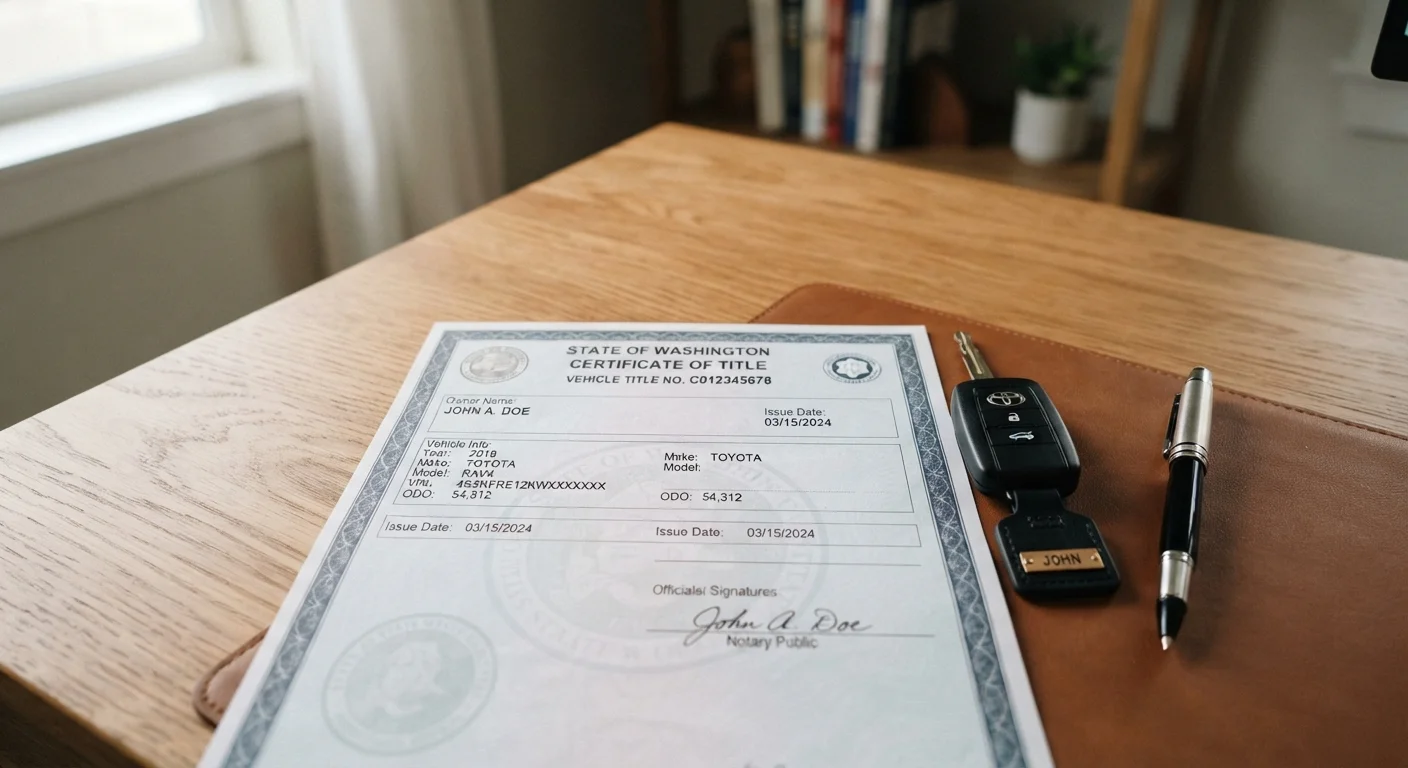
Signed Vehicle Title
The primary document proving the seller's right to transfer ownership to you.
Bill of Sale
Documents the transaction terms and may be required to calculate sales tax.
Odometer Disclosure Statement
Federally required for most vehicles under 10 years old to certify the mileage at time of sale.
Lien Release Letter
Required if the seller had a loan on the vehicle; proves the lender's interest has been cleared.
Notary Public
Some states require notarized signatures on the title or bill of sale - check your state's rules.
Check Your State's Exact Requirements First
Title transfer rules differ meaningfully from state to state - some require a notarized signature, others don't. Before you show up at the DMV, visit your state's motor vehicle agency website to confirm the exact documents and fees required. This single step prevents a wasted trip.
If the vehicle was purchased from a private seller who still owed money on a car loan, confirm the lien is cleared before completing the sale. A vehicle with an unresolved lien cannot be cleanly transferred - the lender's name may still appear on the title, and some states will reject the application outright until a lien release is provided.
Watch Out for 'Open' or Signed-Over Titles
A title signed by the seller but not yet submitted to the DMV is sometimes called an 'open title.' Driving on one for extended periods is risky and illegal in many states. If you're buying a used car, verify the seller's name matches the title exactly - discrepancies can complicate or block the transfer entirely.
Step-by-Step: Completing the Transfer
Follow these steps in order. The sequence matters - particularly confirming the title is clean and the seller's signatures are correct before you leave the point of sale. Errors discovered after the fact are harder and slower to correct.
Confirm There Are No Outstanding Liens
Before money changes hands, verify that the vehicle's title is clear of any lender claims. A lien means a bank or financing company still has a legal interest in the car. You can check for liens through your state's DMV website using the vehicle identification number (VIN). If a lien exists, the seller must obtain a lien release letter from their lender before the title can transfer cleanly to you.
Have the Seller Sign the Title Correctly
The seller must sign the title in the exact location designated for the seller's signature - usually on the back. The name signed must match the name printed on the title exactly. Any corrections made with white-out or written over may render the title invalid. If the vehicle is jointly owned, all listed owners typically must sign.
Complete the Odometer Disclosure
Federal law requires an odometer disclosure for most vehicles under 10 years old. This is often a section printed directly on the title, or it may be a separate form. The seller records the mileage and certifies it's accurate. Both parties typically sign. This protects you from odometer fraud and is required for the title transfer to be accepted.
Gather Your Supporting Documents
Bring the signed title, a completed bill of sale, your government-issued photo ID, and proof of insurance to the DMV. Some states also require a vehicle inspection certificate or a smog/emissions test result before they'll process the transfer. Check your state DMV's website - requirements vary and the list above may not be exhaustive for your location.
Submit the Transfer Application at the DMV
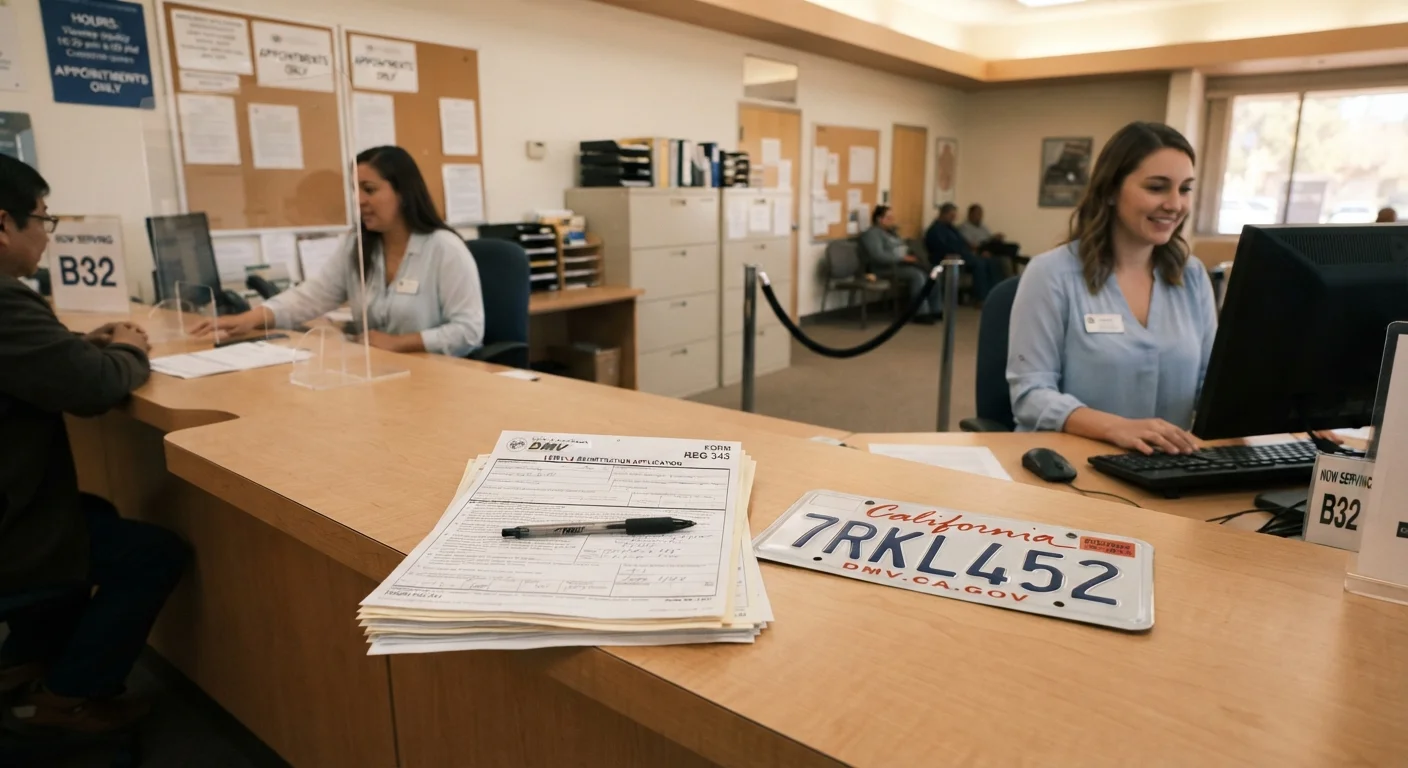
Visit your local DMV office or, in states that allow it, submit documents by mail or online. Complete the title transfer application form - available at the DMV or on their website - and pay the required fees. The DMV will process the application and issue a new title in your name. Processing times range from same-day to several weeks depending on the state and submission method.
Update Your Registration and Insurance Records
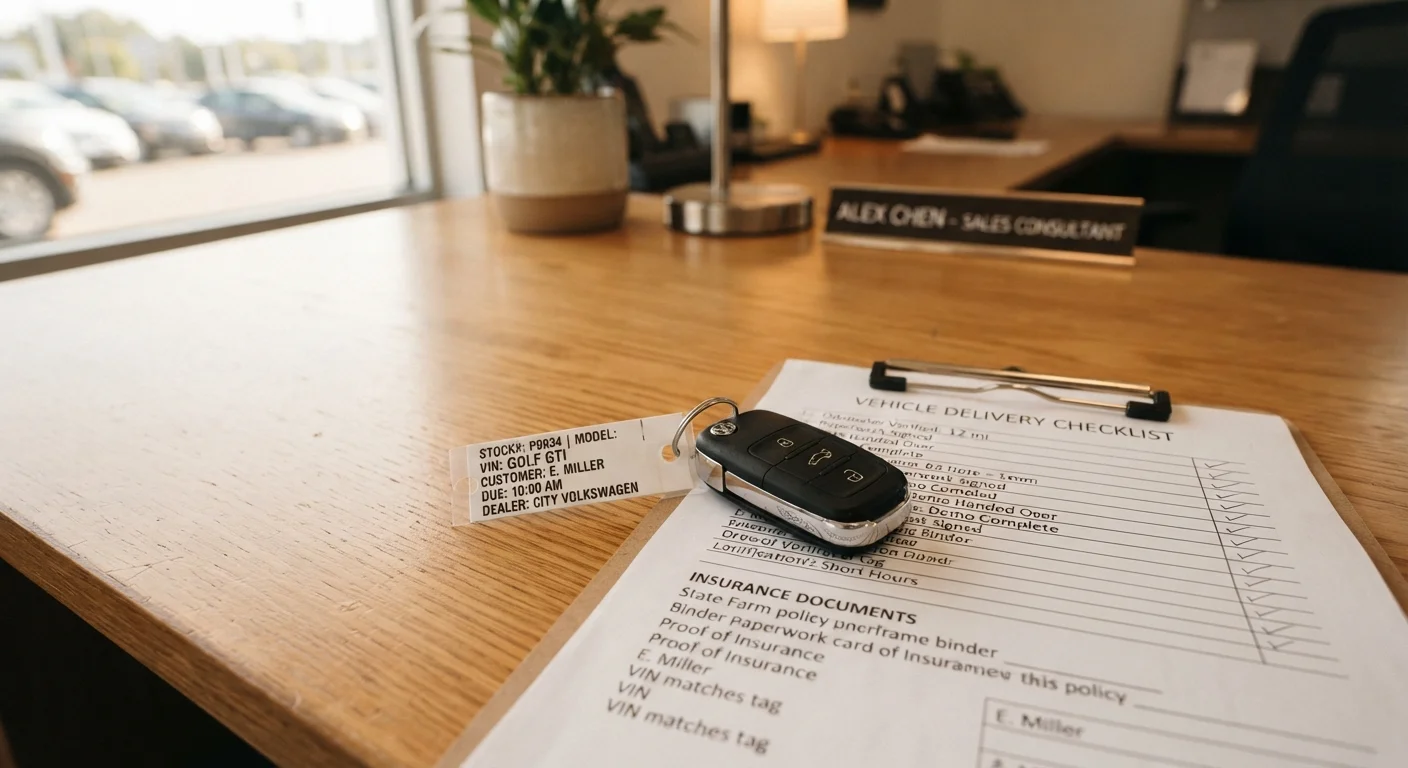
Once the title is in your name, make sure your vehicle registration reflects the current owner as well. In many states these are processed simultaneously, but not always. Notify your insurance provider of the completed transfer so your policy accurately records the vehicle under your ownership. This matters for any future claims.
Once your transfer is complete, your next step is making sure your registration is current and your first-month ownership checklist is covered. The New Car Ownership Checklist: The First 30 Days walks through registration, insurance verification, and other tasks new owners often overlook. For a deeper walkthrough of registration specifically, see Vehicle Registration From Start to Finish.