Why the First 30 Days Matter More Than You Think
Buying a car generates a wave of excitement - and a surprisingly long list of tasks that have real deadlines. Miss your state's registration window, skip a recall check, or forget to confirm insurance, and what started as a great purchase can become a stressful, costly situation fast.
This checklist is designed to help you get every critical item handled in an organized way. Whether this is your first vehicle or your fifth, the first 30 days set the foundation for a smooth ownership experience. For a broader look at how ownership responsibilities work over time, see our complete car ownership guide.
If you're coming from a lease - or deciding between leasing and buying - it's worth understanding how leasing vs. buying changes your ownership responsibilities before working through this checklist.
Insurance Must Be Active Before You Drive
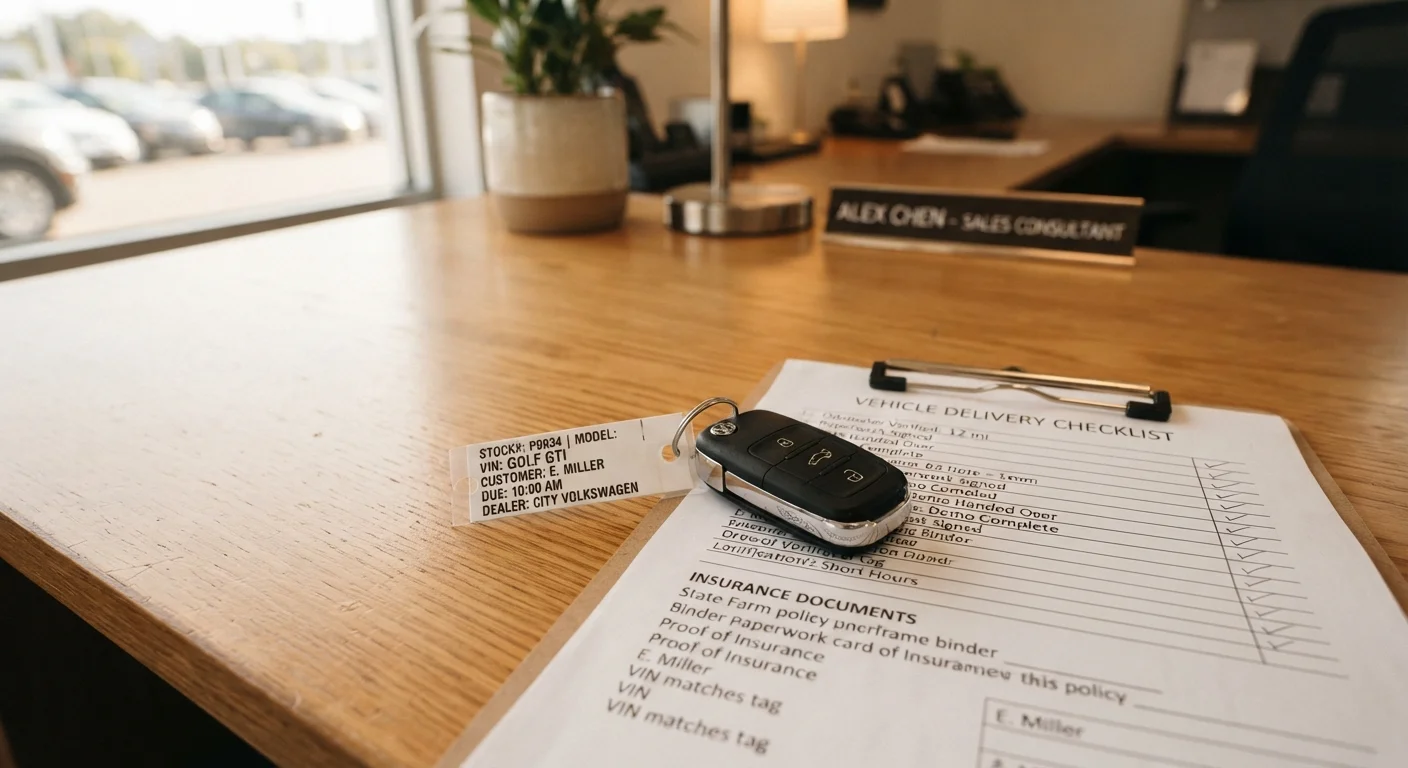
Confirm with your insurer that the new vehicle is covered before you leave the dealership or seller's location. Do not assume your existing policy automatically extends to a new car without verification. Driving uninsured - even briefly - exposes you to significant financial and legal risk in nearly every US state.
What You'll Need to Get Started
Before working through the checklist, gather a few essentials. Having these on hand will make the administrative tasks significantly faster.
NHTSA VIN Recall Lookup
Use your Vehicle Identification Number to check for any open safety recalls on your vehicle at no cost.
Owner's Manual
Your primary reference for correct fuel type, fluid specs, maintenance intervals, and warning light meanings.
Tire Pressure Gauge
Allows you to verify tire pressure matches the recommended PSI listed on your door jamb placard.
Jump Starter or Jumper Cables
Essential roadside tool for handling a dead battery without waiting for assistance.
State DMV Website or Office
Required to complete title transfer and vehicle registration within your state's legal deadline.
Maintenance Log (digital or paper)
Tracks service history so you always know what's been done and when the next service is due.
Your Vehicle Identification Number (VIN) appears on the driver's side dashboard (visible through the windshield), on your title paperwork, and often on your insurance card. You'll use it repeatedly in the first month - for recall checks, registration, and manufacturer registration.
The Full 30-Day Checklist
Work through these items roughly in order - the legal and safety steps are time-sensitive, while the orientation and preparedness tasks can be spread across the first few weeks.
Legal & Administrative
Safety & Recalls
Vehicle Orientation
Emergency Preparedness
Ongoing Tracking
Don't Skip the Title Transfer
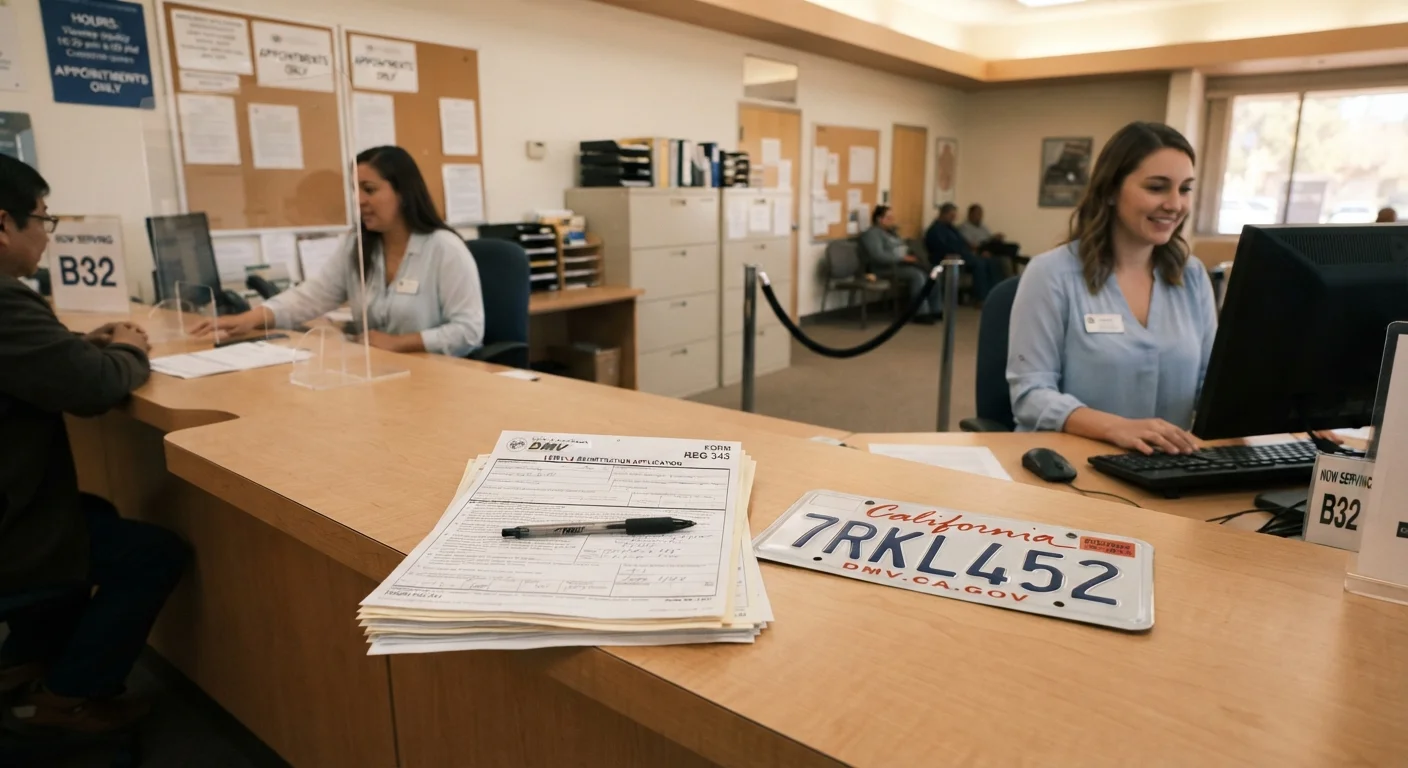
Driving a vehicle with an incomplete title transfer can create serious legal and financial complications - including difficulty proving ownership or resolving liens. Most states impose a firm deadline, often 30 days, to complete this step. Check your state's DMV requirements immediately after purchase.
Recall Repairs Are Time-Sensitive
Open safety recalls address real risks identified by manufacturers or federal regulators. Driving a vehicle with an unaddressed recall can put you and others in danger. Recall repairs are completed free of charge at authorized dealerships, so there's no cost reason to delay.
For a step-by-step breakdown of the registration process specifically, our vehicle registration walkthrough covers what documents you'll need, where to go, and what fees to expect. And if title transfer is new to you, transferring a car title explains why it's one of the most important steps new owners overlook.
What Comes After Month One
Once you've cleared the first-month checklist, your focus shifts from administrative setup to ongoing care. The best thing you can do is build simple habits: check tire pressure monthly, keep an eye on dashboard warning lights, and follow the maintenance schedule in your owner's manual.
For a practical introduction to vehicle upkeep, car maintenance from the ground up is a solid next read. When you're ready to plan around the seasons, the seasonal car check-up routine provides a structured way to stay ahead of weather-related wear.
New car ownership involves more moving parts than most people expect, but none of it is complicated once you know what to look for. Use this checklist as your starting point - and revisit it anytime you pick up a different vehicle.