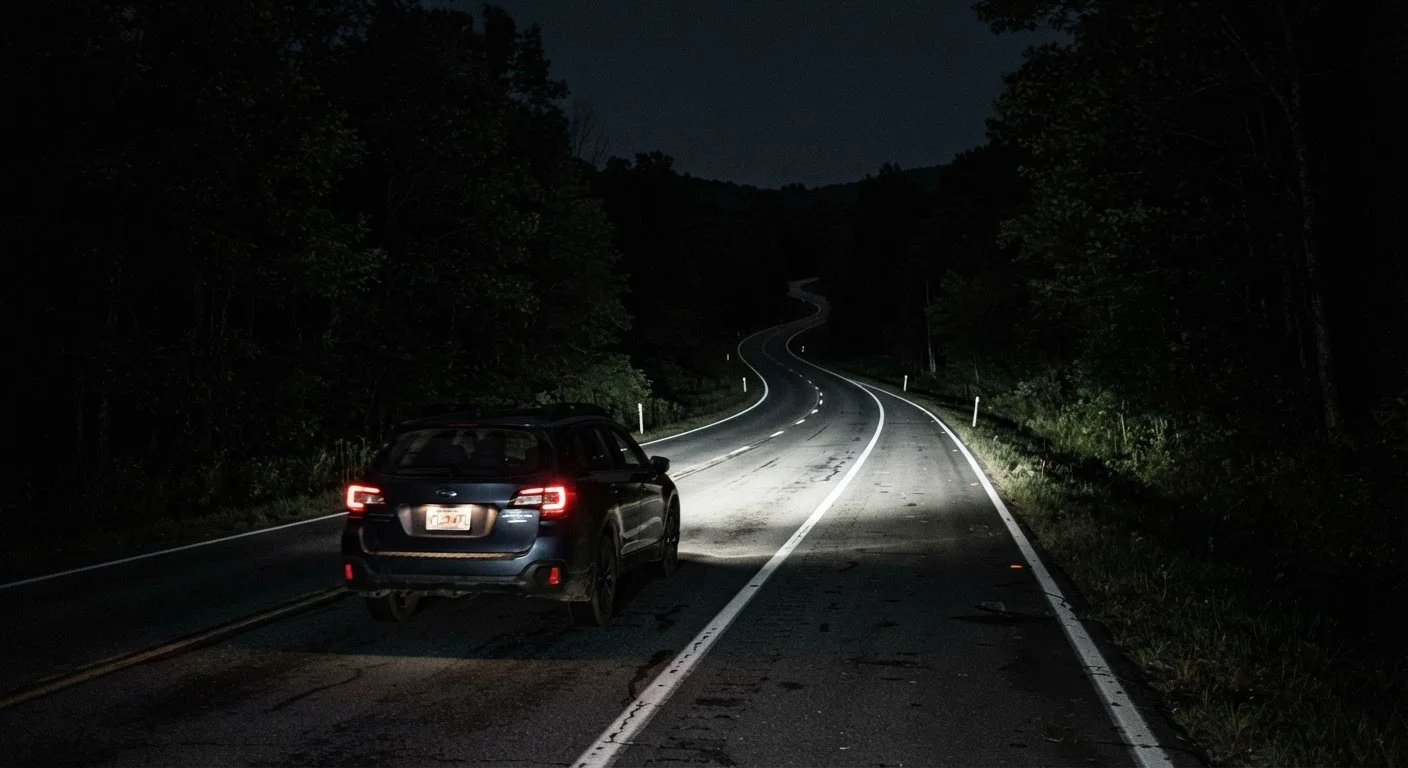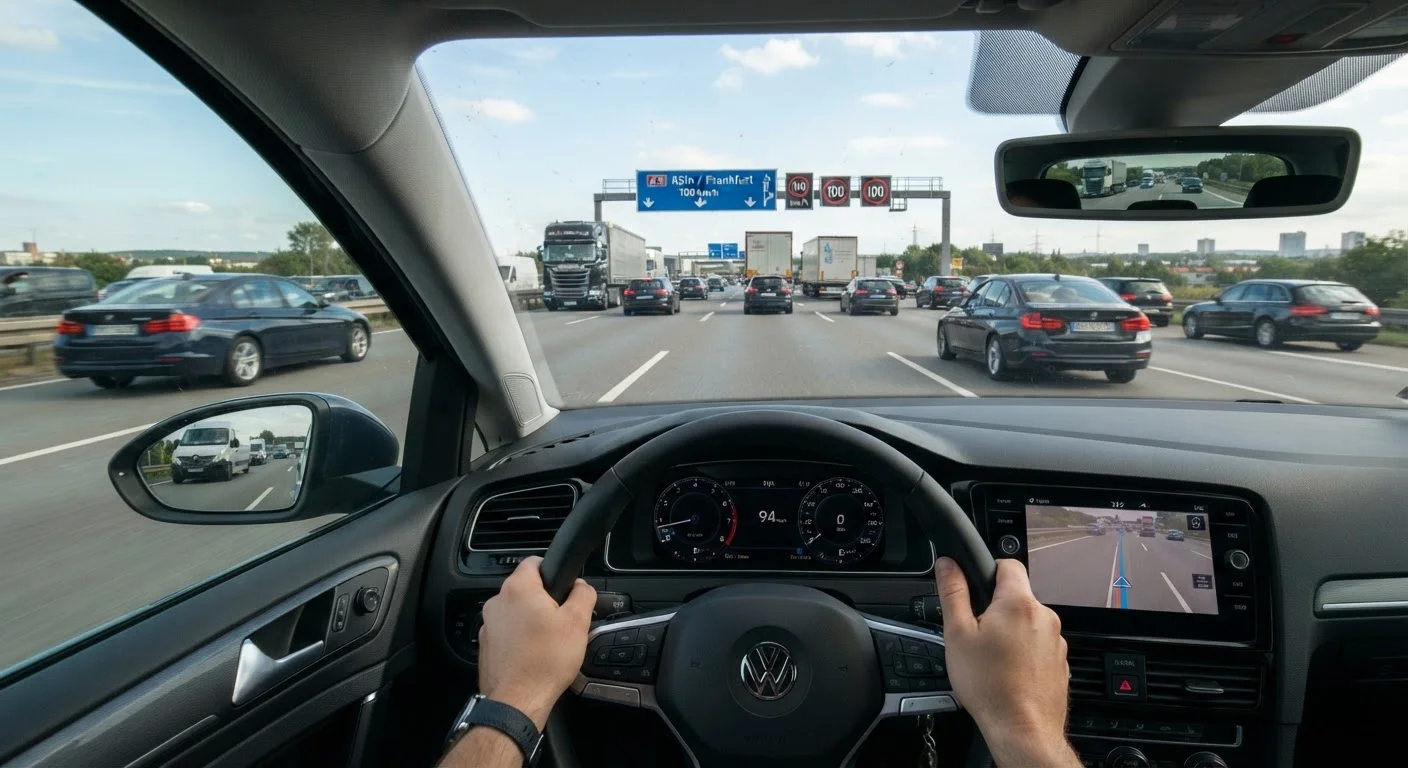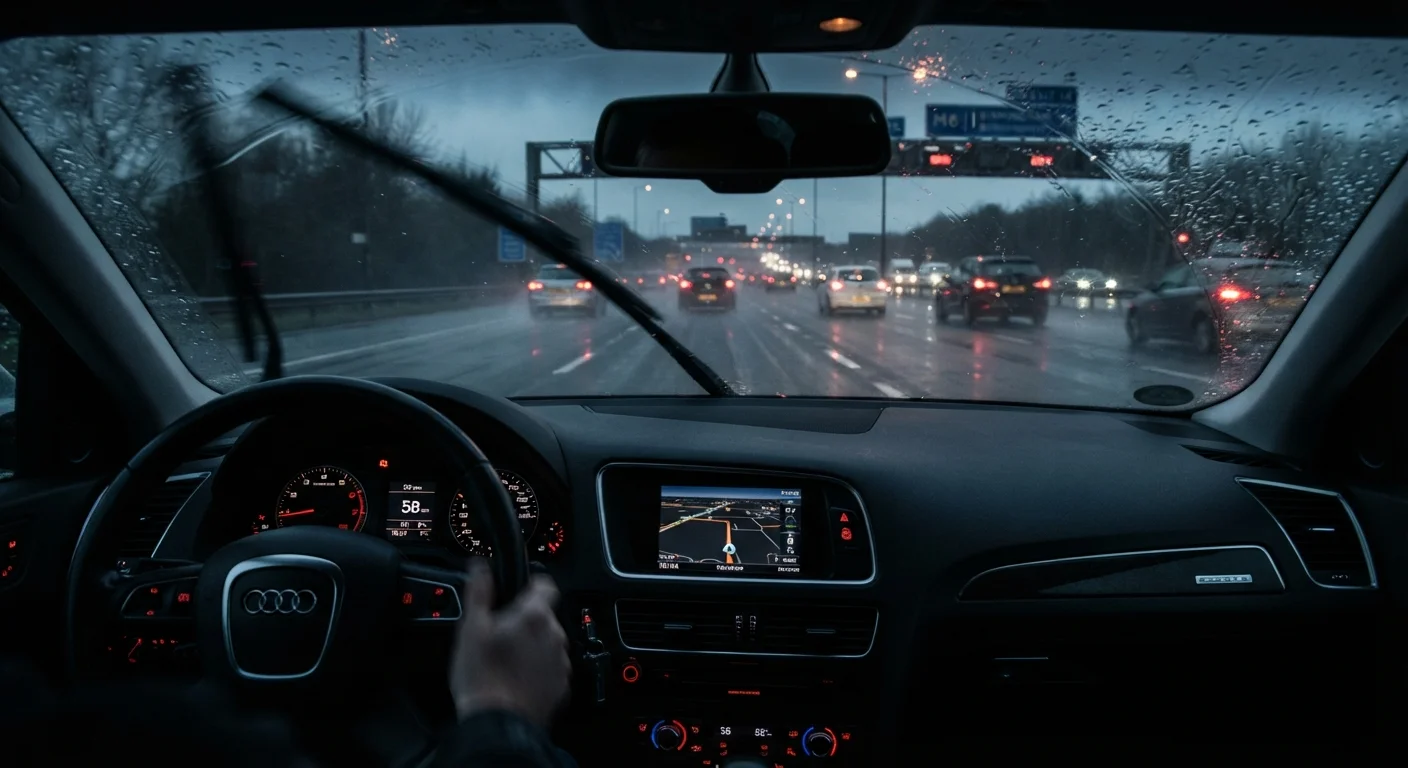

What Highway Hypnosis Actually Does to Your Brain
When driving becomes sufficiently routine - same lane, same speed, same flat road stretching ahead - the brain stops treating it as a task that demands active attention. Instead, it delegates the job to lower-level automatic processing. You may still respond to a sudden brake light ahead, but your ability to anticipate hazards, process new information, or make split-second decisions degrades significantly.
This matters because most crash-avoidance depends on awareness before a threat appears, not reaction after it does. A driver in a hypnotic state isn't scanning mirrors, noticing the truck merging ahead, or clocking that the car in front has been slowing gradually for the past quarter mile.
Layered on top of this is the risk of microsleeps - involuntary sleep episodes lasting two to thirty seconds. At highway speeds, a two-second microsleep means your vehicle travels roughly 175 feet with no one effectively at the wheel. These episodes often go unnoticed by the driver themselves.
Microsleeps Can Be Invisible to the Driver
One of the most unsettling aspects of microsleeps is that drivers often don't know they occurred. The brain can briefly shut down and then resume without any sense of a gap in consciousness. This makes self-assessment unreliable - if you're questioning whether you're too tired to drive, that uncertainty itself is a signal worth taking seriously.
Drowsy Driving by the Numbers
The National Highway Traffic Safety Administration (NHTSA) has consistently identified drowsy driving as a significant contributor to US traffic fatalities. Because drowsiness is difficult to measure after a crash the way alcohol is, the true numbers are widely believed to be undercounted.
~100,000
Police-reported drowsy driving crashes annually (US)
According to NHTSA estimates, though actual figures are considered substantially higher due to underreporting.
2x
Crash risk increase with 6-7 hours of sleep
AAA Foundation for Traffic Safety research found this elevated risk compared to drivers who slept 8 or more hours.
175 ft
Distance traveled in a 2-second microsleep at highway speed
Based on typical highway speed calculations - roughly the length of half a football field with no driver input.
Research from the AAA Foundation for Traffic Safety found that drivers who slept six to seven hours the previous night were twice as likely to be involved in a crash as those who slept eight or more hours. Drivers getting five or fewer hours of sleep showed crash risk comparable to driving with a blood alcohol level at or above the legal limit.
That parallel matters. Most drivers understand that drunk driving is dangerous - but many underestimate that missing a full night of sleep can produce the same impairment profile.
Who Is Most at Risk
Any driver can experience highway hypnosis or drowsiness, but certain groups face elevated risk:
- Shift workers - particularly those finishing overnight shifts - frequently drive while their bodies are signaling a strong need for sleep.
- Young drivers, especially men under 25, are overrepresented in drowsy driving crash statistics, partly due to inconsistent sleep schedules.
- Commercial long-haul drivers, despite federal hours-of-service regulations, still face fatigue risk on extended routes.
- Anyone taking sedating medications, including some antihistamines, sleep aids, and certain antidepressants, may have compounded impairment behind the wheel.
Drowsy driving also worsens other hazards. On roads with limited visibility or unpredictable conditions, reduced alertness becomes even more consequential. If your driving environment already demands more attention - as it does at night - fatigue further narrows your margin for error. Our article on how darkness changes your risk profile covers this overlap in more detail.
Practical Ways to Stay Alert - and When to Stop
There are genuinely useful strategies for managing fatigue on the road, but it's worth being honest about their limits upfront.
Plan Rest Into Long Drives - Not Around Them
Before a long trip, budget time for at least one rest stop every two hours. Treating breaks as optional extras means fatigue will make the decision for you at a worse moment. A 20-minute nap at a rest area can restore alertness more reliably than any stimulant workaround.
What can help:
- Plan long drives to avoid the highest-risk windows: late night and mid-afternoon.
- Take a break every two hours or 100 miles - get out of the car, walk around briefly.
- If you feel drowsy and can do so safely, a 20-minute nap at a rest stop is one of the most effective short-term resets available.
- Traveling with a passenger who stays awake and engaged can reduce hypnotic conditions by maintaining conversation and providing a second set of eyes.
What won't save you if fatigue is severe:
- Turning up the radio or AC
- Opening windows
- Chewing gum or eating
- Splashing cold water on your face
These tactics may provide a few minutes of temporary stimulation, but they don't restore the cognitive processing that sleep deprivation has degraded. If you're nodding off, pulling over is the only safe choice.
Building safer driving habits overall - including recognizing fatigue as a genuine impairment - is a core part of defensive driving in practice. Similarly, conditions that demand high alertness - like wet roads or fog - become considerably more dangerous when fatigue is a factor. See our guide on driving in rain, snow, and fog for how to manage those demands separately.