Why Parallel Parking Feels So Hard
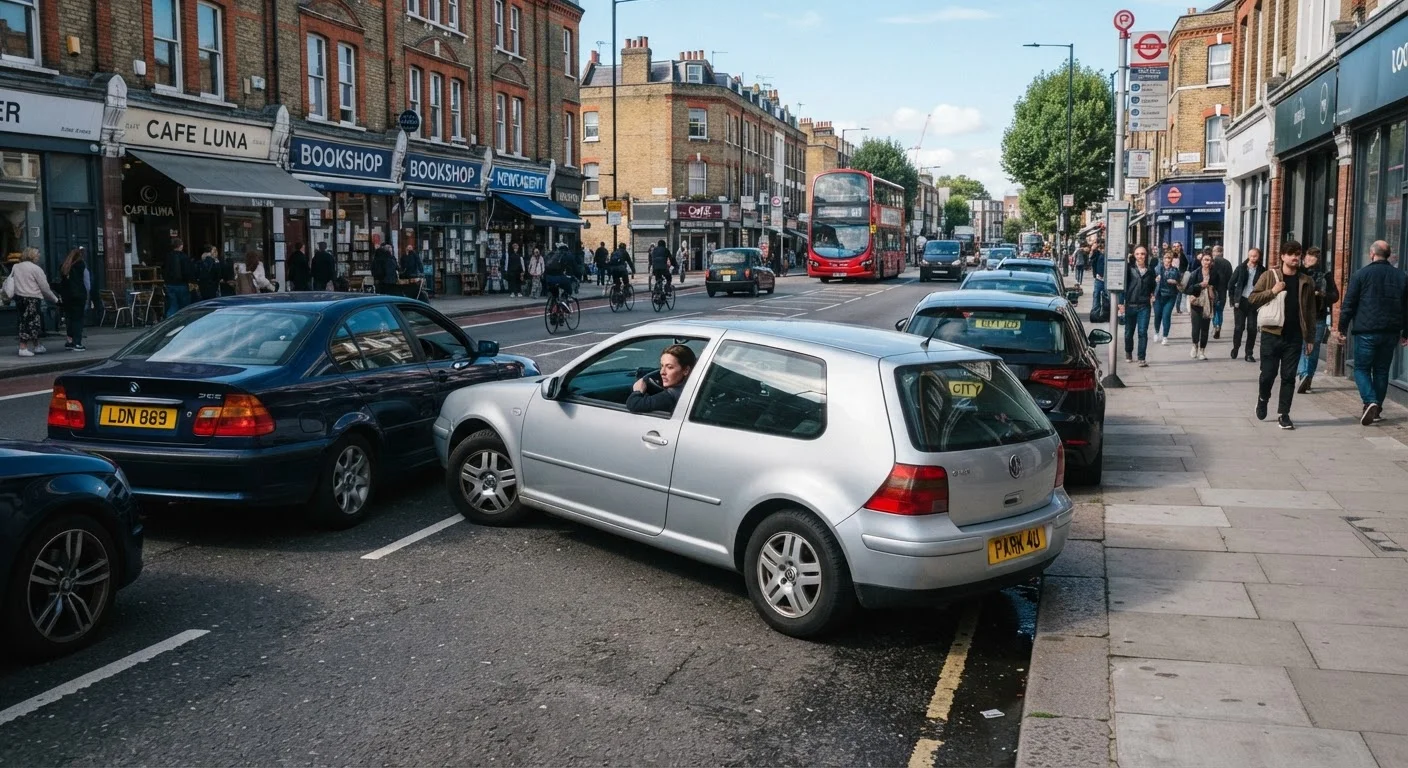
Parallel parking has a reputation that's mostly undeserved. The anxiety around it usually comes from two things: moving in reverse, which already feels unnatural to many drivers, and doing it while other cars wait behind you. That social pressure causes rushed inputs, which cause mistakes, which reinforce the fear. It becomes a cycle.
The geometry of the maneuver is actually straightforward once you understand it. You're essentially tracing an S-curve into a rectangular space using two distinct steering phases. The challenge is learning where those phase changes happen for your specific vehicle - and that's something you can practice deliberately.
If you're still building your overall confidence behind the wheel, our guide to defensive driving habits covers the broader spatial awareness skills that make city driving - including parking - much less stressful.
What you will need
Setting Yourself Up Before You Even Reverse
Most parallel parking errors begin before the car moves an inch. Choosing the right space and positioning yourself correctly at the start determines whether the maneuver is smooth or chaotic.
Look for a space that's comfortably longer than your vehicle - a gap roughly 1.5 times your car's length is a reasonable target for most drivers. Squeezing into a barely-adequate space demands precision that takes experience to develop reliably.
Once you've identified the space, pull up alongside the car parked in front of it. Align your rear bumper roughly with that car's rear bumper, and leave about 2 to 3 feet of lateral distance between your vehicles. This starting alignment is the foundation everything else builds on - get it right and the rest of the maneuver flows predictably.
Practice Without the Pressure First
Before tackling a busy street, find an empty parking lot and set up two markers - cardboard boxes work fine - to simulate the lead and trailing vehicles. Run through the maneuver repeatedly until the reference points feel familiar. Ten focused repetitions in a low-stakes environment can dramatically reduce anxiety when real traffic is watching.
The Step-by-Step Maneuver
The following steps describe a standard parallel parking sequence for a typical passenger car in a right-side street space. Adapt the directions as needed if you're parking on the left in a one-way street situation.
Signal and position alongside the lead vehicle
Activate your right turn signal to communicate your intent to drivers behind you. Pull up parallel to the car in front of the empty space, leaving roughly 2 to 3 feet between your vehicles. Align your rear bumpers as closely as you can judge. Come to a complete stop.
Check all mirrors and blind spots
Before reversing, check your left mirror, right mirror, and rear window. Look for cyclists, pedestrians, and approaching traffic. This isn't a one-time check - continue glancing at mirrors throughout every phase of the maneuver.
Begin reversing and turn the wheel sharply toward the curb
Shift into reverse and begin moving slowly - barely faster than a walking pace. Once your rear bumper clears the rear bumper of the lead car, turn your steering wheel firmly toward the curb (right, for a right-side space). Keep moving slowly as the rear of your car swings into the space.
Straighten the wheel as your car reaches roughly 45 degrees
When your car's angle relative to the curb is approximately 45 degrees - you'll develop a feel for this with practice - begin straightening the steering wheel. Continue reversing slowly. Your front end will swing away from the lead vehicle and toward the lane.
Turn the wheel away from the curb to finish the arc
Before your rear bumper gets too close to the car behind you, turn the steering wheel in the opposite direction - away from the curb. This second steering phase brings your front end into alignment with the space. Continue reversing gently until the car is roughly parallel to the curb.
Straighten up and center yourself in the space
Once parallel, straighten your wheels and inch forward or backward as needed to center your car evenly between the vehicles on either end. Aim to leave a few feet of clearance at both bumpers so the other drivers can exit their spaces. Set the parking brake if you're on any incline.
Once you're settled in the space, check that you're within about 12 to 18 inches of the curb and that your front and rear clearances look roughly even. If you need to adjust, small forward and reverse nudges with gentle steering corrections will get you there.
For new drivers, teen drivers, and anyone sharpening their skills early, the graduated licensing guide explains how to build foundational habits in a structured way - parallel parking is often part of the licensing test for a reason.
Common Mistakes and How to Avoid Them
Even drivers with years of experience make the same recurring errors. The most common: turning the wheel too early on the first phase, which puts the rear of the car into the space before the front has cleared the parked car ahead. The fix is patience - don't start turning until your car's rear has passed the rear bumper of the lead vehicle.
Another frequent problem is stopping the first steering phase too soon, leaving the car at too shallow an angle to complete the second curve into the curb. If you finish the maneuver and you're sitting parallel but too far from the curb, this is usually the culprit. Try reversing a bit further before transitioning next time.
Finally, many drivers forget that other road users aren't static while you're maneuvering. Pedestrians step off curbs, cyclists pass on the right, and following traffic can creep closer than expected. Keep checking your mirrors throughout - not just at the start. Our piece on how tailgating creates hazards is a useful reminder of how quickly rear-end situations develop in slow urban traffic.
Don't Block Traffic While Deciding
If you approach a space and realize mid-setup that it's too small or your positioning is off, it's better to abort and circle around than to attempt a correction while stopped in the travel lane. Stalling in traffic to re-approach creates frustration behind you and can lead to unsafe overtaking. Give yourself permission to try again - it's the smarter move.