Why a Roadside Kit Deserves a Permanent Spot in Your Car
Most drivers don't think about a roadside emergency until they're already standing on the shoulder of a highway, hazards blinking, watching traffic rush by. At that point, whatever is in your trunk - or isn't - determines how the next few hours go.
A dead battery, a blown tire, a minor fender bender at dusk, or a sudden medical situation can happen to any driver on any trip. None of these require a mechanical background to manage better with the right supplies on hand. What they do require is some advance thinking.
This checklist walks through what actually belongs in a roadside emergency kit, grouped by purpose, so you understand not just what to pack but why each item earns its trunk space. A kit that makes sense to you is one you'll actually maintain and use.
Pair this with the seasonal car check-up routine to keep both your vehicle and your kit in good shape year-round.
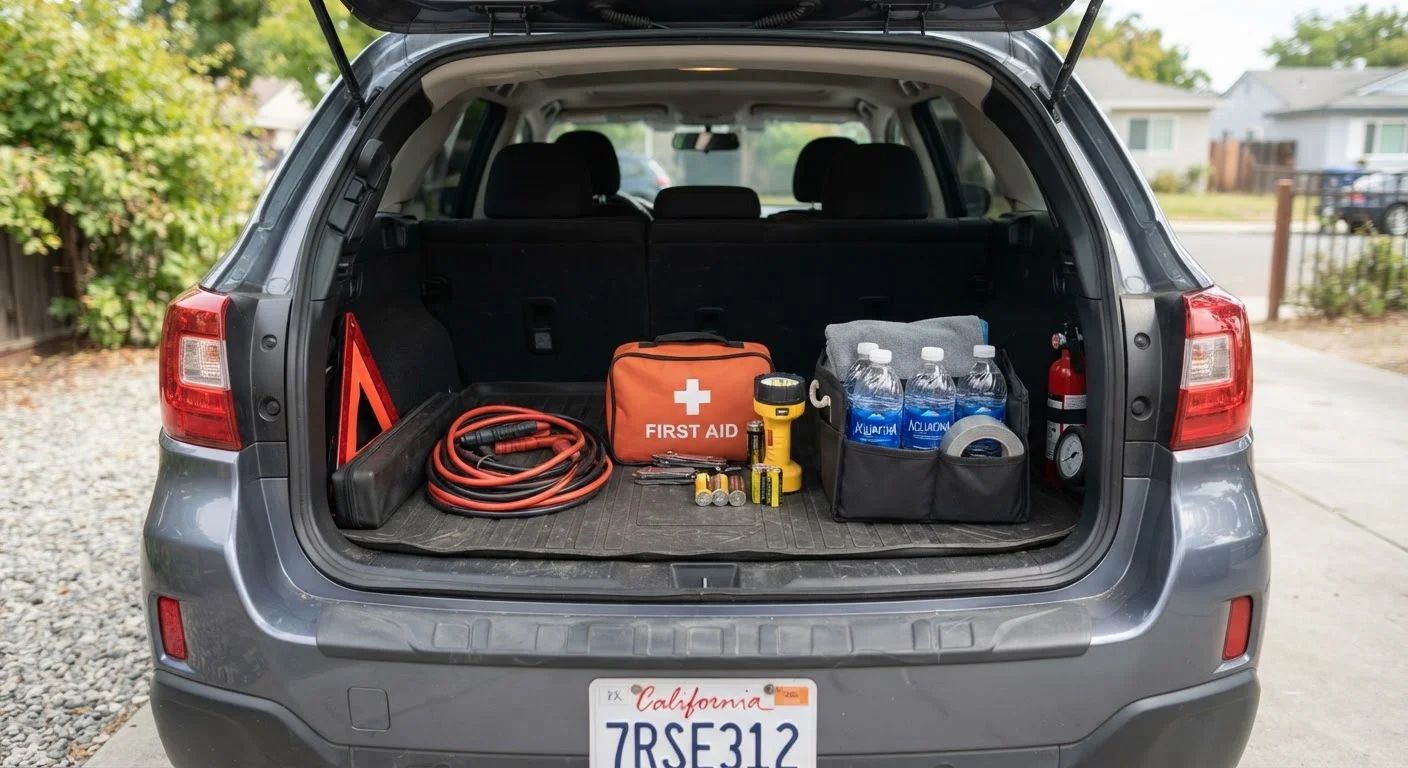
Dedicated storage bag or bin
Keeps all kit items contained, organized, and easy to grab quickly during a stressful situation.
Portable jump starter pack
Provides a self-contained way to jump a dead battery without needing another vehicle nearby.
Reflective warning triangles
Alerts approaching drivers that a vehicle is stopped on or near the road, reducing collision risk.
First aid kit
Allows basic wound care and stabilization until professional medical help is available.
Tire pressure gauge
Lets you verify the spare tire is safe to use before installing it on the road.
The Complete Roadside Emergency Kit Checklist
Work through the groups below and check your current kit - or use this as a build-from-scratch guide. Items marked must are the non-negotiables. Should items cover common real-world scenarios. Nice to have items provide meaningful extra protection without being essential for every driver.
Safety & Visibility
Battery & Electrical
Tire & Basic Mechanical
First Aid
Survival & Comfort
Refresh Your Kit at Least Twice a Year
Batteries lose charge, water bottles can degrade in heat, and first aid supplies have expiration dates. A kit you assembled three years ago and never checked may fail you when it matters most. Set a calendar reminder to inspect and restock your kit each spring and fall - it takes less than 15 minutes.
Once your kit is assembled, store it in a dedicated bag or bin in your trunk rather than loose items rolling around. Labeling the container makes it easy to grab in a hurry. Revisit it at least twice a year - many items, including batteries, first aid supplies, and food bars, have expiration dates or degrade over time.
If you drive regularly for work, take long road trips, or travel through remote areas, consider expanding your kit accordingly. The pre-trip checklist is a useful complement when preparing for longer drives.
What Your Kit Can't Replace
A roadside kit handles the gap between a problem occurring and help arriving - it is not a substitute for professional repair. If your car breaks down in a way you can't diagnose or safely address, the right move is to stay visible, stay in your car when traffic is a risk, and call for roadside assistance or a tow.
Stay Safe First - Repair Second
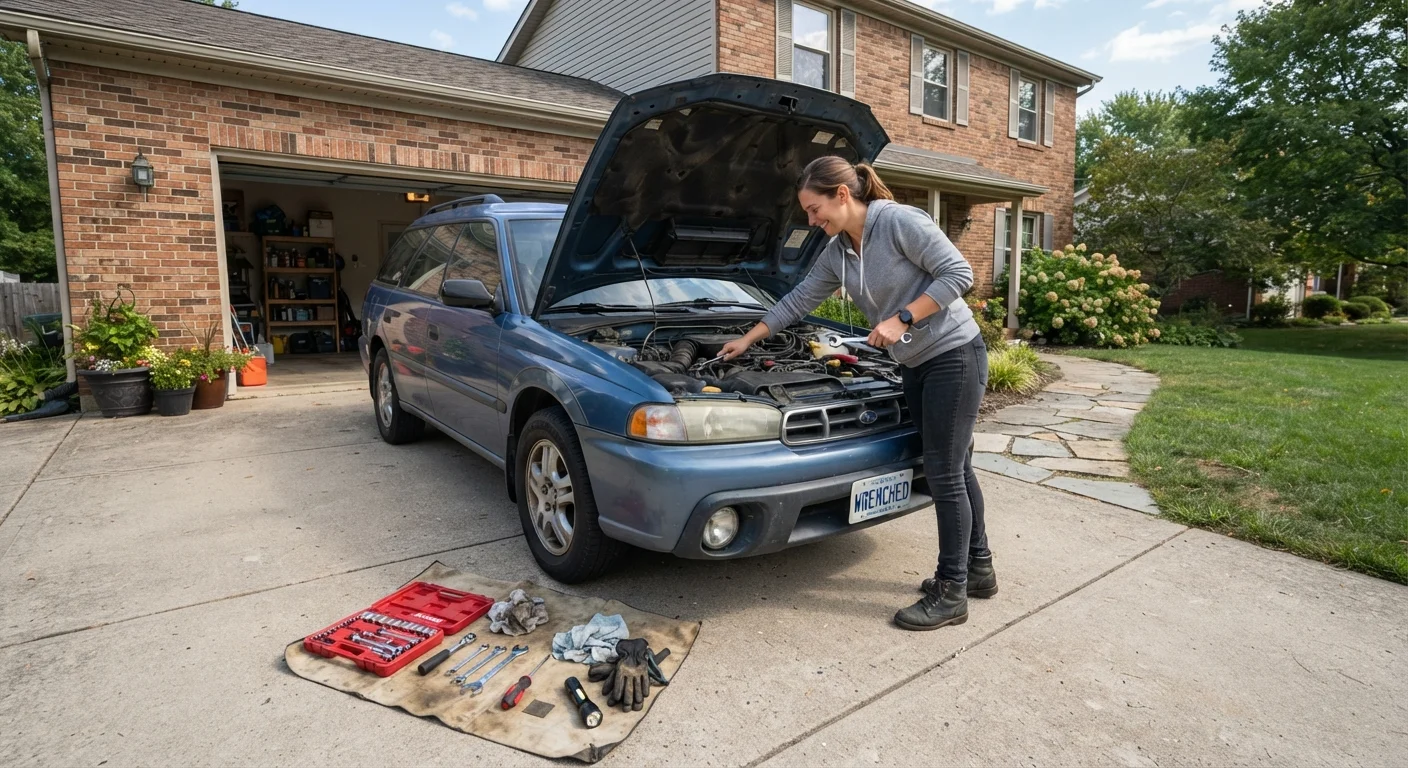
If you're stopped on a highway shoulder, your primary concern is keeping yourself and passengers safe from traffic - not fixing the car. Stay behind guardrails when possible, keep your hazard lights on, and call for help before attempting any repairs. Never work under a vehicle on the side of a road without it being fully secured and off the travel lane.
It's also worth knowing the difference between tasks that are genuinely safe for drivers to handle themselves and those that carry real risk. Our guide to DIY car maintenance breaks that line down clearly.
Building an emergency kit is part of responsible car ownership - much like keeping your registration current and understanding your insurance. It's a small upfront effort with disproportionate value on the day something goes wrong. Think of it the same way you'd think about a financial safety net: modest preparation now prevents a much bigger disruption later. For a parallel look at personal financial preparedness, see building an emergency fund into your budget.