What APR Actually Means
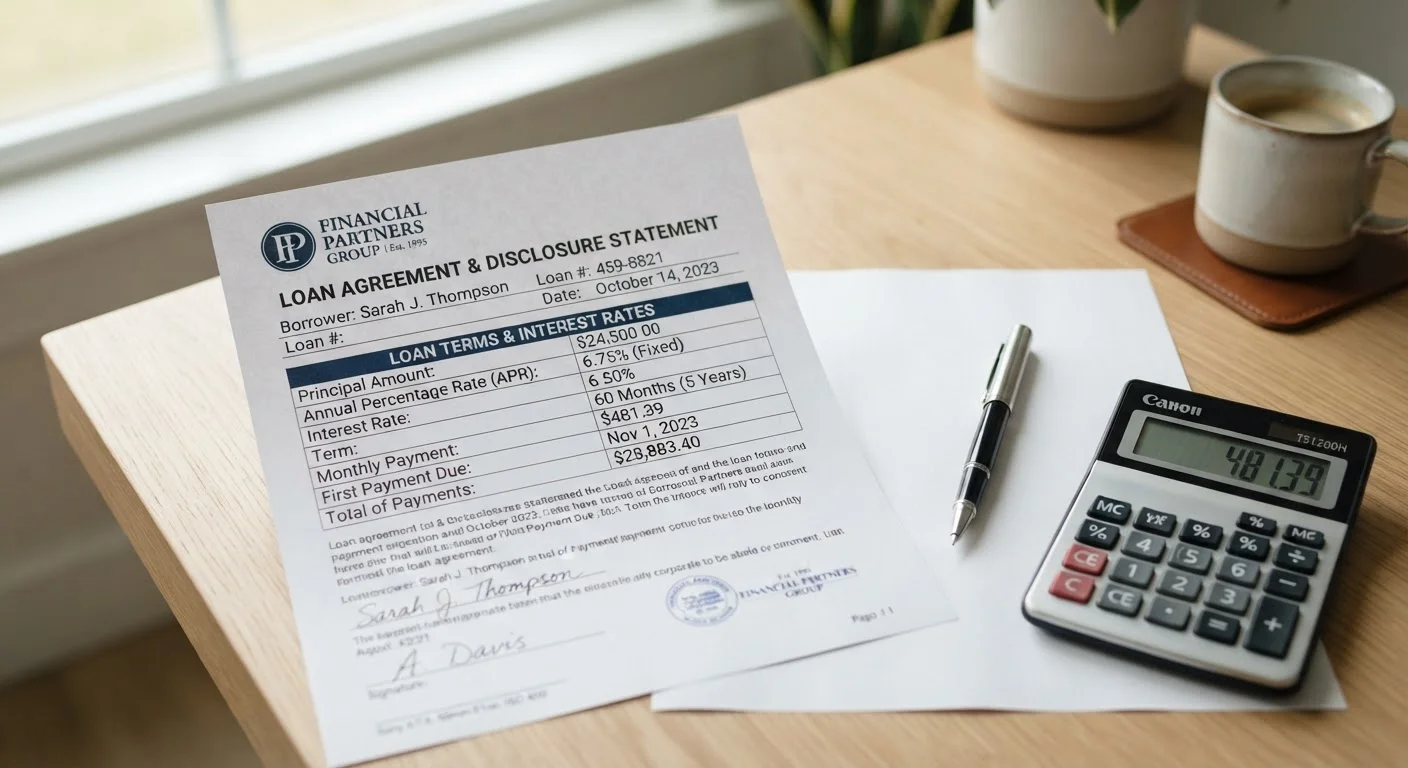
Annual Percentage Rate, or APR, is the yearly cost of borrowing money expressed as a percentage. Unlike a simple interest rate, APR is designed to give borrowers a fuller picture by folding in certain fees - not just the base interest charged on the principal balance.
The federal Truth in Lending Act (TILA) requires lenders to disclose APR so consumers have a standardized number to compare across offers. Because it bundles fees alongside interest, APR will typically be higher than the stated interest rate on any given loan.
If you're new to borrowing basics, our plain-language introduction for first-time borrowers lays a helpful foundation before diving into rate mechanics.
| Governed by | Truth in Lending Act (TILA) (Consumer Financial Protection Bureau) |
| Expressed as | Annual percentage of the loan amount |
| Includes | Interest rate plus most required fees |
| APR vs. interest rate | APR is always equal to or higher than the base interest rate |
| Common loan types using APR | Mortgages, auto loans, personal loans, credit cards |
| Related disclosure | Loan Estimate (mortgages) / Schumer Box (credit cards) |
What's Included - and What Isn't
APR must include:
- The base interest rate charged on the outstanding balance
- Origination fees and underwriting fees charged upfront
- Broker fees (where applicable)
- Mortgage points, if paid to reduce the rate
- Certain closing costs on mortgage loans
APR generally does not include:
- Late payment penalties
- Prepayment penalties
- Most third-party fees (title insurance, appraisal, etc.) on mortgages
- Optional add-on costs (credit insurance, extended warranties)
This distinction matters because two loans with identical APRs can still carry meaningfully different out-of-pocket costs depending on what wasn't captured in that number. Always ask the lender for a full itemized fee list, not just the APR.
Annual Percentage Rate (APR)
The yearly cost of a loan expressed as a percentage, including the interest rate and most required fees. It is standardized under federal law to help borrowers compare offers.
Interest Rate
The base percentage charged on the outstanding principal of a loan, not including fees. It is almost always lower than the corresponding APR.
Annual Percentage Yield (APY)
A rate that accounts for compounding - how often interest is calculated and added to the balance. APY reflects the true annual cost or return more accurately than APR when compounding is frequent.
Origination Fee
An upfront charge by a lender to process and fund a loan. Because it is a cost of borrowing, it is typically included in the APR calculation.
Variable APR
An interest rate that can change over time because it is tied to a benchmark index such as the prime rate. Payments or costs may increase or decrease as the index moves.
Truth in Lending Act (TILA)
A federal law requiring lenders to clearly disclose the APR and other key loan terms so borrowers can make informed comparisons across credit offers.
Fixed vs. Variable APR
A fixed APR stays constant for the life of the loan or - in the case of credit cards - until the issuer gives legally required advance notice of a change. Fixed APRs are predictable, which makes budgeting straightforward.
A variable APR is tied to a benchmark index (commonly the prime rate or the Secured Overnight Financing Rate, SOFR). When that index rises or falls, the APR adjusts accordingly, meaning your payment or interest cost can change over time. Variable APRs typically start lower than fixed rates but carry more uncertainty.
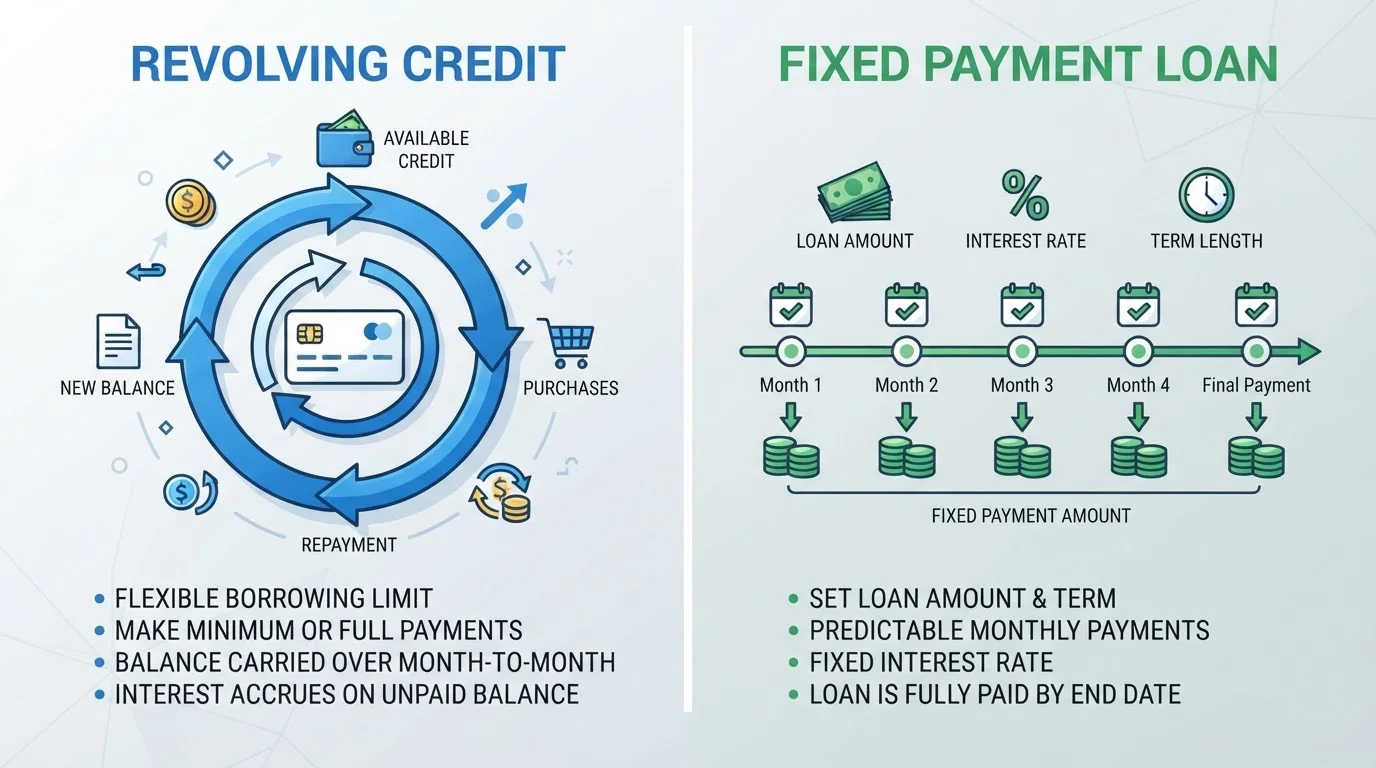
For revolving products like credit cards, the APR landscape is more nuanced - cards often post different rates for purchases, cash advances, and balance transfers. Our article on revolving credit vs. installment loans explains how these two debt structures compare across all major dimensions.
2
APR types: fixed and variable
Most consumer loan products fall into one of these two categories, each carrying different risk and predictability profiles for borrowers.
3+
APRs a single credit card may carry
Card issuers commonly disclose separate APRs for purchases, cash advances, and balance transfers - and each can differ substantially.
How APR Interacts With Compounding
APR is an annualized figure, but it does not directly tell you how often interest compounds. That's where APY - Annual Percentage Yield - becomes relevant. APY accounts for compounding frequency, so it reflects the true annual cost when interest is applied monthly, daily, or otherwise more than once a year.
For installment loans with set monthly payments (auto loans, personal loans, mortgages), the distinction between APR and APY is modest but real. For revolving credit where balances can linger and compound, the gap can be more significant. To understand the mechanics of compounding in plain terms, see our guide on compound interest explained without the math anxiety.
This article is for general informational and educational purposes only. It does not constitute personalized financial, legal, or tax advice. Consult a qualified financial professional before making borrowing decisions specific to your circumstances.